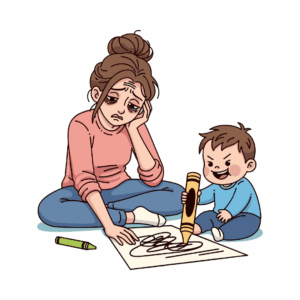
There was a night when I found myself negotiating with a three-year-old over one more sip of water.
Five minutes later, it was one more hug.
Then another story.
Then the stuffed bunny had disappeared under the bed and apparently couldn’t sleep alone.
An hour had passed. I was exhausted. My toddler was somehow even more awake than when we’d started.
I remember thinking, Why is bedtime so hard?
If you’ve had that thought, you’re not alone.
Many parents assume their toddler refuses to sleep because they’re stubborn, manipulative, or simply testing limits. But that’s rarely what’s happening.
Most bedtime battles aren’t about sleep.
They’re about connection, control, routine, and a toddler whose brain is still learning how to switch off.
Once you understand that difference, bedtime starts feeling less like a fight you have to win—and more like a skill you can teach.
Quick Answer
If your toddler refuses to sleep, don’t focus on forcing sleep. Focus on creating a predictable bedtime routine, setting calm but firm boundaries, responding consistently, and helping them feel safe enough to fall asleep independently. Most bedtime battles improve when parents stop negotiating, reduce stimulation before bed, and respond with confidence rather than frustration.
Why Your Toddler Refuses to Sleep
Here’s the mistake most parents make.
We ask,
“Why won’t my toddler just go to sleep?”
The better question is:
“What’s making it hard for them to let go of the day?”
Toddlers experience bedtime differently than adults.
To us, sleep is relief.
To them, bedtime often means:
- Separation from parents
- Loss of control
- Missing out on fun
- Fear of the dark
- Processing a full day of emotions
That explains why bedtime suddenly becomes the most interesting part of their day.
They aren’t trying to make your evening difficult.
They’re trying to delay something their developing brain isn’t fully comfortable with yet.
Understanding this changes how you respond.
The Hidden Reason Bedtime Battles Keep Getting Worse
Imagine your toddler asks for one more story.
You say yes.
Tomorrow they ask for two.
You agree again.
The next night they need water.
Then another cuddle.
Then another trip to the bathroom.
Without realizing it, you’ve taught them something powerful.
Every new request delays bedtime.
Children repeat behaviors that work.
Not because they’re manipulative.
Because that’s how learning works.
This isn’t about blaming parents.
We’ve all done it.
When you’re tired, saying “yes” feels easier than another argument.
The problem is that bedtime quietly becomes a negotiation instead of a routine.
And toddlers are surprisingly good negotiators.
What Actually Helps a Toddler Fall Asleep
Sleep doesn’t begin when your child’s eyes close.
It begins about an hour earlier.
Think of bedtime like landing an airplane.
You don’t drop from 30,000 feet straight onto the runway.
You descend gradually.
Toddlers need the same transition.
A calming bedtime routine tells the brain,
“We’re safe. The day is ending. It’s okay to rest.”
A simple routine might look like this:
- Bath
- Pajamas
- Brush teeth
- Two books
- Cuddles
- Lights out
The magic isn’t the routine itself.
It’s doing it in the same order every night.
Predictability reduces anxiety.
And anxious brains don’t fall asleep easily.
Five Things Parents Say That Make Bedtime Harder
We’ve all said them.
Usually after a long day.
Usually because we’re desperate.
Unfortunately, they often make bedtime worse.
❌ “If you don’t sleep, I’m leaving.”
Why it backfires:
Your child already feels unsure about separation.
Now you’ve made bedtime feel even less safe.
Instead say:
“I’m right outside. Your body is safe, and it’s time to rest.”
Why it works:
It sets a boundary while reassuring your child they aren’t being abandoned.
❌ “Fine. Just five more minutes.”
Why it backfires:
Children learn persistence wins.
Tomorrow they’ll ask again.
Instead say:
“Bedtime is finished. I’ll see you in the morning.”
Why it works:
Calm consistency is easier for toddlers to predict than changing rules.
❌ “You’re not tired.”
Why it backfires:
Toddlers often look energetic when they’re actually overtired.
Their bodies produce stress hormones that make them seem wide awake.
Instead say:
“Your body looks busy, but it’s telling me it needs rest.”
Why it works:
You’re naming what’s happening without arguing.
❌ “Big kids don’t cry.”
Why it backfires:
Children don’t stop feeling emotions because we tell them to.
Instead, they learn emotions aren’t welcome.
Instead say:
“It’s okay to feel upset. I’ll stay calm while you calm down.”
Why it works:
Emotions pass faster when children don’t have to fight them.
❌ “Go to sleep. Right now.”
Why it backfires:
Nobody can force themselves to fall asleep on command.
Adults can’t.
Toddlers certainly can’t.
Instead say:
“You don’t have to make yourself sleep. Just let your body rest.”
Why it works:
Removing pressure often makes sleep come faster.
Five Scripts That Actually Work
Sometimes parents don’t need another parenting philosophy.
They need words.
Here are five scripts you can borrow tonight.
Script 1: When They Keep Leaving Their Bed
“I’ll walk you back every time. It’s bedtime now.”
Why it works:
There’s no lecture.
No anger.
No negotiation.
Just calm repetition.
Eventually, leaving bed becomes boring instead of rewarding.
Script 2: When They Want Another Story
“We already read our bedtime books. We’ll read more tomorrow.”
Why it works:
It acknowledges the request without changing the routine.
Script 3: When They Say They’re Scared
“I believe you. Let’s check together.”
Look under the bed.
Open the closet.
Then say,
“Everything looks safe. I’ll stay with you for one minute.”
Why it works:
You validate the fear without pretending monsters are real.
Script 4: When They Cry for You
“I know you want me. You’re safe. I’ll check on you in five minutes.”
Why it works:
Predictable check-ins build trust while encouraging independent sleep.
Script 5: When They Say They’re Not Tired
“You don’t have to sleep yet. You do need to stay quietly in bed.”
Why it works:
It removes the power struggle.
Your child controls whether sleep comes.
You control the bedtime boundary.
Mistakes That Secretly Fuel Bedtime Battles
Parents often look for one magic solution.
Usually, it’s a collection of small habits keeping the battle alive.
Too Much Screen Time
Blue light suppresses melatonin, the hormone that helps us feel sleepy.
Try switching screens off at least one hour before bed.
Bedtime That Changes Every Night
Children thrive on predictable rhythms.
A bedtime that’s 7:30 one night and 9:00 the next makes falling asleep harder.
Aim for consistency—even on weekends.
Overtiredness
It sounds backwards.
But keeping toddlers awake longer often makes bedtime worse.
An overtired child releases cortisol and adrenaline.
Those chemicals make sleep harder.
Not easier.
Too Much Talking
Parents often explain.
Toddlers often aren’t listening.
The more words we use, the longer bedtime becomes.
Short.
Calm.
Repeated.
Those three things work far better than long speeches.
What If Your Toddler Only Sleeps With You?
This is one of the hardest bedtime situations.
And one of the most common.
If your child has always fallen asleep beside you, that’s what their brain expects.
Sleep associations aren’t bad.
They’re learned.
Which means they can also be changed.
Gradually.
You might begin by sitting beside the bed instead of lying in it.
After a few nights, move your chair slightly farther away.
Then closer to the door.
Then outside the room with regular check-ins.
Progress doesn’t have to be fast.
It just has to keep moving.
A Bedtime Plan You Can Start Tonight
Forget perfection.
Aim for predictable.
Tonight, try this:
One hour before bed:
- Turn off screens.
- Dim the lights.
- Offer a healthy snack if needed.
Thirty minutes before bed:
- Bath or quiet play.
- Pajamas.
- Brush teeth.
Fifteen minutes before bed:
- Read two books.
- Give cuddles.
- Say the same bedtime phrase every night.
After lights out:
Keep responses short.
Avoid negotiations.
Walk them back to bed calmly if needed.
Repeat.
Repeat again.
And repeat once more.
Consistency often feels like it’s not working.
Until suddenly it is.
When Bedtime Battles Might Be Something Else
Most sleep struggles are normal.
Some deserve a conversation with your pediatrician.
Consider seeking medical advice if your toddler:
- Snores loudly every night
- Frequently stops breathing during sleep
- Has severe night terrors
- Seems unusually sleepy during the day
- Has persistent sleep problems despite consistent routines for several weeks
Sometimes the issue isn’t behavior.
It’s sleep apnea, reflux, allergies, iron deficiency, or another medical concern.
It’s always worth ruling those out.
The Goal Isn’t a Perfect Sleeper
Many parents picture bedtime success as a child who climbs into bed, smiles, and falls asleep in five minutes.
That’s a lovely picture.
It’s also unrealistic for many toddlers.
Success looks different.
Success is a child who feels safe.
Who knows what happens next.
Who trusts that bedtime isn’t something happening to them but something their family does every evening.
Some nights will still be messy.
There will still be requests for water.
There will still be tears.
There will still be moments when you wonder if any of this is working.
Keep going.
Children don’t learn bedtime because we say the perfect words once.
They learn because we calmly repeat the same message night after night:
“You’re safe. It’s time to rest. I’ll help you through it.”
Eventually, they believe it.
And one evening, without realizing exactly when it changed, bedtime becomes just another part of the day instead of the hardest one.
That’s when you realize something important.
You didn’t just teach your toddler how to sleep.
You taught them how to feel secure enough to let go of the day.