The clock on the stove says 9:30.
The hallway light is still on.
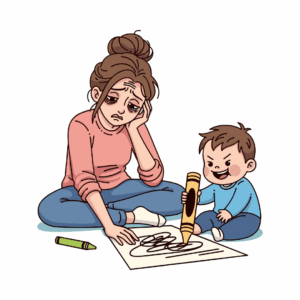
Your toddler stands in the doorway in footed pajamas, holding a plastic cup with both hands.
They ask for water like it is the first time tonight.
It is the fourth time.
You already read the story. You already sang the song.
You already tucked the blanket around the rabbit, then the bear, then the rabbit again.
You stepped out and closed the door halfway. Then you heard the feet hit the floor.
Now here you are again. Same hallway. Same cup. Same small voice finding one more reason to stay up.
The Stall Is Not About the Water
The water is real. They may be thirsty.
It does not matter.
One request buys one more minute with you.
One more minute becomes another request.
Bedtime stretches until you give in or give out.
Your child is not being bad.
Your child is three, and three-year-olds are excellent at finding the soft spot in a plan.
The soft spot is usually this: the plan was never said out loud.
You knew bedtime was over. They did not.
A plan that lives only in your head is a wish. A plan said out loud is a boundary.
Say It Before the Lights Go Off
The best time to set the boundary is not at the door, with a crying child in your arms.
It is earlier. At dinner. In the bath. While the pajamas go on.
Pick the moment when everyone is still calm. Say what will happen.
“After this story, lights go out. I will sit with you for a little while, then I am going to my room.”
That is the whole speech. Short. Plain. Said once, in a normal voice.
Then do it exactly that way.
The second telling is where the trouble starts. The third telling is a negotiation.
Say it once. Then let your actions say it again.
Fix the Morning First
This sounds backwards. Bedtime is the problem, so bedtime should be the fix.
But bedtime does not start at bedtime. It starts when the day starts.
A child who wakes at a different time each morning has a body that does not know when night is coming.
One morning it is six. The next it is eight, because the night before ran late.
The circle keeps turning.
Pick one wake time and hold it. Same time on the weekend. Same time after a rough night.
It will feel unkind for a few mornings. Then the body catches on.
Open the curtains. Eat breakfast at the table. Get outside, even if it is only the front step.
You are not fixing bedtime. You are giving the day a shape, so the night has somewhere to land.
The Half Hour Before
A toddler cannot go from chasing a ball down the hall to lying still in bed.
Nobody can. Grown-ups need a runway too.
Give the evening a slow ending. A short wind-down is enough when it is the same one every night.
Bath, or a washcloth over sticky hands and a sticky face.
Pajamas. Teeth. One book, chosen before the reading starts.
Dim the lights while you do it. Not off, just low.
Turn off the screens. Put the noisy toys away.
Let the last part of the day sound like water running and pages turning.
Be Boring After Lights Out
This is the hardest part, and the most useful.
After lights out, become the least interesting person in the house.
Your voice gets low and slow. Your face stays calm.
You do not start a new game or a new story.
When they ask for water, hand them the cup already waiting by the bed.
When they ask for one more story, say the same line as before.
“Stories are done. It is sleep time now.”
Same words. Same tone. Every time.
Boring is not cold. You can rub their back. You can sit on the floor beside the bed.
What you do not do is bargain.
Bargaining teaches them that the boundary moves if they push it long enough.
A boundary that moves is not a boundary. It is a starting price.
When They Come Out Crying
They will come out. Probably tonight.
Probably with tears, and arms reaching up, and a face that makes your chest ache.
Walk them back. Do not carry on a talk in the hallway.
Skip the questions. You already know: they want to stay up, and staying up is not on offer.
“It is sleep time. I am walking you back to bed.”
Tuck them in. One short sentence of comfort. Then leave again.
“I love you. I will see you in the morning.”
Staying calm matters more than staying quick.
A rushed, irritated return teaches them that crying speeds you up.
A slow, steady return teaches them that crying does not change the plan.
What to Do With the Screaming at the Door
Sometimes they do not come out quietly. Sometimes they stand at the door and scream after you leave.
It sounds terrible through a closed door.
That is how a small person says they do not like a limit.
You do not have to fix the feeling. You have to hold the limit while the feeling passes.
Go back in once if you need to. Keep it short. Keep it dull.
“I hear you. It is still sleep time.”
Then go out again.
The screaming is not a sign you chose wrong.
It is a sign your child is learning where the edge is.
A Script for the Whole Night
When you are tired, thinking is the first thing to go.
So decide the words now, while you are awake and calm.
Use the same ones every night.
At the start of the wind-down: “It is bath time, then pajamas, then one book.”
When the book is chosen: “You picked the bear book. That is our one book tonight.”
When the book ends: “The book is done. Lights out now.”
When the first request comes: “Water is by your bed. Drink, then lie down.”
When they come out of the room: “It is sleep time. I am walking you back to bed.”
When they cry at the door: “I hear you. It is still sleep time.”
When morning comes: “Good morning. It is a new day.”
None of these lines are clever. That is the point.
Let the Night Be Ordinary
The goal is not a perfect bedtime. Perfect bedtimes belong in books where nobody has to do the dishes.
The goal is an ordinary night. A bath. A book. A quiet room.
A parent who says the same few words and means them.
Some nights will still run long. Some nights the cup will come back a fourth time.
You are tired. The night is long. The plan can still hold.
Hold the morning. Dim the house.
Say the boundary before the battle. Be boring after lights out.
Then, in the morning, open the curtains at the same time as yesterday, and start again.