It is bedtime.
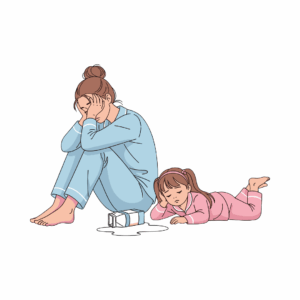
The light is off, the blanket is pulled up, and your child is lying very still, staring at the ceiling.
Then it starts.
“Mum, what if there is a fire?”
You tell her the house is safe, the alarms work, and you are right next door.
She is quiet for ten seconds.
“What if you forget to pick me up tomorrow?”
You tell her you never forget, and you will be at the gate, same as always.
Ten more seconds of quiet.
“What if the dog next door bites me?”
You answer that one too, and then another one comes, and another.
Each answer works for a moment, and then the worry finds a new shape and comes back.
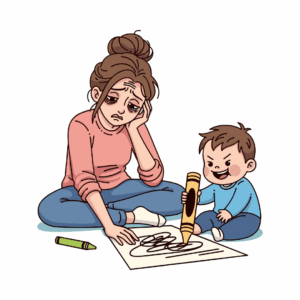
By the third question, you are tired, and by the fifth, you are frustrated, and underneath the frustration is a worry of your own.
What if she never stops worrying?
What if answering the questions is not helping at all?
That second question is the right one, and this guide answers it.
Worry Is an Alarm, Not a Fact
This is the reframe, and it turns the whole problem around.
Worry is an alarm, not a fact.
Your child’s brain has a smoke alarm in it, just like yours does.
Its job is to spot danger and shout.
In some children, that alarm is set too sensitive.
It rings at shadows, at small changes, at things that might happen one day, and your child hears it as loudly as a real fire.
That is why answering the worry does not work for long.
You are arguing with the alarm, and the alarm does not argue back.
It just rings again, at the next thing.
The work is not to switch the alarm off.
The work is to teach your child to check it.
To pause, look around, and ask a simple question: is there really a fire, or is it only smoke?
That checking is a skill, and like any skill, it grows with practice.
It grows fastest when you practise it together, in small moments, not only when the worry is already loud.
That is the whole thesis of this guide, and it has a name: the worry alarm.
Once you see the worry as an alarm, your job becomes clear.
You are not the firefighter, running to every shout.
You are the teacher, standing next to your child while they learn to check.
And a child who can check their own alarm is a child who can sleep at night.
1. Worry Has a Shape
Watch for one week, and you will see the pattern.
Worry is rarely random.
It has a shape, and a time, and a favourite place.
For many children, it is bedtime.
The house goes quiet, the day lets go, and the worries line up like planes waiting to land.
For others, it is the morning, when the day ahead is still unknown.
Or the car, on the way to school, when there is nothing to do but think.
Notice the shape before you try to fix it.
Write it down if it helps, just for you.
“Mondays, before school. Bedtime, every night. The car, on the way to nursery.”
That list is your map.
It tells you where the worry lives, and that is where your help goes first.
A worry you can see coming is a worry you can prepare for.
Ten minutes before bedtime, you can sit down and say the words first.
“Sometimes the worries come at bedtime. If one comes tonight, we will check it together.”
That sentence, said before the worry arrives, does more than ten answers given after it.
Because your child is no longer alone with the alarm.
They know you heard it coming, and you are already there.
2. The Body Speaks First
Children rarely say “I am worried.”
They say their tummy hurts.
They say they cannot sleep, or they do not want to go, or they feel sick on Sunday night.
That is the body speaking first.
Worry lives in the body before it finds words.
A tight tummy, a racing heart, restless legs, a headache that arrives at the same time every week.
Those are not excuses.
They are signals, and they deserve to be believed.
The mistake is to argue with the signal.
“You are fine. Your tummy is fine. You were fine yesterday.”
Your child hears that their body is lying, and they stop telling you about it.
Try believing it out loud instead.
“Your tummy hurts. That happens when the worry is loud. Let us sit together for a minute.”
That sentence does not fix the tummy.
It fixes the loneliness around it.
And a child who feels believed will tell you the worry itself, sooner or later, in their own words.
The body is honest, even when the words are not ready yet.
Worry often shows up as behaviour first, which is why it helps to know how children act when they do not feel safe emotionally.
Once you see the signal, you can answer the worry behind it.
3. Name It to Tame It
A worry with no name feels enormous.
It fills the whole room, and your child cannot tell where it ends and they begin.
Give it a name, and it shrinks.
Not a scary name, and not a silly one.
A plain, small name your child chooses.
“The Worry Bug.”
“Mr Grumbles.”
“The What-If Voice.”
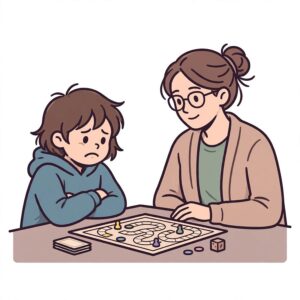
Once it has a name, you can talk about it like a visitor, not like a verdict.
“Is the Worry Bug here again?”
“What is he saying tonight?”
Your child can answer that question, because it is about the bug, not about them.
That distance is the whole trick.
A child who says “the Worry Bug thinks I will fail” is already one step away from the fear.
A child who says “I will fail” is standing inside it.
One step of distance is often all a small child needs to start thinking clearly.
You can draw it together, if your child likes drawing.
A small bug, with too many legs, on a piece of paper.
Then the bug lives on the fridge, where you can both see it, and it stops living only in your child’s head.
A named worry is a worry you can argue with.
4. The Three-Question Check
Here is the system, and it has numbers you can copy: the three-question check.
When a worry arrives, ask three questions, in the same order, every time.
Question one: is it happening right now?
Most worries are about later, or tomorrow, or one day.
Right now, in this room, the house is quiet, and you are safe.
Question two: how likely is the worst part?
Not possible, but likely.
A fire is possible, and very unlikely, and the alarms work.
That word, likely, is doing the heavy work.
It teaches your child to measure a fear instead of just feeling it.
Question three: what is one small thing we can do?
Not ten things, and not a perfect plan.
One small thing.
“We can check the alarm together.”
“We can pack your bag tonight, so the morning is ready.”
The three questions do not argue with the worry.
They walk around it, look at it from three sides, and let your child see it clearly.
Use the same three questions every time.
Children learn a pattern by hearing it repeated, and one day your child will ask them of herself, without you.
That is the check working.
5. Small Brave Steps
The mistake most parents make is to remove the scary thing.
Your child is scared of the party, so you skip the party.
Scared of the swimming lesson, so you cancel the lesson.
It feels kind, and it works for a day.
But the worry learns something from it.
It learns that the party was dangerous, because you treated it as dangerous.
And next time, the worry is louder.
The answer is not to force the scary thing either.
Forcing a frightened child into a party is not brave, it is frightening.
A child who refuses to go may look defiant.
But a refusal that comes from worry is not defiance, and it needs comfort, not discipline.
The answer is a small brave step.
Go to the party for ten minutes.
Just ten, and then you can go home.
Most children stay longer, once they are there.
If they do not, ten minutes is still a win, because they went.
Next time, try fifteen.
Then twenty.
Small steps work because each one gives your child proof.
Proof that the party was loud but fine, that the lesson was hard but survivable, that the worry was wrong.
Proof beats reassurance, every time.
And proof is something your child collects herself, one small step at a time.
You are not pushing your child into fear.
You are walking beside them through it, at a pace they can manage.
6. Bedtime and the Worry Box
Bedtime is where the worry box lives.
It is a small box, or a jar, or a drawer, and it has one job.
It holds the worries until morning.
Before bed, sit together for five minutes.
Your child tells you the worries of the day, or draws them, or whispers them into the box.
One worry, or three, or ten.
Then you close the lid together.
“The worries stay in the box tonight. They will be here in the morning if we need them.”
That sentence is doing something important.
It is not pretending the worries are gone.
It is giving them a place to wait.
Children who carry worries to bed carry them all night.
Children who put them in a box can sleep, because the box is doing the holding for them.
If a worry comes back in the dark, your child can whisper it to the box, or tell you in the morning.
Either way, the night is for sleeping.
The box is the only tool in this guide with a name, and it earns it.
Five minutes, one box, and a lid that closes.
When the worry is about the dark itself, the fear of the dark scripts give you words for bedtime.
When Comfort Makes It Worse
Some kinds of comfort make worry worse, and they are the ones that feel most natural.
It helps to name them, because most parents use them, and naming them is not a reason for guilt.
Do not answer the same worry ten times a night.
The first answer helps.
The tenth teaches your child that the worry needs constant checking, and the checking becomes the habit.
Do not say “there is nothing to worry about.”
Your child knows there is something, because they feel it.
Dismissing the feeling does not remove it.
It teaches your child to hide it.
Do not let worry cancel everything.
A child who never goes to parties, never tries the lesson, never sleeps away from home, is a child whose world is shrinking.
Shrinking the world feels safe, and it makes the worry bigger.
Some of our own habits can trigger anxiety without meaning to, and it is worth knowing which ones.
And here is the doubt that keeps parents up at night.
“But won’t talking about worries make them worse?”
No.
Talking about a worry in daylight, with a calm adult, makes it smaller.
What makes it worse is silence, and avoidance, and a worry that is never named.
A named worry is a worry your child can check, and a checked worry is one that loses its power.
If the worry is constant, if it stops your child doing everyday things like school, or play, or sleep, for weeks at a time, or if the tummy aches never stop, that is the moment to talk to your pediatrician.
Not because something is wrong, but because it helps to have someone else look too.
When the Worry Comes Tonight
When the worry comes tonight, at bedtime, hold four steps in mind.
First, listen.
Let your child say the worry, all of it, without interrupting.
Second, name it.
“That is the Worry Bug talking.”
Third, check it together.
“Is it happening right now? How likely is the worst part? What is one small thing we can do?”
Fourth, put it in the box.
“The worry stays in the box tonight.”
That is all of it.
Listen, name, check, box.
No new ideas, nothing to memorise, just four steps you can hold in your head while the house goes quiet.
If the worry comes back ten minutes later, do the same four steps again.
Repetition is not failure. It is practice.
Each time you check together, your child learns the shape of the check.
One day, they will do it alone, in their own head, without you.
Tonight, Five Minutes Before Bed
You do not need a new routine, a new book, or a perfect week.
You need five minutes before bed, and a box.
Tonight, find a small box and put it beside the bed.
Before the light goes off, sit with your child and ask one question.
“What worries are we putting in the box tonight?”
Then close the lid together.
That is the whole start.
Five minutes, one box, and a child who knows the worries have a place to wait.
There will be nights when the box does not work, and the worry comes back at midnight.
That is not a failure.
That is a child learning, slowly, to check an alarm that rings too easily.
And one night soon, you will sit down for the five minutes and your child will say something new.
“No worries tonight.”
Morning worry often wears the shape of separation anxiety at drop-off, and the same check works there too.
That is the alarm learning to ring only when it should.