The car door sticks a little in the cold.
You tug it twice before it opens.
Your toddler is already working the chest clip with one hand.
The other hand holds a cracker, half eaten, crumbs on the seat.
Halfway to the door, the small hand finds your leg and stays there.
Not holding your hand.
Holding your leg, fingers curled into the fabric of your jeans.
Inside, the room smells like paint and warm milk.
A teacher crouches near the cubbies, waving, already reaching for a puzzle.
Your toddler does not look at any of it.
Your toddler looks at you.
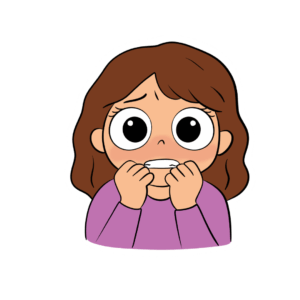
Then the crying starts, loud and sudden, as if a switch flipped.
Some mornings the battle starts at home, with shoes that will not go on.
Some mornings the drop-off looks fine, almost easy, and then pickup falls apart instead.
The Goodbye Starts Before the Door
A good goodbye rarely begins at the door.
It begins the night before, in small, ordinary ways.
Pack the bag together.
Let your child choose the shirt for tomorrow.
In the morning, say the plan out loud, early, in plain words.
“After breakfast, we drive to school.”
“We hang up your coat.”
“I say goodbye, and then I go to work.”
Say it while you are sitting down, face to face, with nothing in your hands.
Children listen with their whole body at this age.
They notice a tight jaw before they notice a sentence.
Build One Goodbye and Keep It
Children do best with a goodbye they can predict.
Not a new one each day.
The same one, in the same order, every time.
Build it together, on a calm evening, not in the doorway.
Some children want a hug, a high five, and a wave through the window.
Some want two squeezes and a silly face.
Let them choose the shape of it.
Then keep it exactly that shape.
Predictability is what makes it feel safe.
Try it at home first, in the living room, with no coats and no clock.
“Let us practice our goodbye.”
“Hug, high five, wave.”
Practice When Nothing Is at Stake
Tiny separations, practiced at home, make the bigger one easier.
Not big tests.
Tiny ones.
Step into the kitchen while they play with blocks in the next room.
Call out, in a light voice, so they can hear you nearby.
“I am in the kitchen.”
“I will be right back.”
Then come back, just as you said you would.
That return matters more than the leaving.
Coming back, again and again, is what teaches them that leaving is not disappearing.
Tell Them What Happens While You Are Gone
A blank day is harder to wait through than a named one.
When you do not know what comes next, every minute stretches.
So name the day, in pieces they can picture.
“While you are at school, you will paint.”
“You will eat lunch with your friend.”
“You will play outside after snack.”
“Then I will come and get you.”
Use the real names.
Use the real parts of their day.
A teacher, a friend, a favorite corner, a song they sing at circle time.
Those details turn a long, empty stretch into a row of small, known things.
Short Means Short
This is the hardest part.
Your child is crying.
Your instinct is to stay until the crying stops.
Staying longer does not make the crying stop sooner.
It stretches it out.
Every extra moment at the door gives the goodbye a new beginning.
So keep it to one goodbye.
One hug, or one high five, or whatever your ritual is.
Then say your line, once.
“I love you. I will see you after snack time.”
Then go.
Be the Calmest Person at the Door
Your child is watching your face more than the room.
If your face says panic, the room feels unsafe.
If your face says steady, the room has a chance to feel steady too.
That does not mean pasting on a bright smile.
Children can spot a forced smile from across the room.
It means slowing down your own body before you walk in.
Drop your shoulders.
Loosen your hands.
Take one slow breath in the car before you unbuckle them.
Speak lower and slower than you feel.
“We are here. Time for our goodbye.”
The Traps That Stretch the Goodbye
A few moves feel kind in the moment and make the next morning harder.
Sneaking out while they are distracted is one of them.
It works once, because they do not see you go.
Then they spend the next morning watching the door, waiting to catch you leaving.
They stop playing, because playing is when you disappear.
Coming back for one more hug is another.
It feels loving.
It teaches them that crying can pull you back through the door.
Bribing with a treat does the same thing, in a different shape.
“If you stop crying, we will get ice cream after school.”
Now the goodbye is a trade, not a ritual.
Lecturing about the rules in the moment does not land either.
A child who is already crying cannot hear a rule.
Lingering to make sure they calm down is the last trap.
Standing by the window, peeking in, waiting for the tears to stop.
Your child can feel you there, just out of reach.
Leave, fully, once, and let the teacher take it from there.
When Pickup Falls Apart Too
Some children hold it together all day and fall apart at pickup.
They see you, and the whole day comes out at once.
They cry, they cling, they refuse to walk to the car.
That can feel like a sign that the day went badly.
It is often the opposite.
They held their feelings in while you were gone, because you were the person they felt safest letting them out with.
You are the safe place, so you get the big feelings.
Do not try to fix it in the parking lot.
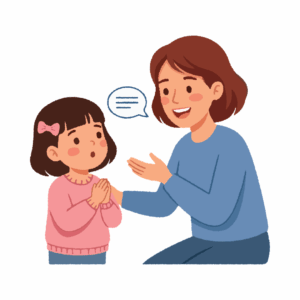
Kneel down, open your arms, and let them come to you.
“You missed me. I missed you too. I am here now.”
Let the reunion be slow.
Own the Reunion Like a Ritual Too
The goodbye gets all the attention.
The reunion deserves some of it.
Make pickup feel as known as drop-off.
Same spot, same first words, same small habit.
Maybe you always kneel, so you are at their height.
Maybe you always say the same line first.
“There you are.”
Maybe you always let them carry their own backpack to the car, even when it drags on the ground.
Small, repeated things add up.
They tell your child, without a speech, that coming back is part of the plan, not a surprise.
On the way home, name one thing from their day, if they shared one.
“You painted a red house today.”
Then let the evening be ordinary.
Snack, bath, a book, bed.
Same hug, same line, same leaving, same return.