It is bedtime and your daughter is not sleepy.
She is lying in the dark, staring at the ceiling, and then she says it.
“Where did Grandma go?”
Grandma died three days ago. You told her at the time, in the kitchen, with the words you had ready.
But now it is dark and quiet, and the question has come back.
You feel your throat close. Every sentence you can think of sounds wrong.
She is waiting. And in that silence you feel the weight of the whole thing.
This is the conversation no parent wants to have, and every parent will have.
A grandparent, a pet, a neighbour, someone small and loved who is suddenly gone.
You cannot protect your child from death.
You can only protect them from facing it alone.
This guide is for that bedtime question.
It will show you the plain words to use, what not to say, and how to stay steady while your child grieves in their own way.
Honest Words Are Kinder Than Soft Ones
Here is the reframe that changes everything: children fill silence with stories scarier than the truth.
When you say nothing, or you say something vague, your child does not stop wondering.
And what they imagine is almost always worse than what actually happened.
Soft words feel kind in the moment.
“Grandma went to sleep.” “We lost the dog.” “Grandpa went away.”
But each of those soft words plants a new fear.
A child who hears “went to sleep” may become afraid of bedtime.
A child who hears “we lost him” may think he can be found.
A child who hears “went away” may wait by the door for him to come back.
Plain words do not do that.
Plain words are smaller than the fear, and that is why they work.
Think of it as a system you can copy: the Three Sentences.
Three sentences, in order, said the same way every time.
What happened, in plain words.
What it means now.
What stays the same.
“Grandma died. Her body stopped working and she cannot come back. We still love her, and we are still a family.”
Three sentences.
That is the whole of it: three sentences.
Say them the same way every time she asks, because repetition is what makes them feel true.
1. The Question at Bedtime
It almost always comes at bedtime. Not because your child is trying to delay sleep, but because the dark is when the day catches up with them.
All day they were busy, distracted, held by other people.
At night, the noise stops, and the question arrives.
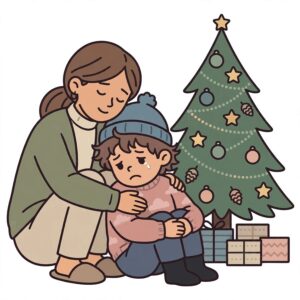
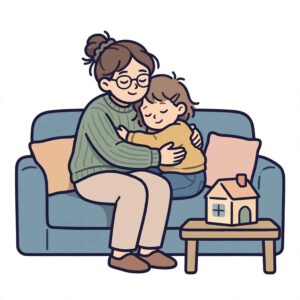
Do not rush it. Sit down, get close, and answer in the same plain words you used the first time.
“Grandma died. Her body stopped working. She cannot come back.”
Then stop. Do not add explanations.
Just the three sentences, and then silence, so she can ask the next thing.
She might ask, “Will you die too?”
That question is not about you. It is about her. She is asking whether she is safe, and whether the people she loves will disappear.
Answer it directly. “I am healthy and I am here. I am not going anywhere. I will take care of you.”
That is what she needs to hear.
A promise about right now, which you can.
You can say, “You can ask me about Grandma any time. Even in the middle of the night.”
That sentence keeps the door open. Grief is not a conversation you have once.
It is a door you leave open, so the questions can come back when they are ready.
2. The Pet Who Dies First
For many children, the first death is not a person.
It is a pet. A goldfish floating at the top of the tank.
A hamster who does not wake up.
An old dog who goes to the vet and does not come home.
“We will get another one.”
“It was only a hamster.”
To your child, it was not only anything.
It was theirs. They fed it, named it, talked to it.
Its death is real grief, in a small body, and it deserves the same three sentences.
“The hamster died. His body stopped working and he cannot come back. We can remember him, and we are still a family.”
Let them bury it, if they want to.
Rituals help children understand what words cannot.
They make the ending real, and they make it shared.
Do not replace the pet the same day.
A new hamster the next morning tells your child that the old one did not matter.
Wait. Let the empty cage sit there for a while.
Let them miss it. Missing is part of loving.
You can say, “It is sad that he is gone. I am sad too.”
That sentence gives them permission to be sad.
Children need that permission more than they need a new pet.
For more on the feelings children hide, see How Children Act When They Don’t Feel Safe Emotionally.
3. “Did I Cause It?”
Sooner or later, your child will ask a question that stops your heart.
“Did Grandma die because I was naughty?”
Or they will not ask it at all.
They will just think it, quietly, for weeks.
Children think in a way adults forget about.
They believe their thoughts and their behaviour can cause big things.
If they wished Grandma would stop telling them what to do, and then Grandma died, the two things connect in their mind.
It is how young minds work. It is called magical thinking, and every child does it.
Your job is to break the connection, clearly and directly.
“Nothing you did caused this. Nothing you thought caused this. Grandma was sick, and her body stopped working. That is the whole reason.”
Say it more than once. Guilt does not leave after one sentence.
Watch for the guilt that hides as behaviour.
A child who suddenly becomes very good, very quiet, very helpful, may be trying to make up for something they think they did.
A child who acts out may be testing whether they can still be loved after being bad.
Both need the same sentence. “It was not your fault.”
Say it plainly, and say it often.
It is the sentence that sets them free.
4. The Child Who Laughs the Next Day
Here is the part that confuses parents most.
The day after the funeral, your child is laughing.
Playing with friends, asking for ice cream, back to normal as if nothing happened.
You wonder if they understood at all.
They did. Children grieve in bursts, not in a steady stream.
Here is a distinction that helps: grieving and forgetting are not the same thing.
An adult grieves by carrying the sadness all day.
A child grieves by dipping into it and out again.
Five minutes of tears, then an hour of play, then five more minutes of tears at bedtime.
The play is not a sign that they have forgotten.
It is how they rest between the hard parts.
Think of it like wading into cold water.
They step in, feel how cold it is, step back out to warm up, and then step in again.
Each time, they stay in a little longer.
Do not interrupt the play to check on the grief.
“Are you sad about Grandma?” asked in the middle of a game will only confuse them.
Let the play be play. The sadness will come back on its own, usually at bedtime, usually as a question.
When it comes, answer it the same way.
The three sentences, the same words, the same calm voice.
You can say, “It is okay to play and laugh. Grandma would have liked that.”
That sentence tells them the laughter is not a betrayal.
It is part of grieving, too.
5. Should They Go to the Funeral?
Every parent asks this one, and there is no single right answer.
But there is a good way to decide.
Ask yourself two questions.
Will someone be there just for them, a person whose only job is to look after your child?
And does your child want to go, or are you deciding for them?
If the answer to both is yes, take them.
Funerals help children understand that the death is real.
They see the coffin, they see people crying, they see the goodbye happening.
But it is less frightening than being left at home imagining it.
Prepare them first, in plain words.
“We are going to say goodbye to Grandma. There will be a big box, and people will be crying. You can sit with me the whole time, and we can leave whenever you want.”
If they do not want to go, do not force it.
Give them their own goodbye instead.
A drawing, a letter, a flower on the grave the next day.
Their own ritual, in their own time.
Either way, the goodbye matters.
Children who do not get to say goodbye sometimes wait for the person to come back.
A goodbye, even a small one, tells them the story has an ending.
6. The Questions That Come Back Months Later
Do not be surprised when the questions return in three months, or six, or a year.
“Where is Grandma now?” “Does she miss us?” “Will I see her again?”
These are not signs that your child is stuck.
They are signs that your child is growing.
Each time they ask, they understand a little more, and the question changes shape.
A four year old asks where Grandma went.
A six year old asks what happens after someone dies.
A nine year old asks whether it will happen to them.
Same grief, new understanding, new question.
Answer each version the same way.
Plain words, honest words, and the three sentences.
What happened, what it means now, what stays the same.
If they ask about heaven, or an afterlife, answer with what your family believes.
Simply, and without pretending to be certain about things nobody is certain about.
“Some people believe Grandma is in heaven, watching over us. I believe she is in our hearts, in the stories we tell about her.”
What matters is that the answer is calm, honest, and the same every time.
You can say, “You can ask me about Grandma whenever you want. Even next year.”
That sentence tells them the door stays open.
Grief does not end. For more on helping children through hard feelings, see How to Raise Resilient Children.
What Not to Say, Even When It Feels Kinder
The most common instinct is to soften the truth with a story.
“Grandma went to sleep.” “We lost the dog.” “Grandpa went on a long trip.”
Each one creates a new fear.
A child who hears “went to sleep” may be afraid to sleep.
A child who hears “we lost him” may think he is somewhere, waiting to be found.
A child who hears “went away” may wait by the door.
Replace the soft story with the plain one.
“Grandma died. Her body stopped working and she cannot come back.”
Another instinct is to hide your own tears.
You cry in the bathroom, or in the car, and come back with a smile.
Your child sees the red eyes anyway.
They just do not know what they mean.
Let them see you cry, once, and tell them what it is.
“I am crying because I miss Grandma. Crying is how our bodies let the sad out.”
That sentence teaches them more about grief than any explanation.
Now the objection every parent raises: but will telling them the truth not scare them more?
Here is the truth underneath it.
What scares a child is not knowing.
The unknown is always bigger than the truth, because the unknown has no edges.
The truth has edges.
It happened, it is sad, and we are still here.
One more boundary to name plainly: if your child stops eating or sleeping for weeks, if they stop playing entirely, or if they talk about wanting to die, talk to your doctor.
Most grief moves in bursts and softens over time.
Grief that stops a child from living is a different question, and it deserves a professional answer.
For more on the worries children carry after a loss, see 9 Ways Parents Can Accidentally Trigger Anxiety in Kids.
In the Moment: The Three Sentences
When the question comes, whether it is bedtime or the car or the supermarket, hold this sequence in mind.
Three steps, nothing new, just this guide’s pieces in order.
Step one: stop and get close.
Get down low, catch their eye, and say, “I am here. Ask me anything.”
Step two: say the three sentences.
“Grandma died. Her body stopped working and she cannot come back. We still love her, and we are still a family.”
Step three: wait, and let them ask the next thing.
Do not fill the silence. Let them lead. Three steps: close, plain words, wait.
Do not add a story on top.
The three sentences are enough.
They are enough because they are true, and because you will say them the same way every time.
You can hold the sequence in your head even when your own throat is closing and the tears are coming.
The Door Stays Open
Your child will be all right.
Not because the sadness goes away, but because they will learn to carry it.
That is what grief is, in the end.
Not forgetting, but carrying. Try one thing tonight.
At bedtime, say the three sentences once more, even if nobody asks.
“Grandma died. Her body stopped working and she cannot come back. We still love her, and we are still a family.”
Then say, “You can ask me about her any time.”
That is the whole plan. Three sentences, one open door.
The questions will come back, and each time they do, you will be ready.
Not with perfect words. With plain ones, said the same way, in a calm voice, by a parent who stayed.
That is what your child will remember.
Not the day Grandma died. The nights afterwards, when you were there, and the door was open.