It is 7:10. One sock is on. One sock is missing.
Breakfast is half eaten. The shoes are by the door, but the feet are not in them.
You can hear the clock in your head, even though no one is saying a word.
The morning is not falling apart because your child is difficult.
It is falling apart because too many choices are happening at once, too fast.
Say this before the rush starts
“First breakfast, then teeth, then shoes.”
“Your chart is waiting. What comes next?”
“Two more bites, then we wash hands.”
“Shoes on, then we open the door.”
Keep your voice low and your words short. Repeat the same order every day.
A toddler can follow a pattern they know. A new plan each morning is hard to follow.
Start the morning the night before
The calmest mornings begin while the house is still quiet at night.
Lay out clothes where your child can see them. Shirt, pants, socks, all in one pile.
Put shoes by the door, toes pointing out, ready to step into.
Pack the bag together. Water bottle, snack, spare clothes, book for the ride.
Set the table for breakfast. Bowl, spoon, cup, all waiting in the morning light.
Check the weather once, then choose the jacket or hat for tomorrow.
When the night work is done, say it out loud. “Tomorrow is ready.”
That one line tells your child the morning has already been thought through.
It also tells you. You will not be hunting for socks while the clock runs.
Make a chart your child can read
A visual chart turns a morning of nagging into a morning of pointing.
Use pictures, not words. A photo of a bowl. A photo of a toothbrush. A photo of shoes.
Keep it to five steps at most. Breakfast. Wash. Dress. Shoes. Bag.
Put the chart at your child’s eye level, near where the morning happens.
Let your child move a peg, flip a card, or stick a star after each step.
The small action matters. It makes progress visible to a small person.
Do not add new steps in the middle of a busy week. Keep the same pictures.
If a step keeps failing, change the picture or move the step, not the child.
A chart works when it stays the same long enough to become a habit.
The flow, in order
Wake with light and a soft voice, not a list of tasks.
“Good morning. Time to stretch.” Open the curtain and let the day in.
Breakfast comes first, while energy is still fresh.
Sit down together for a few minutes. Eat, drink, and breathe before moving on.
After breakfast, wash hands and face. Keep a step stool and towel within reach.
Teeth come next, while you are already at the sink.
Then dress. The clothes are already laid out, so there is nothing to hunt for.
Shoes go on by the door. One shoe, then the other. No running back for a bag.
Bag last. Your child carries it if they can. It is the signal that you are leaving.
The same order, every day, is what makes it feel easy after a while.
When the morning slips
Some mornings will still slip, even with a chart on the wall.
Your child may refuse breakfast. Offer a banana for the walk instead.
Your child may refuse the shirt you laid out. Offer the other shirt, not a new hunt.
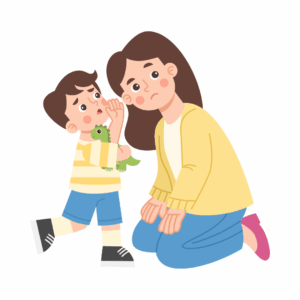
Your child may sit on the floor and refuse shoes. Sit beside them for a minute.
“Shoes are hard today. I will help with the first one.”
Help with one shoe. Let them try the second. Then move on.
If you are running late, cut a step, not a connection.
Skip the extra book. Skip the long goodbye at the door. Keep the hug.
A rushed morning can still end kindly. The last minute sets the tone for the day.
Set the wake time, not just the leave time
Many mornings go wrong before breakfast begins.
The wake time was too late, so every step after it felt rushed.
Work backwards from the time you need to leave.
Allow time for breakfast, washing, dressing, shoes, and a slow start.
Then set the wake time to match that, not the other way around.
A wake time ten minutes earlier can change the whole mood.
It gives room for a spilled drink, a lost sock, or a slow morning.
Keep the wake time steady on weekends too, as much as you can.
A steady wake time helps the body know when the day begins.
If your child wakes early, use that time for a quiet book, not a screen.
A calm start is worth more than a fast start.
Pack a morning basket
A basket by the door can hold the small things that slow you down.
Put the water bottle in it. Put the snack in it. Put the spare socks in it.
Put a small book or a soft toy in it for the ride.
Let your child check the basket each night. “Bottle, snack, socks, book.”
Checking is a game. It also stops the morning hunt for missing things.
If something is missing, you find it at night, when you have time.
Keep the basket in the same place. A basket that moves is a basket that gets lost.
When the basket is ready, the morning has one less thing to think about.
Your child can carry the basket to the door. That is the last step.
What makes it work over time
Do the same steps at the same time for a few weeks before you judge it.
A routine is not a test your child passes or fails in one day.
It is a path worn smooth by walking it again and again.
Notice the small wins out loud. “You did breakfast and teeth without a reminder.”
That kind of praise points to the effort, not to being good or bad.
Keep bedtime steady too. A tired child has less patience for a morning list.
Keep your own morning simple. Fewer tasks for you means fewer rushed words for them.
When the chart works, leave it alone. Do not keep improving a system that is working.
Tomorrow will come fast. Tonight, lay out the clothes, set the table, and rest.