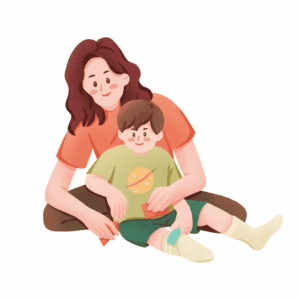
The shirt is on the bed. Your toddler is under the bed.
One arm is in a sleeve. The other arm is nowhere to be found.
You are holding the pants. They are holding a toy car.
Nothing about this moment is about a shirt.
It is about a small person who wants a say in what happens to their own body.
Try these words first
“You choose. Red shirt or blue shirt?”
“Arms up like a rocket. Ready, blast off.”
“This leg first, then that leg. You are doing it.”
“Pants on, then we pick a sticker.”
“I will hold the shirt. You push your head through.”
Offer two choices you can live with. Then let the choice stand.
Short, playful words work better than a long reason in the middle of a struggle.
Why dressing can feel so big
Getting dressed asks a lot from a small body.
Arms go up. Head goes through a hole. Legs find narrow tubes.
It happens while standing still, which is the hardest part for a toddler.
It also happens at a moment when the day is already pulling them somewhere else.
A child who refuses is often saying, “I want some control here.”
That is not defiance for its own sake. It is a wish to be part of the decision.
When you give a little control, the struggle often gets smaller.
Control does not mean letting them wear a swimsuit in the rain.
It means letting them pick between two warm, dry options.
Make dressing a game they can win
Turn the shirt into a tunnel. “Drive the car through the tunnel.”
Count the buttons as you go. One, two, three, done.
Let them dress a teddy first. The teddy can wear the socks.
Race the song, not the clock. Put on a short song and dress before it ends.
Stand in front of a mirror. Let them watch their own arms find the sleeves.
Keep the game short. One round is enough.
If the game stops working, drop it. A tired game becomes another argument.
Save the game for the days when you have a little time to play it.
On rushed days, use the choices and the calm voice, and keep moving.
Teeth and bath use the same pattern
Teeth feel like dressing. Something is happening to their body, on your schedule.
Offer a choice there too. “Blue toothbrush or green toothbrush?”
“You brush first, then I help with the back teeth.”
Let them hold the toothbrush while you count to ten out loud.
Ten is short enough to finish. It also gives them a clear end.
Bath time works the same way. Choice, then a clear next step.
“Bubbles or no bubbles tonight?” “You wash your toes, I wash your hair.”
Keep the water warm, the towel close, and the words simple.
When teeth and bath follow the same pattern as dressing, life gets easier.
Your child starts to know the rhythm: a choice, a short task, then done.
What to avoid saying
Avoid turning clothes into a test of being good.
“Good children get dressed fast” puts the child on trial for a shirt.
Avoid threats that you cannot keep. They teach fear, not dressing.
Avoid a long lecture about being late. A toddler cannot hold that idea.
Avoid dressing a child who is upset while they are still crying hard.
Pause first. Sit close. Wait for the breathing to slow.
“I am here. We will get dressed when you are ready.” Then wait a little.
A calm start is faster than a forced start that falls apart halfway through.
When clothes hurt or itch
Sometimes the refusal is not about choice at all.
A tag can scratch. A seam can rub. A waistband can feel too tight.
Your child may not have the words for that yet.
They may only know that the shirt feels wrong on their skin.
Check the clothes with your hands. Feel for a rough tag or a stiff seam.
Cut the tag out if you can. Turn the sock inside out if the seam hurts.
Try a softer fabric for a few days and see what changes.
Try a looser waistband. Try shoes with no laces to fuss over.
If one shirt always causes a battle, put it away for a while.
It is not worth a morning fight every day.
Comfort is not spoiling. A comfortable child can get dressed faster.
Practice on a calm day
Do not try a new dressing idea on a rushed morning.
Try it on a slow afternoon, when no one needs to leave.
Put the clothes on a teddy. Let your child dress the teddy, then dress themselves.
Make it slow and silly. The teddy can wear the shirt backwards first.
Laugh together. Then fix the shirt and try again.
A calm practice gives your child a memory of dressing going well.
That memory helps on the next busy morning.
Keep the practice short. Five minutes is enough.
End with the clothes off again, so there is no pressure to stay dressed.
The point is the practice, not the outfit.
When nothing works today
Some days, the choices do not help. The game does not help. The calm voice does not help.
Your child is tired, or unwell, or simply done with the morning.
On those days, dress them with as little fuss as you can.
Keep your hands gentle and your words few.
“Arms up. One leg. Other leg. All done.”
Do not turn a hard day into a lesson about dressing.
The lesson can wait for a day when your child has room to learn it.
Afterwards, move on to something kind. A cuddle, a drink, a story in the car.
A hard morning does not undo the good mornings before it.
Tomorrow is a new chance to try the choices again.
Build a small dressing spot
Pick one place for dressing and keep it the same.
A low basket with two outfits. Socks in a small box. Shoes in a pair by the wall.
Let your child reach the basket. Let them pull out the shirt themselves.
That small reach is a choice. It is also the start of the task.
Keep the room warm and the light soft in the morning.
Put the toy car on the shelf while dressing happens. It will still be there after.
When the clothes are on, name the win plainly.
“You picked the blue shirt and pushed your arms through.”
That sentence tells them what they did, step by step.
Tomorrow, the same spot, the same basket, and the same two choices will be waiting.