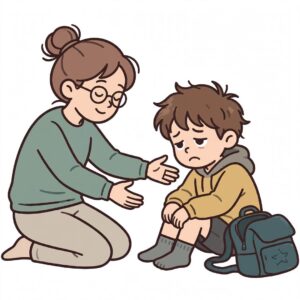
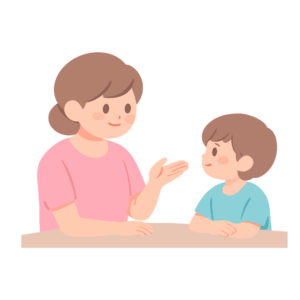
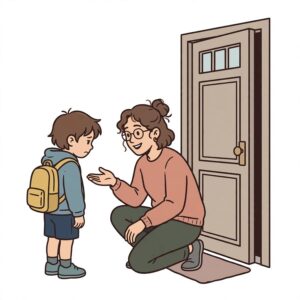
You are standing in the kitchen, trying to make lunch, and your child is at your feet.
“Play with me.”
You point at the blocks. They stack two, knock them down, and come back.
“Play with me.”
You hand them crayons. They draw one wobbly sun, and then they are back at your elbow, tugging your sleeve.
“Play with me.”
You love them, and you are also tired, and the lunch is not making itself, and a small voice in your head says that a good parent would stop everything and play, right now, for as long as they ask.
So you sit down, and you play, and the lunch waits, and twenty minutes later your child looks up and says the same thing again.
It feels like the need has no bottom.
It feels like if you stop playing, even for five minutes, you are failing them.
And underneath that, there is a quieter worry, the one you do not say out loud: what if my child cannot play alone because I have done something wrong?
That question is the one this guide answers.
Not with a guilt trip, and not with a trick.
With a simple truth and a small plan you can start tonight.
Boredom Is the Doorway, Not the Enemy
Here is the reframe, and it changes everything after it: boredom is the doorway to play, not the enemy of it.
Children do not learn to play alone by being left alone.
They learn it the way they learn anything else, in small steps, with you nearby, the way a child learns to walk by holding a hand and then letting go for two steps, then three.
Independent play is a muscle, and like any muscle, it grows when it is used a little at a time, not when it is suddenly asked to lift the whole weight.
Think about what happens when a child is always entertained.
Every minute has a plan, a screen, a song, an adult with an idea.
The child never meets a blank stretch of time, so they never discover what lives on the other side of it.
And what lives on the other side is the good stuff: the block tower that becomes a castle, the dolls who start talking to each other, the cardboard box that turns into a shop.
None of that happens in the first minute.
It happens in the third or fourth minute, after the boredom has had a moment to do its work.
Your job, then, is not to entertain your child all day.
Your job is to make a little space, stay close enough to feel safe, and let the boredom do what it is for.
That is the whole thesis of this guide, and it has a name: the boredom doorway.
When you stop fearing boredom, you stop fearing the words “play with me,” because you know they are not a verdict on your parenting.
They are a child asking for help to get through a door they have not yet learned to open alone.
1. Start Smaller Than You Think
Most parents start too big.
They clear a whole afternoon, lay out every toy, and announce that the child will now play alone for an hour.
The child lasts four minutes, comes looking for them, and both of them conclude that independent play does not work in this house.
It does work.
It just works at five minutes, not sixty.
Here is the system, and it has numbers you can copy: the 5-10-15 ladder.
Day one, five minutes of solo play.
Not an hour, not half an hour.
Five minutes, with you nearby, while you do something of your own.
Every three days, add five minutes.
By the end of week two, you are at fifteen minutes.
On the first day, set it up plainly.
“I am going to finish the washing up. You are going to build with the blocks, and I will be right here.”
When the five minutes are done, go to them.
Notice what they made.
“You built a tower and a garage. That is a lot for five minutes.”
The ladder works because each rung feels easy, and easy is what makes a child willing to climb again tomorrow.
2. Set Up the Invitation, Not the Instruction
“Go and play” is an instruction, and instructions need a starting point a child does not yet have.
A child told to go and play looks at a room full of toys and sees a hundred choices and no first step.
So they come back to you, because you are the easiest first step.
The fix is a small tool with a name: the play invitation.
A play invitation is two or three things, laid out before your child arrives, half started, waiting for them.
The animals standing in a row with the fence beside them.
The dolls sitting at a tiny table with two empty cups.
The blocks stacked in a low wall with a toy car parked next to it.
Say one sentence, and then step back.
“I left the animals and the fence out. I wonder what they will do today.”
That sentence is doing three jobs at once.
It tells your child what is there, it suggests a story without ordering one, and it leaves a gap their imagination can fill.
Half started is the sweet spot.
Enough to begin, little enough to need them.
3. Stay Nearby, Not Involved
Here is the part most parents get backwards.
They think teaching a child to play alone means leaving the room.
It means the opposite, at first.
Your child needs to know you are there, not involved, and not going anywhere.
That is what makes the risk feel small enough to take.
Try the nearby chair.
Pull up a chair at the edge of the room, sit down with your own thing, a book, a cup of tea, a basket of laundry to fold, and stay there.
When they bring you a block to show you, you look, you smile, you hand it back.
“That is a tall tower. You can put the red one on top.”
Then you go back to your book.
Let them sit for a minute, then gently return them to the play.
“I am here. I am reading my book. You can show me when you are done.”
Presence first, distance second.
That is the order that works.
Mornings are when the following you around is worst, and the morning routine without a fight script uses the same nearby, not involved idea for the first hour of the day.
4. Let Boredom Do Its Work
Sooner or later, your child will stand in front of you and say it.
“I am bored.”
Your instinct will be to fix it.
To offer an activity, a snack, a screen, anything to end the discomfort.
Do not fix it.
Try this instead.
“Bored is okay. Bored is where the good ideas live. I will be in the kitchen if you need me.”
Then go to the kitchen.
What happens next is almost always the same.
Your child wanders, pokes at a toy, complains once more, and then, somewhere around the third or fourth minute, they start doing something.
A cushion becomes a boat.
A spoon becomes a microphone.
A pile of socks becomes a shop.
This does not mean you ignore a child who is genuinely stuck.
If they have wandered for ten minutes and nothing has caught, you can offer one small nudge, not a whole plan.
“The box is still there if you want it.”
One nudge, then step back again.
If your shelf is empty of ideas for those nudges, the screen-free activity list has simple starting points that need no preparation and no screen.
5. End Before the Crash
There is a moment in every solo play session when it is going well, and there is a moment, usually five minutes later, when it falls apart.
Most parents wait for the fall.
They wait until the child is frustrated, the tower has collapsed, the tears have started, and then they step in, and both of them walk away thinking solo play is hard and miserable.
End it before the crash instead.
Watch for the signs that the play is starting to wobble: the building gets rougher, the child starts looking around for you, the play gets louder and less focused.
That is your cue to call them back while it is still good.
“You played for ten whole minutes. That is the longest yet. Come and tell me what you built.”
Over time, the good endings stretch longer, because your child trusts that you will come back before it gets hard.
If the crash happens anyway, and it will sometimes, do not treat it as a failure.
Just be calm about it.
“That was a long play. You are tired now. Let us have a snack together.”
6. Rotate, Do Not Add
Walk into most playrooms and you will see the same problem: too much.
Too many toys, too many choices, too much noise, and a child standing in the middle of it all doing nothing.
More toys do not make more play.
They make less, because every choice costs a little attention, and a room full of choices spends it all before the playing starts.
Try the opposite.
Put most of the toys away, out of sight, in a cupboard or a box on a high shelf.
Leave out five or six things, and only five or six.
A set of blocks, some animals, a few cars, paper and crayons, one puzzle.
That is plenty.
Then rotate them once a week.
On Sunday evening, swap two or three things for two or three from the cupboard, and put the others away.
“These are this week’s toys. The others are having a rest.”
The same less is more idea sits behind toddler routines, where a few steady rhythms do more than a packed schedule.
Most of the time, the problem is not that your child needs more toys.
It is that they cannot see the toys they already have, because there are too many of them in the way.
Less out, more play.
It sounds backwards until you try it.
What Not to Do, and the Worry You Are Already Carrying
Some shortcuts feel like they work, and quietly make the problem worse.
It helps to name them, because most parents use them at least sometimes, and recognising them is not a reason for guilt.
It is a reason to choose differently next time.
- Do not use a screen as the solo play. A child watching a show is busy, not playing, and busy is not the same as absorbed. A screen fills the boredom instead of letting it open the doorway, so the child never learns to cross it alone.
- Do not praise every minute. “Good playing, well done, amazing tower” turns play into a performance for your applause, and a child who plays for applause stops playing the moment you look away.
- Do not sneak away. If your child looks up and you have vanished, the lesson they learn is that playing alone means being left, and they will not risk it again tomorrow.
- Do not turn it into a test. Timing them with a stopwatch, or announcing “you must play alone now,” makes a natural skill feel like an exam, and exams make children freeze.
And now the worry you are already carrying, the one that has probably been sitting in your chest since the first paragraph.
“But won’t my child feel rejected if I stop playing with them?”
No, not if you do it the way this guide describes.
Rejection is being left without warning, without a nearby adult, without a return.
Playing alone, the way you are building it here, is the opposite of that.
You are nearby.
You return.
You notice what they made.
That is not rejection.
That is the beginning of confidence.
In the Moment: The Four Steps to Hold in Mind
When your child comes to you and says “play with me,” and you need twenty minutes to make lunch, hold these four steps in mind.
First, lay out the invitation.
Two or three things, half started, on the floor or the table, before your child arrives.
Second, name the time.
“I am going to finish lunch. You are going to play for ten minutes, and I will be right here.”
Third, sit nearby and do your own thing.
Not watching, not directing, just present, with your own task in your hands.
Fourth, come back and notice.
Before the crash, go to them, look at what they made, and name it.
“You built a road and a bridge. That is a lot for ten minutes.”
That is all of it.
Invitation, time, nearby, notice.
No new ideas, nothing to memorise, just four steps you can hold in your head while the pasta boils.
Start Tonight, With a Tray
You do not need a new routine, a new toy, or a perfect week.
You need a tray, three things, and five minutes.
Tonight, after your child is asleep, lay out two or three things on a tray or a low table.
The animals and the fence.
The blocks and one car.
The dolls and two cups.
Leave it where your child will find it in the morning, and when they do, say one sentence.
“I left the animals out. I wonder what they will do today.”
Then sit nearby with your tea, and let the boredom doorway do its work.
Three minutes is a beginning.
Tomorrow, try five.
Small starts are the whole method, and the fifteen daily micro-routines toddlers love are built on the same idea: tiny, repeatable, and easy to keep.
And one day soon, you will look up from the kitchen and realise the house has gone quiet, not because your child has vanished, but because they are deep in a game of their own making, and they did not need you to start it.