You are at the park and your child is playing with a red truck.
They have been pushing it through the sand for ten minutes, completely absorbed.
Then another child walks over, picks the truck up, and starts playing with it.
Your child screams.
They grab for the truck, they cry, and the other child’s parent looks at you.
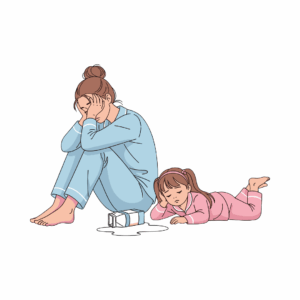
You feel the heat rise in your face.
Everyone is watching, and the word you hear in your head is selfish.
You say the thing most parents say: “Share. Give him a turn.”
Your child screams louder.
Now you feel judged and your child feels unheard, and nobody is sharing anything.
So how do you teach your child to share without forcing them to hand over everything they love?
This guide is for that sandpit moment and for the months after it.
It will show you why forced sharing backfires, how turn-taking works, and what to say when the other parent is watching.
Turn-Taking, Not Handing Over
Here is the reframe that changes everything: forced sharing teaches compliance, not generosity.
Call it Turn-Taking, Not Handing Over.
When you make your child hand over a toy on demand, they learn one lesson.
If someone wants what I have, I must give it up, even if I am still using it.
That is not generosity.
That is giving in to pressure, and it teaches your child that their own needs do not count.
Real sharing is different.
Real sharing is turn-taking: I use it, then you use it, then it comes back to me.
The toy comes back.
That is what makes it safe to share.
A child who knows the truck will come back can let go of it.
A child who thinks it is gone forever will hold on tighter.
So the work is not to make your child share on command.
The work is to build a system where turns are fair, visible, and kept.
Call it the Turn Timer.
Three minute turns, two turns each, and one warning before the swap.
The child chooses when to pass the toy on, inside the three minutes, and the timer calls the turn, not the parent.
Three minutes, two turns, one warning.
That is the whole system, and it works because it is fair, it is visible, and the child has a say in it.
Generosity grows from that safety, not from being forced.
1. The Park Moment
Start with the moment itself, because what you do in the first ten seconds decides how it ends.
Your child is screaming, the other child is holding the truck, and both parents are watching.
Do not grab the toy back.
Do not say “share now” in front of everyone.
Both of those moves turn a small conflict into a public test, and your child will fail it in front of an audience.
Instead, get low and get close.
Kneel beside your child and name what happened.
“You were playing with the truck and he took it. That was a surprise.”
That sentence does two jobs at once.
It tells your child you saw what happened, and it tells the other parent you are handling it.
Then offer the plan, not a lecture.
“Let us use the turn timer. Three minutes each, and the timer will tell us when to swap.”
If the other child does not know the timer, explain it simply.
“We take turns with the timer. He has three minutes, then it is your turn.”
Most children accept a timer far more easily than they accept an adult’s order, because a timer is fair to everyone.
For more on staying calm when your child is upset in public, see 15 Phrases That Help Kids Build Self-Regulation.
2. Why Share Now Backfires
The instinct to say “share now” is strong.
It feels polite.
It feels like the right thing to do in front of other parents.
But it backfires for a simple reason: it asks your child to give up something they are still using.
Imagine you are reading a book and someone snatches it from your hands and says, “Share.”
You would not feel generous.
You would feel robbed.
Your child feels the same way about the truck.
Forced sharing also teaches the wrong lesson to the other child.
It teaches them that grabbing works, because an adult will make the other child hand it over.
Both children lose.
Yours learns that their needs do not count.
Theirs learns that grabbing gets results.
Replace the command with a turn.
“You are still using the truck. When the timer rings, it is his turn, and then it comes back to you.”
That sentence protects your child’s turn and promises the other child a turn too.
Here is a distinction that helps: sharing is not the same as giving away.
Sharing means it comes back.
Giving away means it is gone.
Children understand that difference perfectly, and they are right to hold on tighter when they think something is gone for good.
When you promise the toy will come back, and then you make sure it does, your child learns that sharing is safe.
3. Ownership First
Before a child can share, they need to know what is theirs.
That sounds obvious, but many sharing battles start because ownership was never clear.
At home, sort toys into two groups with your child.
Mine and ours.
“Mine” toys are the special ones: the favourite bear, the truck from grandma, the puzzle they just finished.
“Ours” toys are the everyday ones: blocks, balls, crayons, the sandpit toys.
Ours toys are for sharing.
Mine toys are for keeping, and that is allowed.
This is the rule that makes all the other rules work.
A child who knows they can keep their three favourite things does not have to fight for everything.
They can be generous with the rest, because the things that matter most are safe.
Talk about it before a playdate, not during one.
“Your bear stays in your room today. The blocks are for sharing with Sam.”
One sentence before the playdate saves ten minutes of argument during it.
And when friends come over, let your child choose what goes away.
Choosing is control, and control is what makes sharing possible.
For more on giving your child real choices, see What Respecting Your Child Really Looks Like.
4. The Turn Timer in Action
The Turn Timer is simple, and simple is why it works.
You need a timer your child can see, a kitchen timer or a phone timer on the table.
Set it for three minutes.
The child with the toy gets three minutes, then the timer rings, and the toy passes to the next child.
Two turns each, then the game changes or the toy goes away.
One warning before the swap: “One more minute, then it is Sam’s turn.”
That warning matters more than the timer itself, because it gives your child time to finish and let go.
Let the child choose when to pass it on inside the three minutes.
If they want to hand it over after one minute, that is their choice, and it counts as a turn.
Choice is what turns a rule into a skill.
The timer calls the turn, not the parent.
That is the key.
When the timer rings, it is not you taking the toy away.
It is the timer, and the timer is fair to everyone.
Children accept fair far more easily than they accept being told.
Start the timer at home first, with a sibling or with you.
Practise it three times, with a toy your child likes but does not love.
By the third practice, they will be setting the timer themselves.
Then take it to the park.
Three minutes, two turns, one warning.
That is the whole system, and it fits in your pocket.
5. Words for the Hard Moment
A child who has no words for a hard moment can only scream or grab.
So hand them the words first, and let them try the words at home.
Start with the sentence for holding on: “I am still using it.”
Short, clear, and true.
Rehearse it over breakfast.
You reach for their cup, they say, “I am still using it,” and you say, “You are right, I will wait.”
Five minutes of practice, and the sentence is in their pocket.
Then teach them the sentence for asking: “Can I have a turn?”
Not grabbing, not crying, just asking, in words.
Practise that too, with you playing the child who has the toy.
And teach them the sentence for waiting: “I will wait for my turn.”
Waiting is the hardest part, and having words for it makes it bearable.
Three sentences: still using it, can I have a turn, I will wait.
Do not hand them a list of ten scripts.
Give them three, practised at home, carried into the world.
When the hard moment comes at the park, kneel down and whisper the first one.
“Say, I am still using it.”
Your child says it, the other child hears it, and the moment changes.
Words replace grabbing, and that is the skill growing.
For more on handling the word no, see Toddler Says No to Everything.
6. The Special Toy Box
Here is the one small tool for the whole guide: the Special Toy Box.
It is a box, a basket, or a shelf, and it holds the three toys your child does not have to share.
Let your child choose the three.
Not you, them.
Choosing is the point.
When friends come over, the three special toys go in the box, and the box goes on a high shelf.
Everything else is for sharing.
The Special Toy Box works because it removes the fear.
Your child is not worried about losing their favourite bear, because the bear is safe on the shelf.
So they can be generous with the blocks, the balls, and the crayons.
Generosity grows on its own, once the fear is gone.
Watch for it in small ways.
Your child hands a crayon to a friend without being asked.
They offer the last biscuit to their sister.
They let a younger child go first on the slide.
Those moments are generosity, and they came from safety, not from force.
Notice them out loud.
“You shared the crayons without anyone asking. That was kind.”
That sentence tells your child what generosity looks like in real life.
Not a grand gesture.
Just a crayon, offered freely.
For more on handling bossy moments around toys, see How to Deal With a Bossy Child.
What Not to Do, Even When Other Parents Are Watching
The hardest sharing moment is the public one.
Other parents are watching, your child is screaming, and you feel judged.
The instinct is to force the share, right now, to prove you are a good parent.
Do not do it.
Forcing a share in front of an audience teaches your child that your reputation matters more than their feelings.
It also teaches them that crying in public gets them punished, not helped.
Another mistake is shaming your child afterwards.
“You were so selfish at the park today. I was embarrassed.”
Shame does not build generosity.
It builds hiding.
A child who feels shamed will share less next time, not more, because sharing has become tangled up with fear.
Replace the shame with a plan.
“That was hard at the park today. Next time we will bring the timer. What do you think?”
That sentence treats the moment as a problem to solve together, not a crime to punish.
Now the objection every parent raises: but will other parents not think my child is selfish?
Will they not judge us?
Here is the honest truth about that worry.
Other parents are mostly relieved when someone handles a sharing battle calmly instead of forcing it.
They have all been there.
And a child who learns turn-taking becomes the child other parents want their children to play with, because they are fair, not because they give in.
One more boundary to name plainly: if your child cannot tolerate any turn-taking after many months of practice, or if grabbing and hitting happen often, talk to your doctor or nursery.
Most sharing struggles fade with practice.
A pattern that does not fade deserves a professional answer.
In the Moment: The Sharing Sequence
When the grabbing starts, hold this sequence in mind.
Four steps, nothing new, just the pieces of this guide in the order you will need them.
Step one: kneel to their height.
Kneel beside your child and name what happened.
“You were playing with the truck and he took it.”
Step two: offer the timer, not a lecture.
“Let us use the turn timer. Three minutes each.”
Step three: give them the words.
Whisper, “Say, I am still using it.”
Step four: hold the turn.
When the timer rings, make sure the toy passes, and make sure it comes back.
Four steps: close, timer, words, hold.
Four steps, and the timer does the hard work.
Say the four steps to yourself before the playdate starts: close, timer, words, hold.
If the timer is not there, use your watch and count the minutes out loud.
You can hold them in your head even when the other parent is watching.
A Calm Place to End
Your child is not selfish.
They are learning, and learning takes time.
Generosity is not something you can force into a child.
It is something that grows when a child feels safe, when turns are fair, and when sharing means the toy comes back.
Try one thing tonight.
Sort the toys into mine and ours with your child, and let them choose their three special toys for the box.
Then practise the turn timer once, with a kitchen timer and a toy they like.
Three minutes, two turns, one warning.
That is the whole plan.
Turn-taking, not handing over.
Your child will share, in their own time, in their own way.
And when they do, it will be real.
And if today was hard, start again tomorrow with the timer and the words.
One hard afternoon does not undo a week of practice.
Keep going.
The timer is in your pocket.