Respecting your child doesn’t mean letting them do whatever they want.
It doesn’t mean saying yes to every request, avoiding consequences, or giving up your authority.
And it definitely doesn’t mean treating your child like a tiny adult.
Respectful parenting means remembering that your child is a person whose feelings, body, thoughts, and developing independence deserve to be taken seriously.
You can respect your child and still say no.
You can listen and still hold a boundary.
You can validate their feelings without agreeing with their behavior.
And sometimes, the most respectful thing you can do is calmly say, “I won’t let you do that.”
So what does respecting a child actually look like in everyday life?
1. Listen When Your Child Is Talking
You don’t have to agree with everything your child says to show that you’re listening.
Put down the phone when you can.
Make eye contact.
Let them finish their story.
Ask questions.
If your child tells you about something that seems small, remember that it may not feel small to them.
Instead of:
“That’s nothing to worry about.”
try:
“I can see why that bothered you.”
Sometimes respect begins with simply being fully present.
2. Don’t Humiliate Your Child
Correcting your child doesn’t require embarrassing them.
Avoid making fun of mistakes, mocking their fears, comparing them to siblings, or bringing up their mistakes in front of other people.
Imagine your child spills something at a friend’s house.
Instead of:
“Seriously? Can’t you be more careful?”
try:
“Accidents happen. Let’s clean it up.”
Your child still learns responsibility.
But they don’t have to carry shame along with it.
A child can learn from a mistake without being made to feel like the mistake defines them.
3. Respect Their “No” When You Can
Children don’t get to decide everything.
You may need them to wear a seat belt, take medicine, leave the playground, or hold your hand near traffic.
Safety boundaries aren’t optional.
But there are many situations where you can respect their preferences.
Maybe they don’t want a hug from a relative.
Maybe they don’t want to wear the shirt you picked.
Maybe they don’t feel like talking immediately after school.
When there isn’t a safety issue, consider giving them some control.
“You don’t have to hug Grandma. You can wave or say hello.”
This teaches an important lesson:
Your body belongs to you, and other people’s bodies belong to them.
4. Give Choices Where Choices Are Appropriate
Respect doesn’t mean handing your child complete control.
It means giving them reasonable opportunities to participate in decisions that affect them.
Instead of:
“Put your pajamas on.”
try:
“Do you want the blue pajamas or the dinosaur ones?”
You’re still setting the bedtime expectation.
Your child gets some autonomy within the boundary.
The American Academy of Pediatrics notes that young children are developing independence and recommends giving them opportunities to practice while keeping appropriate safety limits.
This is one of the simplest ways to communicate:
“Your choices matter.”
5. Explain Rules Instead of Demanding Blind Obedience
Children need boundaries.
But “because I said so” doesn’t have to be your only explanation.
You don’t need a ten-minute lecture for every rule.
Keep it simple.
“We hold hands near the road because cars can’t always see us.”
“You can’t hit your brother because people deserve to be safe.”
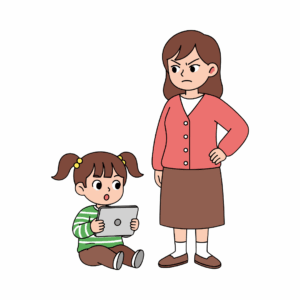
“The tablet is finished because it’s bedtime.”
You remain the parent.
You’re simply helping your child understand the reason behind the boundary.
6. Take Their Feelings Seriously
Respecting feelings doesn’t mean allowing every behavior.
Your child can be furious that you turned off the television.
They can be devastated because you said no to candy.
They can cry because you made them leave the playground.
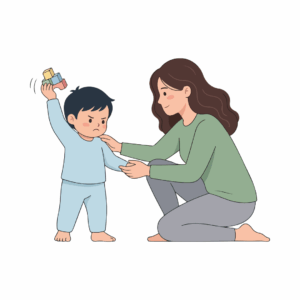
You can acknowledge the feeling while maintaining the limit.
“You really wanted to keep playing. You’re disappointed. We’re still leaving.”
That response communicates two things at once:
“Your feelings matter.”
and
“The boundary still stands.”
Those messages can coexist.
7. Don’t Force Affection
A child shouldn’t have to hug, kiss, sit on someone’s lap, or show physical affection simply because an adult expects it.
You can encourage kindness and greetings without forcing physical contact.
Try:
“You can give Grandma a hug, wave, or say hello.”
This gives your child an appropriate choice while still teaching social courtesy.
It also helps children understand that affection should be mutual rather than something they’re required to provide.
8. Apologize When You Get It Wrong
Respect goes both ways.
If you yell at your child, speak harshly, or unfairly blame them, you can apologize.
You don’t lose authority by saying:
“I shouldn’t have yelled. I was frustrated, but I should have spoken calmly. I’m sorry.”
In fact, you’re modeling something valuable.
You’re showing your child that adults make mistakes too.
The American Academy of Pediatrics emphasizes that there are no perfect parents and that mistakes are a normal part of family relationships.
Your child doesn’t need to believe you’re flawless.
They need to know that mistakes can be acknowledged and repaired.
9. Respect Their Privacy as They Grow
The amount of privacy a child needs changes with age.
A toddler obviously needs much more supervision than a teenager.
But as children grow, give them reasonable personal space.
Knock before entering an older child’s room when practical.
Don’t share embarrassing stories about them publicly without considering how they might feel.
Don’t turn private struggles into family entertainment.
You are still responsible for their safety.
But safety and privacy don’t have to be enemies.
10. Don’t Interrupt Every Problem They Try to Solve
Sometimes parents jump in because they can see the solution immediately.
Your child can’t open the container.
You open it.
They can’t resolve an argument.
You intervene.
They struggle with homework.
You give them the answer.
Helping is important.
But so is allowing children to experience themselves as capable.
Try:
“What do you think you could try?”
or:
“Do you want help, or would you like another minute to figure it out?”
Respect includes trusting your child’s ability to learn.
11. Take Their Questions Seriously
Children ask a lot of questions.
Sometimes hundreds of them.
Why is the sky blue?
Why can’t we go?
Why does Grandma live there?
Why do people die?
Why does my friend have that?
You won’t always have an answer.
That’s okay.
You can say:
“I’m not sure. Let’s find out.”
When you take their curiosity seriously, you’re communicating that their desire to understand the world matters.
12. Don’t Use Your Size as Your Argument
You’re bigger.
You’re older.
You’re the parent.
That’s true.
But physical size and authority don’t require intimidation.
You don’t need to loom over your child, scream in their face, or threaten humiliation to establish a boundary.
A calm:
“I won’t let you hit.”
can be more powerful than a long angry lecture.
Respect doesn’t eliminate parental authority.
It changes how you use it.
13. Respect Their Individual Personality
Your child may not be who you expected.
Maybe they’re quiet when you imagined an outgoing child.
Maybe they’re highly sensitive.
Maybe they love being alone.
Maybe they ask endless questions.
Maybe they’re cautious instead of adventurous.
Maybe they need more time to warm up to people.
Don’t constantly compare them with siblings, cousins, or other children.
Instead, learn who they actually are.
Harvard’s Center on the Developing Child emphasizes that responsive relationships involve responding to a child’s individual signals, interests, capabilities, and initiative.
Your child shouldn’t have to become someone else to earn your respect.
14. Hold Boundaries Without Shaming
Respectful parenting isn’t permissive parenting.
Your child can be angry.
They can’t hit.
They can dislike bedtime.
They still have to go to bed.
They can disagree with you.
They can’t insult people.
They can refuse to clean up.
You can still require them to participate.
Try separating the child from the behavior:
“I love you. I’m not letting you throw that.”
or:
“You can be angry. You cannot hurt your sister.”
The boundary stays firm.
The child’s dignity stays intact.
15. Tell Them the Truth in an Age-Appropriate Way
Children deserve honest answers.
That doesn’t mean giving a five-year-old every adult detail.
It means answering questions honestly at a level they can understand.
If you don’t know, say so.
If plans have changed, explain why.
If you made a mistake, acknowledge it.
If something difficult is happening in the family, don’t automatically assume pretending everything is fine is better.
Children notice more than we sometimes realize.
Honest, age-appropriate communication helps build trust.
Respect Doesn’t Mean Saying Yes
This may be the most important distinction.
A respectful parent can say:
“No.”
They can say:
“I understand you’re angry, but the answer is still no.”
They can say:
“You don’t have to like this rule. You do have to follow it.”
They can stop unsafe behavior.
They can enforce consequences.
They can expect responsibility.
Respect isn’t about removing authority.
It’s about using authority without humiliation, intimidation, or unnecessary control.
The American Academy of Pediatrics similarly emphasizes clear expectations and a firm but loving approach when helping children develop independence and appropriate behavior.
What Your Child Learns From Respectful Parenting
When children are consistently treated with respect, they get repeated experiences of being listened to, guided, corrected, and taken seriously.
Over time, those experiences can become part of how they understand relationships.
They learn that disagreements don’t have to mean rejection.
They learn that boundaries don’t mean a loss of love.
They learn that adults can apologize.
They learn that their feelings can be expressed without controlling everyone around them.
And they learn that respect isn’t something reserved for people with more power.
It’s something people practice with one another.
Final Thoughts
Respecting your child doesn’t require perfect parenting.
You will still lose patience sometimes.
You will still say no.
You will still have days when everyone is tired and the house feels chaotic.
That’s normal.
What matters is the pattern you create over time.
Listen when they speak.
Take their feelings seriously.
Give choices when appropriate.
Respect their body.
Avoid humiliation.
Let them solve manageable problems.
Apologize when you get it wrong.
Hold firm boundaries without making them feel small.
And remember that your child doesn’t have to agree with you to deserve respect.
You can be the authority and still be the safe person.
That may be what respectful parenting really looks like.