Toddlers are learning how to communicate, manage frustration, follow rules, and control impulses, all while becoming increasingly determined to do things themselves.
That combination can make discipline feel exhausting.
One minute your toddler is happily playing. The next, they’re throwing a cup because you gave them the “wrong” color.
Positive discipline doesn’t mean letting difficult behavior slide.
It means setting clear limits while teaching your child what to do instead.
The goal isn’t simply to stop unwanted behavior in the moment. It’s to gradually help your toddler develop the skills they need to behave appropriately.
Here are 15 practical positive discipline strategies you can start using.
1. Keep Your Rules Simple
Toddlers don’t need a long list of household rules.
Choose a few important ones and make them easy to understand.
For example:
- We use gentle hands.
- We stay close outside.
- Toys stay on the floor.
- We use inside voices.
Instead of saying:
“Don’t behave badly.”
tell your toddler exactly what you want.
“Use gentle hands.”
Clear expectations are much easier for a young child to follow.
2. Tell Them What to Do Instead
One of the simplest positive discipline changes is replacing “don’t” with a specific alternative.
Instead of:
“Don’t throw.”
Try:
“Balls are for throwing. The cup stays on the table.”
Instead of:
“Don’t hit.”
Try:
“Hands are for gentle touches.”
Instead of:
“Don’t climb on the table.”
Try:
“Feet stay on the floor.”
Your toddler needs to learn the acceptable behavior, not just what you’re asking them to stop doing.
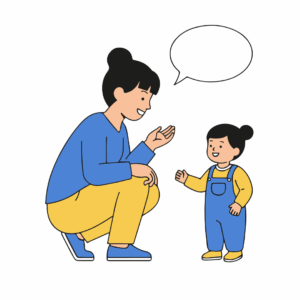
3. Get Close Before Giving a Direction
Shouting instructions from another room often doesn’t work well with toddlers.
Walk over.
Get down to their level.
Make sure you have their attention.
Then give a short direction.
“Please put the blocks in the basket.”
You don’t need a long explanation.
Young children are still developing their ability to follow increasingly complex instructions, so keeping directions concrete and age-appropriate makes sense. The CDC specifically recommends clear directions and expectations as part of effective parenting strategies for toddlers. (CDC)
4. Give One Direction at a Time
Imagine saying:
“Put your toys away, get your shoes, wash your hands, and come to the table.”
That’s a lot for a toddler to process.
Instead:
“Put the blocks in the basket.”
Wait.
Then:
“Now let’s put your shoes on.”
Breaking tasks into smaller steps can make cooperation much easier.
It also gives you more opportunities to notice and praise each successful step.
5. Offer Two Choices
Toddlers want independence.
You don’t have to give them control over everything to accommodate that need.
Offer choices within your boundary.
“Red shirt or blue shirt?”
“Walk to the bathroom or hop?”
“Brush teeth before pajamas or after?”
The important thing is that both choices are acceptable to you.
You’re communicating:
“You have some control, but I am still the parent.”
This can reduce unnecessary power struggles while giving toddlers opportunities to practice decision-making.
6. Praise the Behavior You Want to See
Positive discipline isn’t only about correcting behavior.
It’s also about noticing when your toddler gets it right.
Instead of assuming good behavior will happen without comment, point it out.
“You put your cup on the table.”
“You waited for your turn.”
“You used gentle hands with your sister.”
“You listened when I asked you to stop.”
Specific praise tells your child exactly what behavior you want repeated.
The CDC notes that positive attention such as praise, hugs, kisses, and encouragement can reinforce behaviors parents want to see more often.
7. Redirect Before the Situation Escalates
Toddlers are easily distracted, and that’s something you can use constructively.
If your child is reaching for something unsafe, redirect them.
“You can’t play with that. Let’s get your blocks.”
If they’re about to throw a toy:
“That toy isn’t for throwing. Let’s throw this soft ball.”
If they’re starting to fight over an object:
“Let’s find another one.”
Redirection works particularly well when the behavior is relatively minor and you can offer an acceptable alternative.
8. Use Natural and Logical Consequences
Positive discipline doesn’t mean there are no consequences.
It means consequences should teach rather than humiliate.
Suppose your toddler repeatedly throws a toy after you’ve told them not to.
You might calmly say:
“Toys aren’t for throwing. I’m putting this toy away.”
The consequence is directly connected to the behavior.
Or if your toddler spills water intentionally:
“Water stays in the cup. Let’s clean it up.”
The child helps clean the spill.
You’re teaching:
Actions have consequences, and I can help fix problems I create.
The CDC’s discipline guidance similarly recommends clear expectations, consistent follow-through, and consequences connected to the behavior.
9. Don’t Turn Every Behavior Into a Battle
Not every irritating behavior requires a major response.
If your toddler makes a silly noise while you’re cooking, you don’t necessarily need a lecture.
If they’re whining for attention while you’re briefly occupied, you might acknowledge them and redirect them.
Save your strongest boundaries for behaviors involving:
- Safety
- Hitting
- Biting
- Destruction
- Serious aggression
- Important family rules
Constant correction can leave everyone exhausted.
Choose your battles carefully.
10. Stay Calm When You Set the Boundary
This is easier said than done.
Your toddler throws food.
You repeat yourself.
They throw more.
Eventually you want to yell.
But yelling doesn’t make the boundary clearer.
Try lowering your voice instead.
“Food stays on the table.”
If they continue:
“You’re showing me you’re finished. I’m going to take your plate.”
Short.
Calm.
Predictable.
You don’t need to sound angry for a boundary to be firm.
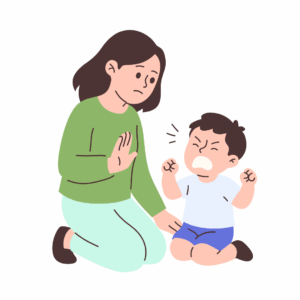
11. Don’t Negotiate During a Meltdown
Once your toddler is deeply upset, lengthy explanations rarely help.
If they are screaming because you said no to another cookie, you don’t need to explain nutrition, sugar, bedtime, and why you bought the cookies in the first place.
Try:
“You really wanted another cookie.”
“The answer is no.”
“I’m here.”
Then wait.
Your toddler can be upset while the boundary remains unchanged.
The lesson is:
“My feelings are allowed. The limit still exists.”
12. Teach Repair After Misbehavior
Discipline shouldn’t end when the unwanted behavior stops.
When appropriate, teach your child how to repair the situation.
If they knock over someone’s blocks:
“Let’s help build them again.”
If they hit someone:
“Hitting hurts. Let’s check if they’re okay.”
If they throw toys everywhere:
“Let’s put them back together.”
Don’t force a dramatic apology from a toddler who doesn’t yet understand the emotional meaning of the words.
Focus on repair.
You’re teaching responsibility without shame.
13. Use Routines to Prevent Problems
Sometimes the best discipline strategy happens before the behavior occurs.
If your toddler regularly melts down before bedtime, create a predictable bedtime routine.
If leaving the park causes chaos, give warnings:
“Five more minutes.”
Then:
“One more turn.”
Then:
“It’s time to go.”
If hunger triggers difficult behavior, keep meals and snacks reasonably predictable.
Structure can prevent many unnecessary conflicts because your toddler begins to understand what happens next.
The CDC identifies structure and predictable rules as useful components of positive parenting for toddlers and preschoolers.
14. Give Attention to Good Behavior, Not Just Bad Behavior
It’s easy to spend an entire day correcting a toddler.
“Don’t touch that.”
“Stop.”
“Get down.”
“Don’t throw.”
“No.”
Eventually, your child may learn that misbehavior is the quickest way to get a parent’s full attention.
Make a deliberate effort to notice the quieter moments.
Sit beside them while they play.
Comment on what they’re building.
Give them a hug.
Notice cooperation.
Say:
“I love how gently you’re playing.”
“You waited while I finished talking.”
“You came when I called you.”
The goal isn’t constant praise.
It’s making sure positive behavior receives plenty of attention too.
15. Be Consistent Without Expecting Perfection
Positive discipline works best when children can predict what will happen.
If throwing a toy means the toy gets put away one day but results in yelling, bargaining, and eventually getting the toy back the next day, the boundary becomes confusing.
Consistency doesn’t mean responding perfectly every time.
You’re going to be tired.
You may lose your patience.
You may change your mind.
That’s normal.
Just return to the boundary.
“Yesterday I let that go, but we’re not going to throw toys today.”
You don’t need to become a perfectly calm parent.
You need to become a reasonably predictable one.
What Positive Discipline Is Not
Positive discipline is sometimes misunderstood as permissive parenting.
It isn’t.
You can be gentle and firm.
You can say:
“I know you’re angry. I’m not letting you hit.”
You can say:
“You don’t want to leave. We’re still leaving.”
You can say:
“You’re disappointed. The answer is still no.”
You can acknowledge the feeling without giving in to the behavior.
That’s one of the most important distinctions between positive discipline and permissive parenting.
Feelings are accepted. Unsafe or unacceptable behavior still has limits.
What to Say Instead of Yelling
When you’re frustrated, having a few phrases ready can help.
Instead of:
“Stop it!”
Try:
“I won’t let you hit.”
Instead of:
“How many times do I have to tell you?”
Try:
“It’s time to put the toy away.”
Instead of:
“You’re being naughty.”
Try:
“That behavior isn’t safe.”
Instead of:
“Because I said so!”
Try:
“The rule is no climbing on the table.”
Instead of:
“If you don’t stop crying, I’ll give you something to cry about.”
Try:
“You’re upset. I’m here, and the answer is still no.”
The goal isn’t to find magical phrases that make toddlers instantly cooperate.
It’s to make your communication clearer and less threatening.
What If Your Toddler Keeps Testing the Boundary?
They probably will.
Toddlers are learning through repetition.
A child who keeps touching the forbidden object isn’t necessarily plotting against you.
They may be testing:
“Is this rule still true?”
Your job is to answer consistently.
“That’s not for playing with.”
Move the object.
Redirect.
Repeat if necessary.
You don’t need to create a bigger punishment simply because your toddler tested the limit again.
Sometimes the most effective discipline is boringly consistent.
Final Thoughts
Positive discipline isn’t about finding the perfect response to every toddler behavior.
It’s about creating a parenting pattern your child can understand.
Set clear limits.
Give simple directions.
Offer choices.
Redirect when appropriate.
Notice good behavior.
Use reasonable consequences.
Teach repair.
Stay calm when you can.
And when your toddler has a huge emotional reaction to a very small problem, remember that they’re still learning skills that adults often take for granted.
You can be compassionate without being permissive.
You can hold a boundary without yelling.
And you can discipline your toddler in a way that teaches rather than shames.
The goal isn’t simply to get your toddler to behave today. It’s to help them gradually learn how to behave when you’re not there to tell them what to do.