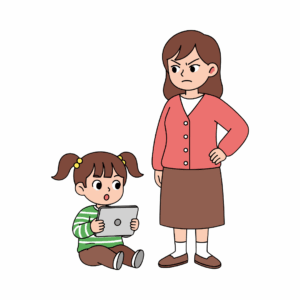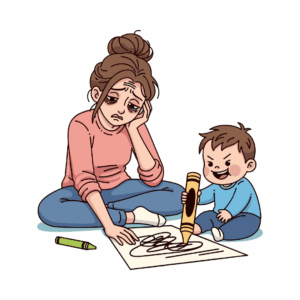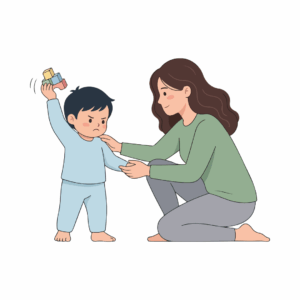
“If you don’t stop crying, I’ll give you something to cry about.”
“If you don’t clean that up, you’re not getting your tablet.”
“If you don’t come right now, I’m leaving without you.”
“If you don’t behave, just wait until we get home.”
Most parents have said something like this at some point.
Usually, it happens when you’re tired, rushed, frustrated, or you’ve asked the same thing five times and nothing seems to work.
A threat can feel effective because it sometimes gets immediate compliance.
But there’s an important difference between getting a child to obey because they’re afraid and teaching a child to cooperate because they understand the boundary.
That doesn’t mean parents should never use consequences.
It means the goal is to replace fear and intimidation with clear expectations, predictable limits, and calm follow-through.
UNICEF recommends positive discipline strategies that teach children expected behavior rather than relying on harsh verbal or physical punishment.
So if threatening your child has become a habit, what can you do instead?
What Counts as a Parenting Threat?
A threat is generally a statement designed to control behavior by making the child fear something unpleasant will happen.
Some threats are obvious:
“I’ll hit you if you don’t stop.”
Others sound more ordinary:
“If you don’t get dressed right now, I’m throwing all your toys away.”
Or:
“Keep that up and you’ll be sorry.”
The problem isn’t simply that the child hears a consequence.
The problem is when the consequence is exaggerated, frightening, humiliating, unrelated, or unlikely to actually happen.
A healthy boundary tells a child what you will do to keep the limit.
A threat often communicates:
“Do what I want, or I will make you suffer.”
Those are very different messages.
Why Threats Can Feel So Effective
There’s a reason parents reach for threats.
They can work in the short term.
A child may stop.
They may freeze.
They may quickly do what you asked.
But stopping a behavior because a child is afraid isn’t the same as learning why the behavior needs to change.
If the only reason a child cleans their room is because they’re afraid you’ll take everything away, the lesson may become:
“I better avoid getting caught.”
Instead, you want your child gradually to learn:
“This is my responsibility.”
That’s a much more useful skill as they grow older.
1. Replace “If You Don’t…” With a Clear Expectation
Instead of:
“If you don’t put your shoes on, we’re leaving without you.”
try:
“It’s time to put your shoes on. I’ll help you with the first one.”
You’re not removing the expectation.
You’re removing the threat.
The child still needs to get ready.
But they aren’t being forced to imagine what punishment might happen if they fail.
2. Tell Them What You Will Do
One of the biggest differences between a threat and a boundary is who controls the action.
A threat might sound like:
“If you throw that toy again, you’ll never see it again.”
A boundary sounds like:
“If you throw the toy, I’ll put it away for now.”
The second statement is calm and predictable.
You’re not trying to frighten your child.
You’re explaining what you will do.
And then you need to follow through.
3. Use Consequences That Actually Make Sense
A consequence works best when it is related to the behavior.
If your child repeatedly throws a toy, putting the toy away for a while makes sense.
If they refuse to leave the playground, you may need to end the outing.
If they spill something intentionally, they can help clean it up.
Compare that with:
“If you don’t stop whining, you’re not going to your friend’s birthday party next month.”
That’s disconnected from the behavior and difficult for a young child to understand.
You don’t need a bigger punishment.
You need a clearer connection between the behavior and what happens next.
4. Stop Making Consequences Bigger When You’re Angry
This is where many parents get stuck.
You start with:
“Please put the tablet away.”
Your child refuses.
You say:
“Put it away now.”
They still refuse.
Then frustration takes over:
“Fine! No tablet for a week!”
Now you’ve created a consequence you may not actually want to enforce.
Try deciding your limits ahead of time.
For example:
“When the timer rings, tablet time is finished.”
Then when the timer rings:
“Tablet time is finished. You can use it again tomorrow.”
Predictability reduces the need for escalating threats.
5. Give Choices Within the Boundary
Sometimes children resist because they want some control.
You don’t have to give them control over everything.
Give them control over something.
Instead of:
“Get dressed right now or we’re going without you.”
try:
“Do you want to put your shirt on first or your pants?”
The boundary remains:
You need to get dressed.
The choice is:
Which part do you want to do first?
This can reduce unnecessary power struggles while still keeping you firmly in charge.
6. Use “When,” Not “If”
This small change can make a big difference.
Instead of:
“If you clean up, then we can read a story.”
try:
“When the toys are put away, we’ll read a story.”
The second version communicates expectation rather than uncertainty.
You’re not threatening.
You’re simply explaining what needs to happen before the next part of the routine.
You can use this throughout the day:
“When your shoes are on, we’ll go outside.”
“When your homework is finished, you can play.”
“When the toys are cleaned up, we’ll start bedtime.”
7. Don’t Threaten to Leave
One threat deserves special attention:
“I’m leaving without you.”
It may seem like a quick way to make a child hurry.
But for a young child, separation from a caregiver can feel genuinely frightening.
Instead, stay close and state the practical consequence.
“We’re leaving the playground now. You can walk to the car, or I can help you.”
You’re still leaving.
You’re still holding the boundary.
But you’re not using the fear of abandonment as your parenting tool.
8. Don’t Use Love as Leverage
Avoid statements such as:
“If you keep acting like this, I won’t love you.”
or:
“I don’t want to be your mom when you behave like that.”
Children need to know that parental love isn’t something they can lose by having a difficult moment.
You can be very firm about behavior while keeping the relationship secure.
Try:
“I love you. I’m not going to let you hit.”
That’s an incredibly powerful combination.
Love remains. The boundary remains.
9. Don’t Threaten Consequences You Won’t Enforce
Children learn quickly when a threat is empty.
“I’m throwing every toy away!”
Five minutes later, nothing happens.
Next time:
“You’re grounded for a month!”
Again, nothing happens.
Eventually, your words lose credibility.
It’s better to choose a small consequence you can calmly follow through with than announce a huge punishment you won’t realistically enforce.
Consistency matters more than intensity.
10. Teach the Behavior You Want
Sometimes the best alternative to a threat is simply telling your child what to do.
Instead of:
“Stop being disrespectful!”
try:
“Try that again in a respectful voice.”
Instead of:
“Don’t make a mess!”
try:
“Keep the crayons on the table.”
Instead of:
“Stop screaming!”
try:
“Use your regular voice so I can understand you.”
Children need to know what success looks like.
“Stop” tells them what not to do.
A clear instruction tells them what they can do instead.
What About When Your Child Completely Refuses?
This is where calm parenting can get difficult.
You say:
“It’s time to leave.”
Your child screams:
“NO!”
You don’t need to respond with a bigger threat.
You can say:
“You don’t want to leave. I know.”
Then:
“It’s still time to go. You can walk, or I can carry you.”
If they refuse to choose:
“I’ll help you.”
And then follow through.
You don’t need to win an argument.
You need to calmly carry out the boundary.
What If You’re Already Angry?
This is probably when threats are most tempting.
Your body is tense.
Your child isn’t listening.
You can feel yourself getting louder.
Before you say something you don’t mean, pause if the situation is safe.
Take a breath.
Lower your voice.
Use fewer words.
You can even say:
“I’m getting frustrated. I’m going to take a minute before I respond.”
That is not giving up your authority.
It’s modeling emotional regulation.
Your child gets to see that strong emotions don’t have to control your behavior.
What to Say Instead of Common Threats
Here are some quick swaps you can keep in mind.
Instead of:
“Stop crying or I’ll give you something to cry about.”
Try:
“You’re upset. I’m here. We can talk when you’re ready.”
Instead of:
“Clean your room or I’m throwing everything away.”
Try:
“The toys need to be picked up before we start the next activity.”
Instead of:
“If you don’t come now, I’m leaving.”
Try:
“It’s time to go. You can walk to the car or I can help you.”
Instead of:
“If you hit your brother again, you’re going to be in big trouble.”
Try:
“I won’t let you hit. If you need space, I’ll help you move away.”
Instead of:
“Behave or you’re not getting anything.”
Try:
“You can be disappointed, but you still need to speak respectfully.”
The goal isn’t to find the perfect sentence.
It’s to communicate the same boundary without using fear as the main tool.
Does This Mean You Should Never Use Consequences?
No.
Children need boundaries.
They need limits.
They need to experience reasonable consequences for their choices.
The difference is how those consequences are delivered.
A threat says:
“Do this or I’ll make something bad happen to you.”
A boundary says:
“This is what needs to happen, and this is what I’ll do if it doesn’t.”
For example:
“If you keep throwing the blocks, I’ll put them away.”
That’s not a threat when it’s a calm, predictable limit that you’re prepared to follow through on.
You’re not trying to scare your child.
You’re managing the situation.
Your Child Doesn’t Need to Be Afraid of You to Respect You
This can be a difficult mindset shift.
Some parents grew up hearing:
“I was scared of my parents, and I turned out fine.”
Maybe you did.
But fear isn’t the only way children learn boundaries.
You can be respected without being frightening.
You can be firm without being harsh.
You can say no without threatening.
And you can enforce consequences without making your child feel that your love is conditional.
The long-term goal isn’t simply:
“My child obeys me.”
It’s:
“My child learns how to make good decisions, handle limits, and take responsibility.”
That’s a much bigger goal.
Final Thoughts
If you catch yourself threatening your child, don’t turn that realization into another reason to feel guilty.
Most parents have moments when frustration takes over.
What matters is noticing the pattern and changing what you can.
The next time you hear yourself saying:
“If you don’t…”
pause.
Ask:
“What boundary am I actually trying to set?”
Then say that instead.
Tell your child what you expect.
Give a reasonable choice when appropriate.
Explain what you will do.
Follow through calmly.
And remember that firmness doesn’t require fear.
Your child can know that you mean what you say without being afraid of what you’ll do.
You don’t have to threaten your child to be a strong parent.
You can be calm, clear, consistent, and still hold the line.