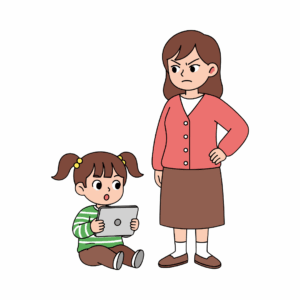
“Don’t be rude.”
Most parents have said it.
Usually, we say it quickly because we’re embarrassed, frustrated, or trying to teach our child how to behave around other people.
Maybe your child interrupts Grandma.
Maybe they refuse to say hello.
Maybe they complain loudly about a gift.
Maybe they answer a question with an attitude.
And before you even think about it, you say:
“Don’t be rude.”
The problem is that those three words don’t actually tell a child what to do instead.
For a young child especially, “rude” is an abstract label. They may understand that you’re unhappy, but they may not know whether you wanted them to apologize, use a different tone, wait their turn, or choose different words.
Teaching manners works better when children are given clear, specific behaviors to practice.
The American Academy of Pediatrics recommends teaching children expected behavior through clear expectations, modeling, and positive reinforcement rather than relying only on punishment or criticism.
So the next time you’re tempted to say “Don’t be rude,” try one of these instead.
1. “Try That Again With Kind Words.”
This is useful when your child’s message is reasonable but the delivery isn’t.
Maybe they say:
“Give me that!”
You can respond:
“Try that again with kind words.”
Now your child has a chance to correct the behavior without being labeled as a rude person.
They might try:
“Can I have that, please?”
You’re teaching a skill instead of simply pointing out a character flaw.
2. “How Could You Say That More Respectfully?”
Sometimes children genuinely don’t realize how their words sound.
Instead of:
“Don’t be rude to your sister.”
try:
“How could you say that more respectfully?”
This encourages your child to think about the effect of their words.
It also gives them an opportunity to repair the interaction themselves.
You’re not doing the social thinking for them.
You’re helping them learn how to do it.
3. “Please Let Them Finish.”
Interrupting is one of those behaviors that can make parents immediately reach for “Don’t be rude.”
But children often interrupt because they’re excited, forgetful, or still developing impulse control.
Make the expectation specific.
“Please let Grandma finish talking.”
Then, if necessary:
“You can tell her when she’s finished.”
This is much clearer than simply telling your child that interrupting is rude.
They learn the actual behavior you expect.
4. “You Don’t Have to Like It, But You Can Say It Politely.”
Children are allowed to dislike things.
They don’t have to pretend to love every meal, gift, outfit, activity, or decision.
The lesson is that honesty doesn’t require cruelty.
If your child says:
“This is disgusting!”
you might say:
“You don’t have to like it. You can say, ‘No thank you, I don’t want any.'”
That’s an important distinction.
You’re not teaching your child to hide their feelings.
You’re teaching them how to express those feelings without unnecessarily hurting someone else.
5. “Let’s Try That Again.”
Sometimes you don’t need a long explanation.
Your child says something disrespectful.
You pause.
“Let’s try that again.”
That’s it.
They get another opportunity.
If they need help, you can add:
“You can say, ‘I’m frustrated because you took my toy.'”
This approach is especially useful because it separates the child from the behavior.
You’re not saying:
“You’re rude.”
You’re saying:
“That wasn’t how we speak to each other. Try again.”
6. “What Would Be a Kind Way to Ask?”
Children sometimes demand things without realizing they’re making demands.
“Get me water.”
“Move.”
“Give me that.”
Instead of immediately calling them rude, teach them how to turn a demand into a request.
“What would be a kind way to ask?”
They might learn:
“Can I have some water, please?”
or:
“Could you move over, please?”
You’re giving them a practical social script they can use again.
7. “You Can Be Angry Without Being Hurtful.”
This one matters because children aren’t always rude because they’re careless.
Sometimes they’re overwhelmed.
They may be tired, frustrated, disappointed, or angry.
If your child says:
“I hate you!”
you don’t have to respond with:
“Don’t be rude!”
Try:
“You’re really angry. You can tell me you’re angry, but you can’t use hurtful words to attack me.”
The feeling is allowed.
The hurtful behavior isn’t.
That distinction helps children learn that emotions don’t have to be suppressed in order to behave respectfully.
8. “Look at How That Might Make Them Feel.”
Children are still developing empathy.
Instead of simply demanding an apology, help them think about the other person’s experience.
If your child laughs at someone’s mistake, you could say:
“Imagine if everyone laughed when you made a mistake. How would that feel?”
Then give them a chance to repair:
“What could you say to them now?”
This turns a correction into an opportunity to develop empathy.
9. “We Treat People With Respect, Even When We’re Upset.”
This is a useful family rule because it doesn’t depend on the situation.
Your child can be angry.
They can disagree.
They can be disappointed.
They can think you’re being unfair.
But there is still a boundary around how people treat one another.
You might say:
“You can disagree with me. You can tell me you’re angry. But you can’t insult me.”
That’s respectful parenting without being permissive.
You’re not asking your child to obey silently.
You’re teaching them how to disagree without attacking someone.
10. “What Do You Think You Should Say?”
This is one of the best phrases to use as children get older.
Instead of always supplying the correct response, give them a chance to think.
Your child interrupts someone.
You look at them and say:
“What do you think you should say?”
They might realize:
“Sorry for interrupting.”
Or maybe they need help figuring it out.
That’s okay.
The goal is gradually moving from parent-directed correction toward self-correction.
You’re helping your child develop an internal sense of how to handle social situations.
What If Your Child Doesn’t Correct It?
Sometimes they won’t.
You say:
“Let’s try that again.”
And they say:
“No.”
That’s when you can calmly hold the boundary.
“You don’t have to say it right now. But we’re not going to speak to people that way.”
You don’t need to turn every correction into a power struggle.
Stay calm.
Keep the expectation clear.
Give them time to regulate if they’re overwhelmed.
Then return to the conversation.
Don’t Force Performative Manners
There’s an important difference between teaching manners and forcing children to perform politeness.
For example, you can teach your child to greet people respectfully without forcing physical affection.
Instead of:
“Give Grandma a hug.”
try:
“You can say hello, wave, or give Grandma a hug if you’d like.”
Likewise, if your child doesn’t like a gift, you can teach them to say:
“Thank you for thinking of me.”
They don’t have to pretend the gift is their favorite thing in the world.
Good manners shouldn’t require children to ignore their boundaries.
What Children Actually Need to Learn
“Don’t be rude” is often an umbrella phrase for many different skills.
Your child may actually need to learn:
How to wait their turn.
How to disagree respectfully.
How to ask instead of demand.
How to express disappointment.
How to apologize.
How to listen.
How to use an appropriate tone.
How to show appreciation.
How to recognize when someone has been hurt.
Those are skills.
And skills become easier to learn when we teach them directly.
You Don’t Have to Correct Every Little Thing
Children are going to be awkward sometimes.
They’re going to forget manners.
They’re going to interrupt.
They’re going to say something blunt.
They’re going to complain.
They’re going to have moments when their behavior is less than impressive.
You don’t have to turn every imperfect interaction into a lesson.
Sometimes a simple reminder is enough.
Sometimes you can let it go.
And sometimes the best thing you can do is model the behavior yourself.
Say please.
Say thank you.
Apologize when you make a mistake.
Let people finish talking.
Speak respectfully when you’re frustrated.
Children learn a tremendous amount from what they repeatedly see.
Final Thoughts
The next time “Don’t be rude” comes to mind, pause for a second.
Ask yourself:
What do I actually want my child to do?
Do you want them to use a kinder tone?
Wait their turn?
Apologize?
Ask politely?
Respect someone’s boundary?
Express disappointment without insulting someone?
Say that instead.
Because children don’t need to hear only what they’re doing wrong.
They need to know what they can do differently.
So instead of:
“Don’t be rude.”
try:
“Try that again with kind words.”
“Let them finish.”
“You can disagree respectfully.”
“You don’t have to like it, but you can say it politely.”
“What would be a kind way to ask?”
Those small changes turn correction into teaching.
And over time, your child doesn’t just learn to avoid being called rude.
They learn what respect actually looks like.