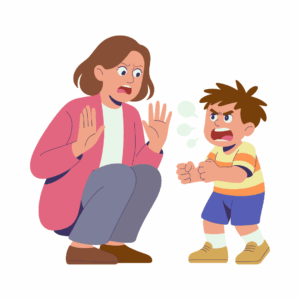
Your child is screaming.
You have already said no.
They are crying, yelling, demanding, and repeating the same request over and over.
And you’re running out of patience.
This is the moment when gentle parenting can feel incredibly difficult.
You want to stay calm.
You don’t want to yell.
But you also don’t want to give in just because your child is having a huge reaction.
So what do you do?
The answer is not choosing between being gentle and being firm.
You can be both.
Gentleness is how you respond. Firmness is how you hold the boundary.
When you understand that distinction, difficult moments become much easier to navigate.
Your Child’s Screaming Does Not Mean the Boundary Is Wrong
One of the hardest parts of parenting is watching your child become upset after you say no.
You might immediately think:
“Maybe I’m being too strict.”
“Should I just give them what they want?”
“Am I making this worse?”
Not necessarily.
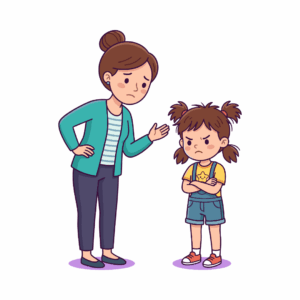
Children are allowed to dislike boundaries.
They are allowed to cry.
They are allowed to feel disappointed.
Your job isn’t to make sure your child never experiences frustration.
Your job is to help them experience frustration safely.
You can say:
“I know you really want it. You’re upset. I’m still saying no.”
That’s both compassionate and firm.
Don’t Match Their Volume
When your child screams, your nervous system may react automatically.
You feel your body tense.
Your voice gets louder.
You repeat yourself.
Soon, you’re both shouting.
Try something different.
Lower your voice instead.
Slow down your movements.
Take a breath before answering.
You don’t need to overpower your child’s nervous system.
Your calm presence gives them a model for how to move through intense emotions.
Try:
“I’m listening. I’m not going to yell at you.”
Validate the Feeling, Not the Behavior
Validation is one of the most misunderstood parts of gentle parenting.
Validating your child’s feelings does not mean agreeing with everything they do.
You can say:
“You’re furious that we have to leave.”
without saying:
“So you can stay.”
You can say:
“You really wanted that toy.”
without buying it.
You can say:
“You’re angry with me.”
without changing the rule.
The message is:
Your feelings are welcome. Harmful behavior still has limits.
Keep Your Words Short
When children are highly emotional, lengthy explanations usually don’t help.
They may not be able to process everything you’re saying.
Instead of giving a five-minute explanation, choose one clear sentence.
Try:
“I know you’re upset. We’re still leaving.”
Or:
“You’re angry. I won’t let you hit.”
Or:
“You want another show. Screen time is finished.”
Then pause.
You don’t have to keep defending your decision.
Stop Turning the Boundary Into a Debate
Sometimes parents accidentally teach children that every boundary is negotiable.
The child asks.
The parent says no.
The child asks again.
The parent explains.
The child argues.
The parent explains more.
Eventually, everyone is exhausted.
You don’t have to convince your child that your boundary is fair.
They can disagree.
You can calmly repeat:
“I hear you. The answer is still no.”
That’s enough.
Give Choices Where Choices Are Possible
Being firm doesn’t mean controlling every detail.
Give your child autonomy where you can.
Instead of:
“Put your pajamas on now.”
Try:
“Do you want the dinosaur pajamas or the blue ones?”
Instead of:
“Get in the car.”
Try:
“Do you want to climb in yourself or should I help you?”
The non-negotiable part stays firm.
Your child gets some control over how they participate.
This can reduce unnecessary power struggles.
Don’t Rush to Stop the Crying
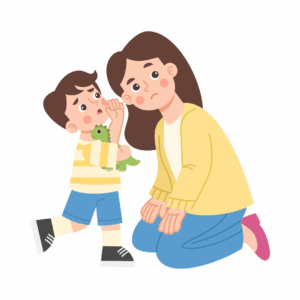
A child’s tears can make parents uncomfortable.
You may feel an immediate urge to fix the situation.
But crying is not always a problem that needs fixing.
Sometimes your child simply needs to experience disappointment.
You can stay nearby and say:
“I know. This is really hard.”
Then let them cry.
You don’t need to remove the feeling.
You need to help them feel safe while experiencing it.
Hold the Boundary Without Becoming Cold
Firmness doesn’t require emotional distance.
You can remain physically and emotionally available while maintaining your decision.
For example:
“I’m not changing my answer, but I’m staying with you.”
That sentence communicates two important things:
The boundary is firm.
The relationship is safe.
Children need both.
If They Hit, Kick, or Throw
Gentle parenting does not mean allowing unsafe behavior.
If your child hits, calmly intervene.
You might say:
“I won’t let you hit.”
Move yourself or others out of reach if necessary.
If they throw an object:
“I’m going to move this because it’s not safe to throw.”
Avoid turning the moment into a lecture.
First make everyone safe.
Then discuss what happened once your child is calm.
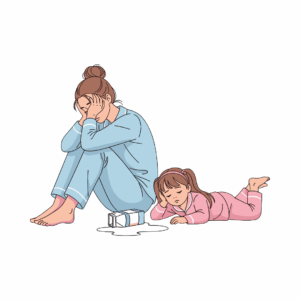
What If You Are the One About to Lose It?
Sometimes the problem isn’t that you don’t know what to say.
You’re simply exhausted.
You’ve been asked the same question 20 times.
You’ve had a long day.
Your patience is gone.
In that moment, give yourself permission to pause.
If your child is safe, take a few seconds.
Breathe.
Unclench your jaw.
Lower your shoulders.
Remind yourself:
“I don’t have to solve this perfectly.”
You only need to respond to the next moment.
What to Say When You’re at Your Limit
You can be honest without making your child responsible for your emotions.
Try:
“I’m feeling frustrated, so I’m going to take a breath.”
Or:
“I’m having a hard time staying calm. I’m going to speak slowly.”
You’re modeling emotional regulation in real time.
And if you do lose your temper, repair afterward.
Try:
“I yelled earlier. I’m sorry. I was overwhelmed, but yelling wasn’t the right way to handle it.”
An apology doesn’t weaken your authority.
It strengthens trust.
What Gentle and Firm Parenting Sounds Like
When your child says:
“I want another cookie!”
You might say:
“You really want another one. We’re done with cookies today.”
When they scream:
“That’s not fair!”
You might respond:
“It feels unfair. I’m still holding the limit.”
When they cry:
“You don’t have to like my answer. I’m here with you.”
When they hit:
“You’re angry. I won’t let you hurt me.”
These responses don’t eliminate the emotion.
They teach your child that emotions can exist alongside boundaries.
Remember What Your Child Is Learning
Every time you hold a boundary calmly, your child is learning something.
They’re learning that:
- Anger doesn’t control other people.
- Disappointment is survivable.
- Parents can say no and still be loving.
- Feelings don’t need to become harmful behavior.
- Conflict doesn’t mean the relationship is broken.
- Calm can return after intense emotions.
These lessons take time.
Your child won’t master emotional regulation because of one perfect response.
They learn through repetition.
Final Thoughts
There will be days when gentle parenting feels anything but gentle.
Your child may scream.
You may feel exhausted.
You may question whether you’re doing it right.
Remember that being gentle doesn’t mean being passive.
And being firm doesn’t mean being harsh.
You can say no without yelling.
You can validate feelings without giving in.
You can stop unsafe behavior without shaming your child.
And you can hold a boundary while staying emotionally close.
So when your child is screaming and you’re tempted to either explode or surrender, take a breath.
Get low.
Use fewer words.
Name the feeling.
Hold the boundary.
And remind yourself:
You don’t have to make the emotion disappear. You just have to help your child move through it safely.