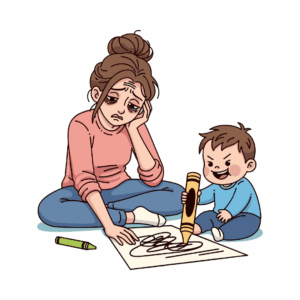
When parents hear the word “boundaries,” they often imagine rules, discipline, and saying “no.”
Toddlers, on the other hand, often hear something completely different.
They hear:
“My parent is stopping me.”
It’s easy to assume boundaries create power struggles. But child psychology tells us the opposite.
Healthy boundaries don’t make toddlers feel controlled; they make them feel safe.
Toddlers are wired to test limits. They push, climb, throw, refuse, and protest because they’re trying to understand how their world works. Every time they discover a consistent, loving limit, they learn something even more important than the rule itself:
“The adults around me are in charge, and I’m safe.”
The goal isn’t to control your toddler’s every move.
The goal is to create predictable limits that help them explore the world with confidence.
Here are six boundaries that support emotional security while strengthening your relationship with your child.
Why Toddlers Need Boundaries More Than They Need Freedom
Many parents worry that setting too many limits will damage their child’s confidence.
In reality, toddlers become anxious when there are no clear limits at all.
Imagine being two years old.
You don’t fully understand danger.
You don’t know what happens next.
You can’t manage your emotions yet.
The adults around you become your roadmap.
Consistent boundaries tell your child:
- “Someone is keeping me safe.”
- “The world is predictable.”
- “I don’t have to figure everything out by myself.”
Boundaries aren’t the opposite of love.
They’re one of the clearest ways children experience it.
1. The Boundary: “I Won’t Let You Hurt People.”
This is one of the most important limits every toddler needs.
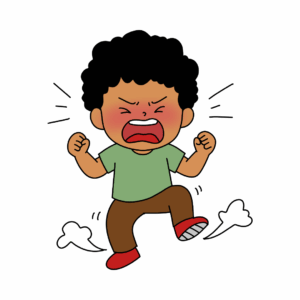
Toddlers hit, bite, kick, and throw; not because they’re “bad,” but because their brains are still learning impulse control.
Your job isn’t to punish the emotion.
It’s to stop the behavior.
Instead of shouting:
“What’s wrong with you?”
Try saying:
“I won’t let you hit me.”
If needed, gently hold their hands or move them to a safe space.
Then add:
“You’re really angry. I’m here to help.”
This teaches two powerful lessons:
- Feelings are okay.
- Hurting people isn’t.
2. The Boundary: “Some Things Are Not Safe.”
Toddlers naturally want to climb furniture, touch hot ovens, run into parking lots, and grab sharp objects.
These moments require immediate, confident boundaries.
Instead of saying:
“Be careful!”
Try:
“I won’t let you touch the stove because it’s hot.”
Or:
“I’m holding your hand because cars can’t always see little people.”
Notice the focus.
You’re not controlling your child.
You’re protecting them.
Children feel safest when adults confidently handle safety decisions.
3. The Boundary: “It’s Okay to Feel Angry. It’s Not Okay to Break Things.”
Toddlers experience enormous emotions in tiny bodies.
When frustration takes over, toys may fly across the room.
Your response matters.
Avoid saying:
“Stop being naughty.”
Instead say:
“You’re really upset. I won’t let you throw toys.”
Then offer a safe alternative.
You could say:
“You can throw this soft ball into the basket.”
Or:
“Let’s stomp our feet together.”
This helps your child learn that emotions can be expressed in safe ways.
4. The Boundary: “Some Decisions Belong to Parents.”
Toddlers thrive when they have choices.
But they don’t need to make every decision.
Too many choices can actually create stress.
For example, bedtime isn’t a negotiation.
Instead of asking:
“Do you want to go to bed?”
Try:
“It’s bedtime. Would you like to walk to your room or hop like a bunny?”
The boundary stays firm.
The child still feels respected because they have a small, meaningful choice within it.
This reduces power struggles while preserving your role as the leader.
5. The Boundary: “We Treat Each Other With Respect.”
Respect isn’t something children suddenly learn in school.
It starts at home.
That means teaching toddlers how family members speak to and treat one another.
When your toddler screams at you, resist the urge to scream back.
Instead say:
“I hear you’re upset. I’m going to listen when we use kind voices.”
If they grab something from another child, calmly respond:
“I won’t let you snatch. Let’s give it back and ask for a turn.”
Children learn respectful behavior by experiencing respectful guidance.
The way you correct them becomes the way they’ll eventually speak to others—and to themselves.
6. The Boundary: “I’ll Stay With You Through Big Feelings.”
This may be the most important boundary of all.
Many parents think they need to end tantrums as quickly as possible.
But your toddler doesn’t need you to erase their emotions.
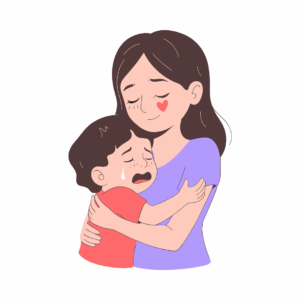
They need you to stay emotionally available while holding the limit.
Imagine your child crying because screen time is over.
Instead of giving the tablet back to stop the tears—or sending them away until they calm down—try saying:
“You’re sad because screen time is finished.”
Then calmly add:
“Screen time is over, and I’m staying with you while you’re upset.”
This communicates something every child needs to hear:
“Your feelings are welcome, even when the answer is no.”
That’s the heart of healthy boundaries.
What Boundaries Should Never Feel Like
Boundaries are most effective when they’re calm, predictable, and respectful.
They shouldn’t rely on fear, shame, or humiliation.
Try to avoid statements like:
- “Because I said so.”
- “Stop crying or I’ll give you something to cry about.”
- “You’re impossible.”
- “Good kids don’t act like this.”
These phrases may create short-term obedience, but they rarely build long-term emotional security.
Children don’t learn self-control through fear.
They learn it through repeated experiences of calm guidance.
Scripts That Hold the Boundary Without Damaging the Relationship
In difficult moments, you don’t need complicated explanations.
Simple, confident language works best.
Try these phrases:
When your toddler hits:
“I won’t let you hit. I’m moving your hands.”
When they refuse to leave the playground:
“You’re having fun. It’s time to go now.”
When they throw food:
“Food stays on the table. If you’re finished, we’ll clean up.”
When they melt down over a limit:
“I know you don’t like this. I’m here with you.”
When they keep asking after you’ve already answered:
“I hear you. My answer is still no.”
These scripts communicate empathy without changing the boundary.
Why Consistency Matters More Than Perfection
No parent gets it right every time.
You’ll lose your patience.
You’ll repeat yourself.
You’ll occasionally give in because you’re exhausted.
That’s part of parenting.
What matters most isn’t being perfect.
It’s being predictable.
When boundaries are consistent, toddlers stop spending so much energy testing where the limits are.
Instead, they begin trusting that the adults in their lives will respond in steady, reliable ways.
That trust becomes the foundation for confidence, emotional regulation, and secure attachment.
Final Thoughts
Toddlers don’t push boundaries because they want stricter parents.
They push boundaries because they’re asking an important question:
“Will someone keep me safe while I figure out this big world?”
Every calm, loving limit answers that question with a reassuring “yes.”
So the next time your toddler protests a boundary, remember this:
They’re not just learning what the rule is.
They’re learning who they can depend on.
When you combine empathy with consistency, your child doesn’t feel controlled.
They feel protected.
And children who feel safe today are far more likely to become confident, emotionally resilient adults tomorrow.