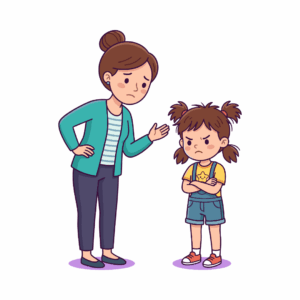
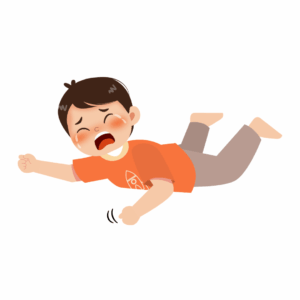
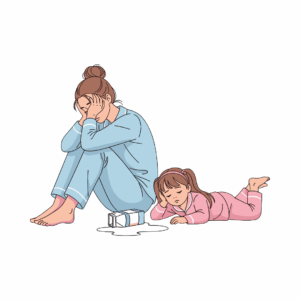
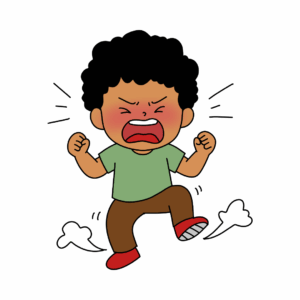
You tell yourself you won’t yell today.
Then your child spills their drink.
They refuse to get dressed.
They ask for the same thing 15 times.
You finally lose your patience.
A few minutes later, you feel guilty.
You may think:
“Why do I keep reacting like this?”
If this sounds familiar, you’re not alone.
Parenting can bring out some very strong emotions.
Sleep deprivation, stress, noise, constant demands, work, household responsibilities, and your child’s behavior can all push you closer to your limit.
Being a reactive parent doesn’t mean you’re a bad parent.
It means you are responding from the heat of the moment instead of having enough space to choose how you want to respond.
The good news is that this pattern can change.
You don’t have to become perfectly calm.
You simply need to create a little more space between what your child does and what you do next.
What Does It Mean to Be a Reactive Parent?
Reactive parenting happens when you respond quickly from anger, frustration, fear, or overwhelm.
Your child spills something.
You shout.
Your toddler refuses to leave.
You threaten a punishment.
Your child talks back.
You immediately raise your voice.
The reaction often happens before you’ve had time to think.
Responsive parenting looks different.
You still notice the behavior.
You still set boundaries.
You still get frustrated.
But you pause long enough to choose your response.
This doesn’t mean ignoring difficult behavior.
It means responding to it without letting your strongest emotion take over.
Responsive caregiving isn’t about being perfect. It involves intentionally responding to children’s needs and supporting their emotional development.
Notice What Triggers Your Strongest Reactions
You can’t change a reaction you haven’t learned to recognize.
Pay attention to the moments when you most often lose your patience.
Maybe it’s:
- Getting ready in the morning
- Bedtime
- Sibling arguments
- Whining
- Repeated questions
- Messes
- Your child refusing to listen
- Public tantrums
- Being interrupted
- Feeling rushed
- Being tired or hungry yourself
You may notice that your child’s behavior isn’t the only trigger.
Sometimes the real trigger is:
“I’m already overwhelmed.”
“We’re going to be late.”
“I’ve had no time to myself.”
“I’ve asked five times.”
Once you know your triggers, you can prepare for them.
Learn to Recognize Your Body Before You React
Your body often knows you’re about to lose your patience before your brain catches up.
Maybe your jaw tightens.
Your shoulders rise.
Your heart starts beating faster.
You feel hot.
You start talking louder.
You feel an overwhelming urge to make your child stop immediately.
These are your warning signs.
Notice them.
That moment is your opportunity to pause.
You don’t have to wait until you’re already yelling.
Give Yourself a Few Seconds Before Responding
You don’t need a 30-minute meditation session in the middle of a toddler meltdown.
Sometimes you need five seconds.
Stop.
Take one slow breath.
Unclench your jaw.
Lower your shoulders.
Then speak.
You can even say:
“I need a minute.”
If your child is safe, step away briefly.
Get some water.
Take a few breaths.
Then return.
That tiny pause can interrupt the automatic reaction.
Stop Expecting Yourself to Stay Calm All the Time
Trying to become a perfectly calm parent can create another problem.
You lose your patience once.
Then you feel terrible.
Then you think:
“I’m failing at this.”
Then the guilt adds even more stress.
Instead, aim for progress.
Maybe you used to yell immediately.
Now you pause for three seconds before yelling.
That’s progress.
Maybe you still lose your patience but recover faster.
That’s progress too.
The goal isn’t perfection.
It’s becoming more aware of what happens before, during, and after your reactions.
Remember That Your Child’s Behavior Is Usually Developmental
One of the fastest ways to become less reactive is to change the meaning you attach to your child’s behavior.
Your toddler keeps asking for something.
You might think:
“They’re trying to annoy me.”
Or:
“They’re being difficult on purpose.”
But toddlers are still developing impulse control, communication, patience, and emotional regulation.
The behavior may be frustrating without being intentionally disrespectful.
When you see behavior through a developmental lens, it becomes easier to respond instead of taking it personally.
Separate the Child From the Behavior
Your child isn’t bad because they had a tantrum.
They’re not disrespectful because they forgot a rule.
They’re not manipulative because they cried after hearing no.
They’re a child having a difficult moment.
You can still stop the behavior.
You can say:
“I won’t let you hit.”
“We’re not throwing toys.”
“It’s time to leave.”
But you don’t need:
“You’re being impossible.”
or:
“What’s wrong with you?”
Correct the behavior without attacking the child’s identity.
Use Fewer Words When You’re Angry
When you’re already frustrated, long explanations usually don’t help.
Your child may not listen.
You may become more frustrated.
Then you repeat yourself.
Then your voice gets louder.
Try making your language shorter.
Instead of:
“How many times have I told you that you need to put your shoes on because we’re already late and you know we have to leave?”
Try:
“Shoes on. We’re leaving.”
Instead of:
“If you don’t stop throwing that toy, I’m going to take everything away!”
Try:
“I won’t let you throw the toy.”
Simple language makes it easier for you to stay regulated too.
Replace Yelling With a Calm Boundary
You don’t have to yell to be firm.
You can lower your voice and still mean what you say.
Try:
“I won’t let you hit me.”
“The answer is no.”
“We’re leaving now.”
“You can be angry. You can’t hurt people.”
“I’m going to help you stop.”
A calm boundary is still a boundary.
In fact, young children learn a great deal about emotional regulation by watching how adults handle stress and strong emotions.
Stop Trying to Win Every Battle
Some parenting moments become bigger than they need to be.
Your child wants to wear mismatched socks.
You say no.
They argue.
You argue back.
Now you’re both upset over socks.
Ask yourself:
Does this actually matter?
Some boundaries are important.
Safety matters.
Respect matters.
Health matters.
But not every preference needs to become a battle.
Giving your child reasonable choices can reduce unnecessary conflict.
Give Choices When You Can
Children often want some control over their lives.
You can provide that control without giving up your boundaries.
Instead of:
“Get dressed.”
Try:
“Do you want the blue shirt or the green shirt?”
Instead of:
“Get in the car.”
Try:
“Do you want to climb in yourself or should I help you?”
Instead of:
“Clean your room.”
Try:
“Do you want to put the books away first or the toys?”
You remain the parent.
Your child gets some autonomy.
Everyone has a little more room to breathe.
Create Routines Around Your Most Difficult Times
If you react most often during predictable parts of the day, build routines around them.
If mornings are chaotic:
Clothes ready the night before.
Shoes by the door.
Simple breakfast options.
A predictable getting-ready sequence.
If bedtime is difficult:
Bath.
Pajamas.
Teeth.
Books.
Cuddle.
Bed.
Predictability can reduce the number of decisions and arguments you have to navigate.
And when you know what comes next, your child does too.
Don’t Make Your Child Responsible for Your Emotions
You can say:
“I’m frustrated.”
That’s healthy.
But try not to make your child responsible for fixing your frustration.
Instead of:
“You’re making Mommy so angry.”
try:
“I’m getting frustrated, so I’m going to take a breath.”
This shows your child something important:
Adults have emotions, and adults are responsible for managing them.
You are modeling the skill instead of demanding that your child regulate you.
Use a Pause Phrase When You’re About to Lose It
Choose a sentence you can use when you feel yourself becoming reactive.
For example:
“I need a moment.”
Or:
“I’m getting frustrated. Let me take a breath.”
Or simply:
“Pause.”
Practice it when you’re calm.
Then use it when you need it.
Having a familiar phrase can make it easier to interrupt the automatic reaction.
Take Care of the Parent Behind the Reaction
Sometimes the problem isn’t a lack of parenting knowledge.
You’re exhausted.
You haven’t eaten.
You’ve had no quiet time.
You’ve been touched all day.
You’ve been working.
You’ve been cleaning.
You’ve been answering questions for hours.
Then your child spills something.
That final little thing feels enormous.
This doesn’t excuse harmful behavior.
But it does give you useful information.
If you’re constantly running on empty, working on your reactions may also require working on your own basic needs.
Eat.
Rest when you can.
Ask for help.
Take breaks.
Lower unnecessary demands.
You don’t have to earn the right to care for yourself.
Have a Plan for Your Biggest Parenting Triggers
If bedtime makes you reactive, don’t wait until bedtime to decide what you’ll do.
Create a plan.
Maybe it is:
“When my child refuses pajamas, I will offer two choices.”
Maybe:
“If I feel myself getting angry, I will step into the hallway for 30 seconds if my child is safe.”
Maybe:
“I will stop repeating myself after the second reminder and use a calm consequence.”
A plan gives you something to follow when your emotions are running high.
Repair When You Get It Wrong
You will still lose your patience sometimes.
You may yell.
You may speak harshly.
You may react in a way you regret.
Repair matters.
Go back to your child.
Get down to their level.
Say:
“I yelled earlier. I was frustrated, but I shouldn’t have yelled at you. I’m sorry.”
Don’t add:
“But you made me angry.”
Own your part.
Then move forward.
Apologizing doesn’t make you weak.
It teaches your child that people can make mistakes and repair relationships afterward.
Don’t Turn Your Guilt Into Another Problem
After you yell, you may feel terrible.
You might think:
“I’ve damaged my child.”
“I’m just like my parents.”
“I’m a terrible mother.”
Try to separate accountability from shame.
Accountability says:
“I didn’t handle that well, and I want to do better.”
Shame says:
“I’m a terrible person.”
The first one can lead to change.
The second often leaves you stuck.
Practice the Response You Want Before You Need It
You don’t learn a new parenting response only during a meltdown.
Practice when you’re calm.
Imagine your child refusing to leave the park.
Instead of yelling:
“We’re going home now!”
practice:
“You don’t want to leave. I know. It’s time to go. I’ll help you.”
Imagine your child hitting.
Practice:
“I won’t let you hit. You’re angry. Let’s move away and calm down.”
The more familiar these responses become, the easier they are to access under stress.
Focus on Becoming Responsive, Not Perfect
There will be days when you respond beautifully.
There will be days when you’re barely holding it together.
There will be moments when you pause.
And moments when you don’t.
That’s parenting.
The goal is not to eliminate every strong emotion.
It’s to become better at noticing those emotions before they control your behavior.
A responsive parent can still be frustrated.
They can still say no.
They can still enforce consequences.
They can still have difficult days.
The difference is that they are increasingly able to choose their response instead of being controlled by the reaction.
A Simple Three-Step Reset for Difficult Moments
When you feel yourself becoming reactive, remember three things:
Pause.
Take one breath before you speak.
Connect.
Remind yourself:
“My child is having a hard time. They aren’t my enemy.”
Respond.
Set the boundary you actually want to set.
For example:
“You’re angry because I said no. I won’t change the answer, but I’m here with you.”
That’s it.
You don’t need a perfect speech.
You need a pause and a plan.
Final Thoughts
If you want to stop being a reactive parent, don’t start by demanding that you never get angry again.
Start smaller.
Notice your triggers.
Learn your body’s warning signs.
Pause before speaking.
Use fewer words.
Set calm boundaries.
Give choices when appropriate.
Create routines around difficult parts of the day.
Take care of your own basic needs.
And when you get it wrong, repair.
Your child doesn’t need a parent who never gets frustrated.
They need a parent who is learning how to handle frustration without making the child carry it.
Every time you pause instead of yelling, you are practicing a new pattern.
Every time you repair after a mistake, you are showing your child what healthy relationships look like.
And every time you choose to respond instead of react, you’re becoming the parent you want to be.