It is a Friday night, and the board is on the table.
Snakes and ladders, or cards, or the one with the little plastic pieces your child loves.
For ten minutes, it is lovely.
Your child is laughing, moving the counter, counting the squares out loud.
Then the dice turns.
Your counter climbs a ladder, and theirs slides down a snake, and the whole evening changes in a second.
The laughing stops.
The bottom lip comes out.
“You cheated.”
“This game is stupid.”
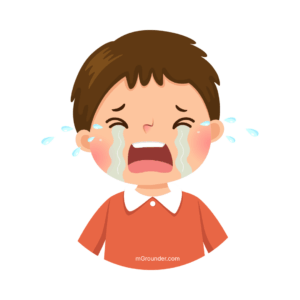
And then the board is on the floor, and your child is crying on the stairs, and you are sitting at the table wondering what just happened.
It was only a game.
Was it?
To you, yes.
To your child, it was the whole world, and the world just told them they were not good enough.
That is the question this guide answers: why does losing feel so big, and what do you do about it?
The Game Is the Whole World
This is the reframe, and it changes how you see the board.
For your child, the game is the whole world.
That sounds like an exaggeration, and it is not.
A young child has no “just a game” yet.
They do not have the part of the brain that steps back and says, “This is small, and I am still fine.”
That part is still growing, and it will be years before it is finished.
Until then, the outcome of the game and the worth of the child feel like the same thing.
Winning means “I am good.”
Losing means “I am bad.”
There is no middle, because a small child thinks in middles very slowly.
That is why the tears are so big.
Your child is not being dramatic, and they are not trying to ruin the evening.
They are grieving a loss that feels, to them, like a loss of standing.
Their place in the family, their cleverness, their luck, all of it was on the board, and the board said no.
That is the whole thesis of this guide, and it has a name: the whole world.
Once you see the game as the whole world, your job becomes clear.
You are not teaching your child to lose.
You are teaching them that losing does not shrink them, and that the world is still there after the board is put away.
That lesson takes years, and it starts with one small game at a time.
1. Losing Feels Like Being Erased
Watch what happens in the seconds after a loss.
Your child does not just look sad.
They look smaller, as if something has been taken out of them.
That is because, to them, something has.
They were winning, and winning felt like being seen.
Then the dice turned, and the being seen went with it.
That is why a child who loses will often say it was not fair.
“Not fair” is easier to say than “I feel small.”
It gives the feeling a reason, and a villain, and a way out.
Your child is not lying when they say the game was rigged.
They are telling you the only story that makes the feeling bearable.
So do not argue about fairness in that moment.
The dice were fair, and your child knows it, and knowing it does not help.
Name the feeling instead.
“You were winning, and then you lost, and that feels awful.”
That sentence does not fix the game.
It fixes the loneliness around the loss.
And a child who feels understood can come back to the table sooner.
The feeling passes faster when it is named, and slower when it is argued with.
2. Let Them Win the Small Ones
Here is the part that surprises most parents.
Letting your child win sometimes is not spoiling them.
It is building the muscle they need to lose.
Think about it like learning to swim.
You do not start in the deep end.
You start where the water is shallow, where the child can touch the bottom, and the fear is small.
Winning is the shallow end.
A child who has won a hundred small games knows what winning feels like, and that knowledge steadies them when they lose.
A child who never wins has nothing to steady them.
Every loss feels like the first one, because in a way it is.
So in the early years, let them win more than they lose.
Not every time, and not by cheating.
Just enough that winning is familiar, and losing is the exception, not the rule.
Play a game they are good at.
Play a short one, where the lead changes hands.
And when they win, notice it plainly, without making it a big ceremony.
“You won that one. You played well.”
Then, slowly, let the losses in.
One loss in three games, then one in two, then half.
Losing well is one of the quietest ways to raise resilient children.
3. Name the Feeling Before It Explodes
There is a moment in every game when the loss is coming and your child can see it.
The other player is two squares from the end, and your child is ten squares back.
That moment is your window.
If you name the feeling there, before the dice is rolled, the explosion is smaller.
“Look, I am nearly at the end, and you are a long way back. That is hard to watch.”
That sentence is doing three things at once.
It tells your child you have seen the board, it names the feeling before it arrives, and it gives them words for it.
Words are the difference between a feeling and a flood.
A child with words can say “I am furious.”
A child without them can only throw the board.
The words you use in the moment matter, and these phrases that help kids build self-regulation are a good place to start.
Do not wait for the meltdown to teach the words.
Teach them when the game is calm, and the stakes are low.
“When I lose, I feel cross. I take a breath, and I say it out loud.”
Your child is watching you lose, too.
How you lose is the lesson they will copy, long before they copy your advice.
4. The Ten-Minute Game
Here is the system, and it has numbers you can copy: the ten-minute game.
Keep games to ten minutes.
Ten minutes, and then the game is over, win or lose.
Play three short games in a row, not one long one.
Three games means three endings, and three chances to practise losing.
And here is the rule that makes it work: the loser chooses the next game.
That rule changes everything.
Losing no longer means sitting and watching the winner celebrate.
It means picking the next game, and the next game is yours.
Your child learns, without anyone lecturing them, that losing leads to choosing.
That is a small lesson, and it is the whole point.
Choose games that end quickly, and games where the lead changes hands.
Card games, dice games, the ones where anyone can win on the last turn.
Avoid the long games, the ones where a child can see they are losing for forty minutes before it ends.
Forty minutes of losing is a long time to hold a big feeling.
Ten minutes is not.
Three games, ten minutes each, loser picks next.
That is the system, and it fits in one sentence.
5. Games of Chance
Some games are better teachers than others.
Skill games, like chess, or the ones where the cleverest player always wins, are the hardest for a sore loser.
Every loss feels like a verdict on how clever they are.
Games of chance are kinder.
Snakes and ladders, dice games, cards where the shuffle decides.
In a game of chance, losing is nobody’s fault.
Not yours, not theirs, not the dice.
It just happened, and it could have happened to anyone.
That is a much easier loss to hold.
Play the chance games first, while the losing muscle is still small.
Let your child lose at snakes and ladders ten times, and watch what happens.
The first loss is a disaster.
The fifth is a sigh.
The tenth is a shrug, and a question: “Can we play again?”
That shrug is the muscle growing.
Save the skill games for later, when the muscle is stronger.
And when you do play them, keep them short, and keep the loser-picks rule.
Chance does not care who is cleverest, and that is a relief to a child who is still learning what clever means.
The same turn-taking that sparks playground conflicts is where losing practice starts.
6. After the Storm
The board is on the floor, and your child is on the stairs, and the game is over.
Now is not the time for a lecture.
A child in the middle of a storm cannot hear a lesson.
They can only hear that they are in trouble, and that makes the storm worse.
Wait.
Wait until the crying has slowed, and the breathing is back, and your child is sitting up again.
Then go to them, and say very little.
“That was a hard game. You wanted to win, and you did not.”
That is enough.
Do not add “and that is why we do not throw the board.”
Not yet.
That sentence can wait until tomorrow, when the storm is a story, not a feeling.
Then, and only then, you can talk about the board.
“Next time, when the feeling comes, we can put the board down together, instead of throwing it.”
Repair comes after the storm, not during it.
And repair is the part your child will remember.
Not the lecture, and not the punishment.
The parent who came and sat with them when the game was lost.
That is the lesson that stays, long after the board is back in its box.
The Shortcuts That Make It Worse
Some shortcuts look like they help, and quietly make losing harder.
It helps to name them, because every parent has tried one, and naming them is how you choose differently next time.
Do not always let them win.
A child who always wins never learns to lose, and the first real loss, at school, or with friends, hits much harder.
Do not mock the tears.
“It is only a game, do not be silly” lands like a verdict, and a child who feels mocked stops bringing their feelings to you.
Do not punish the meltdown.
Sending a child to their room for crying about a game teaches them that big feelings get them sent away.
Do not change the rules so they win.
Your child knows, even if they pretend not to, and a rigged win teaches them that winning matters more than fairness.
And now the question you are probably asking yourself.
“But if I always let her win, she will never learn.”
You are right, and that is why you do not always let her win.
You let her win often when she is small, and less often as she grows, so the losses arrive gradually, not all at once.
A sore loser is not the same as a cheater, and that difference matters.
A sore loser melts down when they lose.
A cheater changes the rules to win, and that needs a different conversation, about fairness, not about feelings.
If losing regularly ends in hitting, or hurting others, or if your child cannot play any game without a meltdown for months, that is the moment to talk to your pediatrician.
Not because anything is wrong, but because a second pair of eyes sees the pattern sooner.
When the Game Is Lost
When the game is lost and the tears start, hold four steps in mind.
First, stay.
Do not leave the table, and do not raise your voice.
Second, name it.
“You were winning, and then you lost, and that feels awful.”
Third, breathe and pick.
One breath together, and then your child picks the next game.
Fourth, play again.
Not tomorrow, but now, while the feeling is still warm.
That is all of it.
Stay, name, breathe and pick, play again.
No new ideas, nothing to memorise, just four steps you can hold in your head while the board is still on the table.
If the board flies anyway, pick it up quietly, and start again.
The calm you show is the lesson your child copies.
Tomorrow night, play the same three short games again.
The steps do not change, and neither does your calm.
Tonight, Three Short Games
You do not need a new game, a new rule, or a perfect week.
You need three short games, ten minutes each, and the loser-picks rule.
Tonight, after dinner, put a game on the table.
A short one, a chance one, one where anyone can win.
Play three games, and let the loser pick the next one.
When your child loses, and they will, name the feeling and stay.
“You were winning, and then you lost. That is hard.”
Then breathe, pick, and play again.
There will be tears. They always pass.
There will be a night when the board goes on the floor.
Pick it up quietly, and play again.
And one night soon, you will watch your child lose a game, take a breath, and say the words themselves.
“Can we play again?”
That is the muscle working.
Sibling games are the hardest of all, and that is no surprise when you see why your children fight each other for your attention.