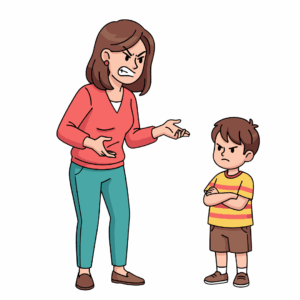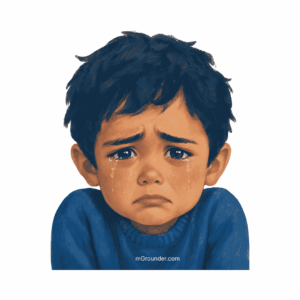
Every parent gets angry.
You can love your child deeply and still have moments when you’re exhausted, overstimulated, or pushed beyond your limit.
Maybe you’ve asked your child five times to get dressed.
Maybe they threw their dinner on the floor.
Maybe you had a difficult day and then came home to another meltdown.
You lose your patience.
Your voice gets louder.
And afterward, you wonder:
“Did my anger hurt my child?”
One angry moment does not make you a bad parent.
What matters is the pattern, how anger is expressed, and what happens afterward.
When yelling, threats, criticism, or intimidation become frequent, children can be affected in ways that go far beyond the moment itself.
Understanding those effects isn’t about creating guilt.
It’s about helping parents recognize the pattern and learn how to repair it.
Children Experience Anger Differently Than Adults
An adult may think:
“I’m just frustrated.”
A child may experience that same moment as:
“Mom is angry with me. Am I safe? Did I do something terrible?”
Children depend on their parents for emotional security.
When a parent’s anger is frequent or unpredictable, children may become more focused on watching the parent’s mood than understanding their own emotions.
They may start asking themselves:
“Is Dad in a good mood today?”
“Should I ask for this now?”
“Will Mom get angry if I make a mistake?”
That constant uncertainty can affect how secure a child feels at home.
1. Angry Parenting Can Make Children Feel Unsafe
Children need to know that home is a place where mistakes and difficult emotions can be handled safely.
Frequent yelling, threats, or intimidating behavior can undermine that sense of safety.
A child may begin walking on eggshells around a parent.
They might become unusually quiet when that parent enters the room or avoid asking for help because they’re worried about the response.
Firm parenting isn’t the problem.
A parent can be firm without being frightening.
The difference is whether the child experiences the boundary as guidance or intimidation.
2. Children Can Learn to Fear Mistakes
Imagine a child spills a glass of milk.
If the response is:
“It’s okay. Accidents happen. Let’s clean it up.”
the child learns that mistakes can be repaired.
If the response is:
“What is wrong with you? Can’t you be careful?”
the child may learn something very different.
They may start hiding mistakes.
They may become afraid to try unfamiliar things.
They may associate mistakes with shame rather than learning.
Children need correction, but they also need room to be imperfect.
3. They May Copy the Way You Handle Anger
Children don’t only listen to what parents teach.
They watch how parents behave.
If a child regularly sees anger expressed through yelling, insults, threats, or slamming doors, they may learn that this is how conflict works.
Later, you may hear them speak to siblings the same way.
That’s not because they are bad.
They’re practicing what they’ve observed.
The good news is that the reverse is also true.
When children repeatedly see adults pause, communicate, apologize, and repair, they learn those skills too.
4. Angry Parenting Can Affect Self-Esteem
There’s a significant difference between correcting behavior and attacking identity.
“Throwing the toy wasn’t okay.”
focuses on behavior.
“You’re so bad.”
attacks the child.
When children repeatedly hear negative labels, they can begin to internalize them.
A child who is constantly called difficult, lazy, careless, or selfish may eventually start believing those descriptions.
Correct the behavior without defining the child by it.
Try:
“That choice wasn’t okay. Let’s figure out what you can do differently.”
5. Some Children Become More Anxious
Frequent parental anger can make some children more watchful and worried.
They may constantly monitor facial expressions, voices, and moods.
They may become anxious about getting things wrong.
They may seek excessive reassurance.
Not every child will respond to parental anger in the same way, but unpredictable anger can make emotional security harder to maintain.
Children benefit from knowing that a parent’s emotions are manageable and that conflict doesn’t automatically threaten the relationship.
6. Others May Become More Defiant
Anger doesn’t always produce fear.
Some children respond by fighting back.
A parent yells.
The child yells louder.
The parent becomes stricter.
The child becomes more resistant.
Soon, the entire relationship becomes a cycle of escalation.
This can make parents believe their child needs even more control.
But sometimes what is needed is less escalation and more predictable boundaries.
You can be firm without turning every disagreement into a battle.
7. Children May Stop Sharing Their Problems
One of the most important things parents can offer is a safe place to bring difficult problems.
But if children expect anger whenever they admit a mistake, they may stop coming to you.
They might hide:
- A poor grade
- A friendship problem
- Something they broke
- A mistake they made
- Something that happened at school
- Something they’re worried about
The immediate behavior may look better because the child is hiding the problem.
But the long-term cost can be significant.
You want your child to think:
“I can tell my parent the truth, even when I’ve messed up.”
8. Angry Parenting Can Affect How Children Handle Conflict
Children are learning relationship skills at home.
If conflict is regularly handled through shouting, blame, or intimidation, they may carry those patterns into friendships and future relationships.
They may learn to avoid conflict completely.
Or they may become comfortable using anger to get their way.
Healthy conflict teaches something different:
“We can disagree and still respect each other.”
That is a lesson children can carry throughout life.
What If You Already Yell?
This is where parents need to hear something important:
You can change the pattern.
You don’t need to become a perfectly calm parent overnight.
Start by noticing your triggers.
Maybe mornings are chaotic.
Maybe bedtime is your breaking point.
Maybe you’re most reactive when you’re physically exhausted.
Once you know the pattern, you can plan for it.
You might prepare clothes the night before.
Reduce unnecessary instructions.
Give transition warnings.
Take a brief pause before responding.
Small changes can reduce repeated explosions.
Repair Matters More Than Parents Realize
You will lose your patience sometimes.
What matters is what happens afterward.
If you yell, come back when you’re calm.
Look your child in the eye and say:
“I yelled at you earlier. I was frustrated, but yelling wasn’t the right way to handle it. I’m sorry.”
Don’t add:
“But you made me angry.”
Take responsibility for your behavior.
This teaches your child that adults can make mistakes, acknowledge them, and repair relationships.
An apology doesn’t remove your authority.
It models accountability.
How to Correct Without Anger
You don’t have to choose between yelling and letting everything go.
There is a middle ground.
Instead of:
“How many times do I have to tell you?”
Try:
“The toys need to stay on the floor.”
Instead of:
“Stop being so disrespectful.”
Try:
“I won’t continue this conversation while we’re yelling. We can talk when we’re calmer.”
Instead of:
“You’re driving me crazy!”
Try:
“I’m getting frustrated. I’m going to take a breath before I respond.”
These responses still provide boundaries.
They simply remove unnecessary intimidation.
What Children Need From an Angry Parent
If you’re working on managing your anger, your child doesn’t need a perfect transformation.
They need to see progress.
They need to hear:
“I’m getting frustrated, so I’m going to pause.”
They need to see you repair mistakes.
They need to know that your anger is yours to manage.
And they need to experience consistent boundaries that don’t depend on how loudly you feel that day.
The message becomes:
“My parent has big feelings, but I am not responsible for controlling them.”
That is an important emotional lesson.
When to Seek Extra Support
If anger frequently feels uncontrollable, involves threats or intimidation, or you are worried that you may hurt your child, seek professional support.
A pediatrician, therapist, or qualified parenting professional can help you identify triggers and build safer strategies.
Getting help isn’t a sign that you’re failing.
It’s a sign that you’re taking your relationship with your child seriously.
Final Thoughts
Angry parenting isn’t about one bad day.
Every parent has moments when patience disappears.
The concern is when anger becomes the main way a child experiences correction, boundaries, or conflict.
Children need parents who can lead them without frightening them.
They need limits without humiliation.
They need correction without being made to feel like a bad person.
And when parents get it wrong, they need repair.
So if you’ve been struggling with anger, don’t use this article as another reason to beat yourself up.
Use it as a starting point.
Pause before reacting.
Change one pattern.
Apologize when necessary.
Try again tomorrow.
Because children don’t need perfect parents.
They need parents who are willing to notice, repair, and grow.