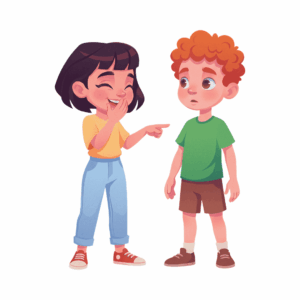
“You’re doing it wrong!”
“Give me that!”
“You have to play my way!”
“Move. I want to sit there!”
If your child frequently tells everyone what to do, corrects other children, insists on being in charge, or struggles when things don’t go their way, you may have started thinking of them as bossy.
But before you decide that your child is simply being difficult, it helps to look underneath the behavior.
Children who seem bossy may be trying to gain control, express strong preferences, practice leadership, cope with frustration, or figure out how social relationships work. They are still learning that other people have their own ideas, feelings, boundaries, and choices.
That doesn’t mean you have to accept controlling or disrespectful behavior.
You can teach your child to be confident without letting them control everyone around them.
Here are 10 positive parenting strategies that can help.
1. Look Beyond the “Bossy” Behavior
The first step is to ask yourself what might be driving the behavior.
Your child may be:
- Struggling with flexibility
- Wanting more independence
- Feeling uncertain
- Trying to control an unpredictable situation
- Excited about an idea
- Frustrated that someone isn’t cooperating
- Copying behavior they’ve seen elsewhere
- Still learning social skills
For example, a child who says:
“You have to play the game this way!”
may not be trying to dominate everyone.
They may simply have a very specific idea of how they want the game to work.
That doesn’t mean you let them dictate everything. It means you can address the underlying skill while still setting a boundary.
Try:
“You really want to play it your way. Other people get to have ideas too.”
This separates the child from the behavior.
Instead of thinking, “My child is bossy,” you can think, “My child is learning how to cooperate.”
2. Teach the Difference Between Asking and Ordering
Children don’t automatically know how their words affect other people.
A child might say:
“Get me some water!”
You can respond calmly:
“Try asking me.”
Then give them the words:
“Can I have some water, please?”
You’re not shaming them for making a demand.
You’re teaching a better way to communicate.
The same approach works with siblings and friends.
“Give me the blue car!”
can become:
“Can I have a turn with the blue car?”
Over time, your child begins to understand that what they want matters, but how they ask matters too.
3. Don’t Give in Just to Avoid a Power Struggle
A bossy child can be persistent.
If they discover that repeating an order eventually gets them what they want, they’ll naturally keep trying it.
Suppose your child says:
“You sit here!”
You might respond:
“You can choose where you sit. I will choose where I sit.”
If they continue:
“I heard you. My answer is still the same.”
You don’t need to argue.
You don’t need to lecture.
And you don’t need to become angry.
A calm boundary can be surprisingly powerful.
4. Give Your Child Appropriate Control
Sometimes bossiness becomes worse when children feel they have very little control over their own lives.
You can give them appropriate choices without handing over the authority.
For example:
“Do you want to wear the blue shirt or the green one?”
“Would you like to brush your teeth before or after putting on pajamas?”
“Do you want to clean up the blocks or the cars first?”
You’re communicating:
“You have choices, but you don’t get to control everything.”
This can be especially helpful for strong-willed children who strongly value independence.
5. Teach That Other People Get a Say
This is one of the most important lessons for a bossy child.
If your child tells a sibling:
“We’re playing my game.”
You can say:
“You can choose a game when you’re playing alone. When you’re playing together, everyone gets a say.”
Then help them practice.
“Ask your sister what she wants to play.”
Or:
“You can suggest your idea, then listen to hers.”
You’re teaching cooperation rather than simply demanding obedience.
6. Give Them Better Words to Use
Sometimes children know what they want but don’t know how to express it appropriately.
Give them phrases they can borrow.
Instead of:
“Move!”
Try:
“Can I get through, please?”
Instead of:
“Give me that!”
Try:
“Can I have a turn when you’re finished?”
Instead of:
“You have to play this way!”
Try:
“I have an idea. Do you want to try it?”
Instead of:
“You’re doing it wrong!”
Try:
“Can I show you how I do it?”
You may need to repeat these phrases many times.
That’s not failure.
You’re teaching a social skill through repetition.
7. Validate the Feeling Without Giving in to the Demand
Your child may become upset when someone doesn’t follow their instructions.
You can acknowledge that frustration without changing the boundary.
“You really wanted your brother to play your way.”
“It’s frustrating when someone chooses something different.”
Then:
“He gets to choose too.”
This is a useful parenting pattern:
Validate the emotion. Hold the boundary.
Your child learns that disappointment is allowed, but controlling other people isn’t.
A positive approach to discipline similarly focuses on understanding what may be influencing a child’s behavior while combining warmth with clear limits and guidance. (Raising Children)
8. Notice When Your Child Cooperates
If most of your attention goes toward correcting bossy behavior, your child may start receiving a lot of attention for being demanding.
Look for the opposite behavior.
If your child says:
“You can choose the game.”
notice it.
“I like how you let your sister choose too.”
If they wait for their turn:
“You waited even though you really wanted the toy. That was patient.”
If they compromise:
“You both wanted different things, and you found a way to take turns.”
Specific encouragement shows your child what successful cooperation looks like.
9. Don’t Humiliate Them by Calling Them “Bossy”
It may be tempting to say:
“Stop being so bossy.”
Especially when you’ve heard the same behavior for the tenth time.
But labels can become part of how children see themselves.
Instead of:
“You’re being bossy.”
describe the behavior:
“You’re telling everyone what they have to do.”
Then teach the alternative:
“You can make a suggestion, but they get to decide too.”
This keeps the focus on something your child can change.
There’s a big difference between:
“You’re bossy.”
and:
“That way of talking isn’t respectful. Let’s try again.”
The first labels the child.
The second teaches the child.
10. Model Respectful Leadership
Some children who appear bossy actually have strong leadership instincts.
They may naturally:
- Organize games
- Come up with ideas
- Take initiative
- Notice what needs to be done
- Want to direct activities
- Feel comfortable speaking up
Those qualities don’t need to disappear.
They need direction.
Teach your child that good leadership isn’t about controlling everyone.
It’s about listening, explaining, cooperating, and making room for other people.
You can say:
“A good leader listens to other people’s ideas.”
Or:
“You can be the person with the idea without being the person who makes every decision.”
That’s a much more useful lesson than simply telling your child to stop taking charge.
What to Say When Your Child Is Being Bossy
Sometimes you need a quick response in the moment.
Try these:
When they give an order:
“You can ask me respectfully.”
When they try to control a sibling:
“Your sister gets to make choices about her own body.”
When they insist everyone play their game:
“You can suggest the game. Everyone gets a turn to choose.”
When they criticize someone else’s way of doing something:
“There can be more than one right way.”
When they become frustrated:
“You don’t like their choice. You can feel frustrated, but you can’t make the choice for them.”
When they refuse to compromise:
“Let’s find a solution that works for both of you.”
Short responses are often more effective than long lectures.
When Your Child Says, “But I Want It My Way!”
This is where many power struggles begin.
You say:
“Your brother gets a turn.”
Your child says:
“But I want it!”
You explain.
They argue.
You explain again.
They argue louder.
Eventually, everyone is exhausted.
Instead, try acknowledging the desire without debating it.
“I know. You really want it your way.”
Then repeat the boundary:
“He gets a turn too.”
You don’t have to convince your child that the boundary is fair before enforcing it.
Sometimes children are allowed to disagree.
They just aren’t allowed to control the outcome.
What If Your Child Is Bossy With Friends?
This can be especially difficult to watch.
You may hear:
“You have to be the doctor!”
“No, you can’t play that!”
“Give me the red one!”
Rather than immediately labeling your child in front of everyone, step in calmly if needed.
You might say:
“Let’s try that again. Ask your friend instead of telling them.”
Or:
“Your friend can choose too.”
If the children are capable of resolving a minor disagreement themselves, give them some space.
Not every conflict requires a parent to referee.
But if your child repeatedly excludes, intimidates, threatens, or physically controls other children, you’ll need to intervene more directly and teach appropriate boundaries.
Don’t Confuse Confidence With Bossiness
A child who speaks up isn’t necessarily being bossy.
A confident child might say:
“I don’t want to play that.”
That’s different from:
“Nobody is allowed to play that!”
A child who expresses an opinion isn’t necessarily controlling others.
A child who says:
“I think we should build it this way.”
is simply sharing an idea.
The problem begins when your child’s preference becomes a demand that everyone else must follow.
You don’t want to teach your child:
“Don’t have opinions.”
You want to teach:
“Your opinions matter, and so do other people’s.”
When Bossy Behavior Is Actually About Anxiety or Control
Sometimes controlling behavior can increase when a child is experiencing stress, uncertainty, or significant changes.
A child who suddenly becomes much more controlling may be communicating that something feels unpredictable.
Pay attention to patterns.
Does the behavior happen mostly:
- Before school?
- During transitions?
- Around unfamiliar people?
- When routines change?
- When they’re tired or hungry?
- After major family changes?
- During sibling conflict?
Looking at the context can tell you more than the label “bossy” ever will.
If the behavior is persistent, severe, affecting friendships or family life, or accompanied by other concerning changes, consider discussing it with your child’s pediatrician or a qualified child-development professional.
The Goal Isn’t to Break Their Strong Will
You don’t need to make your child less confident, less outspoken, or less determined.
Those qualities can become strengths.
A child who learns to express an opinion respectfully may become an adult who can advocate for themselves.
A child who naturally takes initiative may become a capable leader.
A child who knows what they want can learn to pursue goals.
The job isn’t to break the will.
It’s to teach the child how to use it well.
They can be confident without being controlling.
They can be assertive without being disrespectful.
They can lead without dominating.
They can have strong opinions while making room for other people’s opinions.
Final Thoughts
Having a bossy child can be exhausting, especially when every ordinary activity seems to turn into a negotiation.
But try to look beyond the label.
Your child is still learning how relationships work.
They are learning that other people have preferences.
They are learning how to compromise.
They are learning that asking works better than demanding.
And they’re learning that being confident doesn’t mean being in control of everyone around them.
Set clear boundaries.
Give appropriate choices.
Teach respectful language.
Model cooperation.
Notice positive behavior.
And stay calm when your child pushes back.
You don’t need to raise a child who always gives in.
You want to raise a child who can confidently say:
“Here’s what I think.”
and also understand:
“What do you think?”
That’s the difference between simply being in charge and learning how to lead.