You ask your toddler to put their shoes on.
They say no.
You ask again.
They run away laughing.
You tell them it’s time to leave the playground, and suddenly they drop to the ground.
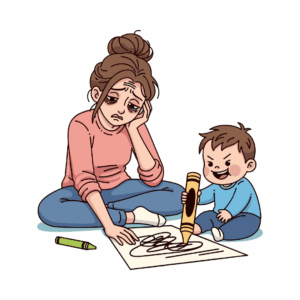
By the end of the day, it can feel like your toddler has challenged every single thing you’ve said.
It’s exhausting.
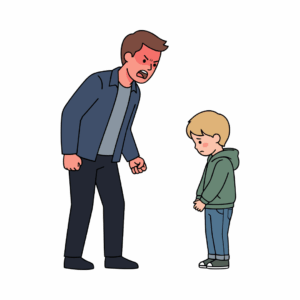
And it’s easy to interpret the behavior as disrespect or a deliberate attempt to test your authority.
But toddlers aren’t usually thinking, “How can I make my parent lose control today?”
They’re developing independence.
They are learning where the limits are, how much control they have, and what happens when they push against those limits.
Your job isn’t to win every interaction.
It’s to provide the calm, consistent leadership your toddler’s developing brain still needs.
Why Toddlers Challenge Parents
Toddlers are discovering something exciting:
They are separate people with their own preferences.
They want to choose what to wear, when to stop playing, what to eat, and how things should happen.
This growing independence is healthy.
The problem is that toddlers don’t yet have the emotional regulation or impulse control to manage that independence smoothly.
So “I want to do it myself” can quickly become:
“NO!”
And “I don’t want to leave” can become a full meltdown.
The resistance isn’t necessarily a rejection of you.
It’s often part of learning how to become their own person.
Testing Boundaries Is Part of Learning
Toddlers naturally test limits.
They may throw a toy after you’ve told them not to.
They may touch something you’ve repeatedly asked them to leave alone.
They may ask for the same thing ten times after you’ve already said no.
They’re learning cause and effect.
“Does Mom really mean no?”
“What happens if I ask again?”
“Will Dad change his mind if I cry?”
This doesn’t mean you should become stricter.
It means your boundaries need to become predictable.
Stay Calm and Avoid the Power Struggle
When your toddler pushes back, it’s tempting to push harder.
You say:
“Because I said so!”
They say:
“NO!”
You repeat yourself.
They scream louder.
Now neither of you is really solving the original problem.
Instead, try lowering the intensity.
Use fewer words.
Stay close.
State the boundary once or twice.
For example:
“You don’t want to leave. It’s time to go. I’ll help you.”
You don’t need to win an argument with a two-year-old.
You need to guide them through the moment.
Separate Feelings From Behavior
One of the most useful parenting skills is learning to accept a feeling without accepting every behavior that comes with it.
Your toddler can be angry.
They cannot hit.
They can be disappointed.
They cannot throw objects at people.
They can disagree.
They cannot run into traffic.
You might say:
“You’re angry that I said no. It’s okay to be angry. I won’t let you hit.”
This gives your child two messages at once:
Your feelings are safe.
The boundary is still real.
Don’t Turn Every Request Into a Command
If your toddler hears commands all day, resistance can become the default response.
Instead, look for opportunities to offer meaningful choices.
Instead of:
“Put your shoes on.”
Try:
“Do you want the red shoes or the blue shoes?”
Instead of:
“Get in the car.”
Try:
“Do you want to climb in yourself or should I help you?”
The choice is real, but the larger boundary remains firm.
This gives your toddler appropriate control without handing over the entire decision.
Choose Your Non-Negotiables
Not everything needs to become a battle.
Ask yourself:
Is this about safety, health, respect, or an important family expectation?
If it isn’t, consider whether you can let your toddler have some control.
Maybe they want to wear two different socks.
Maybe they want to eat their vegetables before their main meal.
Maybe they want to carry their own little bag.
Independence doesn’t have to be fought.
It can be supported within reasonable limits.
Follow Through Without Threats
Toddlers learn quickly whether boundaries are consistent.
If you say:
“If you throw the toy again, I’m putting it away.”
and the toy gets thrown again, calmly follow through.
You might say:
“You threw it, so I’m putting it away. We can try again later.”
No yelling is necessary.
No long lecture is required.
The consequence simply follows the behavior.
Consistency teaches more effectively than intimidation.
Don’t Make Obedience About Love
Avoid statements like:
“If you loved me, you’d listen.”
Or:
“Good children obey their parents.”
Your child’s willingness to cooperate should never become a measure of whether they’re good, bad, loving, or worthy.
Instead, describe the behavior and expectation.
“It’s time to stop playing.”
“I won’t let you hit.”
“You need to stay close to me in the parking lot.”
This keeps the focus on safety and responsibility rather than shame.
Use Connection Before Correction
Sometimes your toddler isn’t actually refusing you.
They’re deeply involved in what they’re doing.
Imagine being absorbed in building a tower and suddenly hearing:
“Come here!”
From across the room.
It may take a moment to shift attention.
Walk over.
Get down to their level.
Make eye contact.
Then give the instruction.
You might say:
“You’re working really hard on that tower. In two minutes, we’re going to clean up.”
That small connection can make transitions much easier.
Give Warnings Before Transitions
Toddlers often struggle with sudden changes.
If possible, prepare them.
Try:
“Five more minutes, then bath time.”
Then:
“Two more minutes.”
And finally:
“It’s time. Let’s go.”
This doesn’t guarantee cooperation.
But it gives your toddler’s brain time to shift gears.
You can also make transitions playful.
“Let’s march to the bathroom.”
“Can you hop like a bunny to the car?”
Playfulness isn’t bribery.
It’s a developmentally appropriate way to invite cooperation.
What to Say When Your Toddler Keeps Saying No
Sometimes the simplest response is the strongest.
Your toddler says:
“No!”
You can say:
“You don’t want to. I hear you. It’s still time to get dressed.”
They scream:
“I don’t want to!”
You respond:
“You really don’t want to. I’m going to help you.”
They keep arguing.
You calmly repeat:
“I know. The answer is still no.”
You don’t need to keep explaining.
A boundary becomes stronger when your words and actions remain consistent.
When Your Toddler’s Behavior Becomes Unsafe
Some behaviors require immediate intervention.
If your toddler runs toward a road, hits someone, bites, throws dangerous objects, or climbs somewhere unsafe, don’t rely on verbal reasoning alone.
Move in quickly and protect them.
You can say:
“I won’t let you do that. You’re not safe.”
Safety boundaries are not optional.
Being gentle means avoiding unnecessary fear and humiliation.
It doesn’t mean standing back while a child gets hurt.
What Parents Often Get Wrong
When toddlers challenge authority, parents sometimes become either too harsh or too permissive.
Harshness can look like:
- Yelling
- Threatening
- Shaming
- Labeling a child as “bad”
- Demanding obedience through fear
Permissiveness can look like:
- Giving in to every demand
- Avoiding boundaries because the child may cry
- Allowing unsafe behavior
- Changing rules constantly
The healthier middle ground is warmth plus structure.
You can be compassionate and consistent.
Remember What Your Toddler Is Learning
Every boundary is an opportunity to teach.
When you calmly stop hitting, your child learns that anger doesn’t justify hurting people.
When you consistently end screen time, they learn that limits are predictable.
When you acknowledge disappointment without changing the rule, they learn that frustration is survivable.
When you give choices where possible, they learn that independence can exist within boundaries.
These lessons don’t happen overnight.
They are built through repetition.
Final Thoughts
Your toddler challenging you doesn’t mean you’ve lost authority.
It doesn’t mean your child is destined to become disrespectful.
And it doesn’t mean you need to become stricter.
Your toddler is learning independence while relying on you for regulation, safety, and structure.
So when they push back, remember:
You don’t have to overpower them. You have to lead them.
Stay calm.
Keep important boundaries clear.
Give choices where you can.
Follow through when you say no.
And make room for the big feelings that come with growing up.
Your toddler may not thank you for the boundary today.
But the consistency you provide now is helping them develop the self-control and emotional skills they will eventually carry on their own.