You ask your child to put their shoes on.
Nothing happens.
You ask again.
Still nothing.
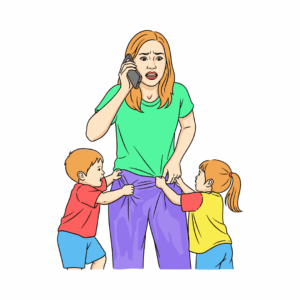
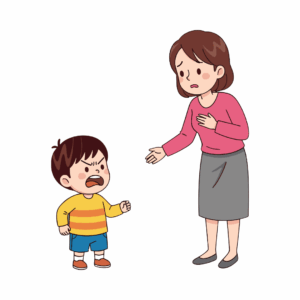
Then you raise your voice.
Suddenly, they move.
If this happens often in your home, you may start wondering:
“Why does my child only listen when I yell?”
It can feel like yelling is the only thing that works.
But here’s the frustrating part: yelling may get a response, but it doesn’t necessarily teach cooperation.
In fact, when yelling becomes the final step in every request, children can gradually learn to wait for that escalation before taking you seriously.
The good news is that this pattern can change.
Why Children Start Waiting for the Yelling
Imagine this happens every morning:
“Please get dressed.”
Nothing.
“Come on, it’s time to get dressed.”
Nothing.
“I’ve asked you three times.”
Still nothing.
Then you yell:
“GET DRESSED NOW!”
Your child finally moves.
From your perspective, yelling worked.
From your child’s perspective, they may have learned something different:
The real request doesn’t happen until Mom or Dad gets angry.
This isn’t necessarily manipulation.
It’s a pattern they’ve learned through repetition.
If the first three requests rarely lead to action, the fourth, louder request becomes the signal that something is actually urgent.
Yelling Can Become a Cue
Children are highly sensitive to patterns.
They notice changes in your voice, facial expression, and body language.
If your normal voice means, “You have some time,” but your angry voice means, “You really need to do this now,” your child may begin waiting for the stronger signal.
That’s why the solution isn’t simply to yell less.
You need to make your calm voice more meaningful.
When you give an instruction, your child needs to learn that calm doesn’t mean optional.
Stop Repeating the Same Request
One of the biggest changes parents can make is reducing repetition.
If you say:
“Put your shoes on.”
Then repeat it five more times, your child may learn that the first request doesn’t really count.
Instead, get close.
Say their name.
Make sure you have their attention.
Then give one clear instruction.
For example:
“Sam, it’s time to put your shoes on.”
Then pause.
Give them a reasonable moment to respond.
If they don’t, calmly follow through rather than simply repeating yourself louder.
Get Their Attention Before Giving Instructions
Sometimes children genuinely aren’t listening because they’re absorbed in something else.
Calling instructions from another room isn’t always effective.
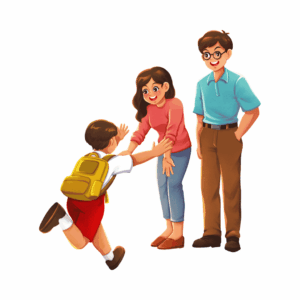
Walk over.
Get down to their level.
Say their name.
Wait for them to look toward you.
Then speak.
Instead of shouting:
“Turn the TV off!”
Try:
“Maya, look at me. It’s time to turn the TV off.”
This isn’t about forcing eye contact.
It’s about making sure your child actually received the message.
Make Your Instructions Clear
Children often struggle with vague requests.
“Behave.”
“Get ready.”
“Be good.”
These phrases don’t tell a child exactly what action you expect.
Instead, describe the behavior.
Rather than:
“Get ready for school.”
Try:
“Put your shirt on, then bring your backpack.”
Rather than:
“Clean up.”
Try:
“Put the blocks in the basket.”
Clear instructions are easier to follow.
Give One Direction at a Time
Parents often give several instructions at once.
“Put your shoes on, get your backpack, brush your teeth, grab your jacket, and come downstairs.”
That’s a lot to process, especially for younger children.
Break it down.
“First, put your shoes on.”
Then give the next direction.
This makes cooperation feel manageable rather than overwhelming.
Stop Using Your Anger as the Consequence
If your child only responds once you’re angry, your anger has accidentally become part of the routine.
Instead, use calm, predictable follow-through.
For example:
“It’s time to turn off the tablet.”
If your child refuses:
“You can turn it off, or I can help.”
Then follow through calmly.
The message becomes:
My parent means what they say even when their voice is calm.
That is the lesson you want to teach.
Use Natural and Logical Consequences
Consequences don’t need to be dramatic.
If your child refuses to get ready and there is less time left for play, the natural consequence may simply be less time available.
You might say:
“We need to leave at 8:00. If getting dressed takes longer, there will be less time for your game.”
This is different from:
“If you don’t get dressed right now, you’re grounded for a week!”
Keep the consequence connected to the behavior.
Don’t Turn Every Request Into a Threat
When parents feel ignored, threats can become automatic.
“If you don’t come now, you’re going to be in big trouble.”
But constant threats can create a cycle where children focus more on avoiding punishment than learning responsibility.
Instead, be clear about what needs to happen and what you’ll do next.
“It’s time to leave. If you don’t walk to the car, I’ll help you get there.”
Then calmly follow through.
Use Fewer Words When You’re Frustrated
The more frustrated we become, the more we tend to talk.
We explain.
We lecture.
We remind.
We complain.
But long speeches rarely improve cooperation.
Try short, calm statements:
“It’s time.”
“I already answered.”
“You don’t have to like it.”
“I’ll help you.”
“The tablet is finished.”
Simple language keeps you from escalating the interaction.
Give Choices Without Giving Away the Boundary
Children often cooperate better when they have some control.
Instead of:
“Put your pajamas on.”
Try:
“Do you want the blue pajamas or the dinosaur ones?”
Instead of:
“Get in the car.”
Try:
“Do you want to climb in yourself or should I help you?”
The boundary stays firm.
Your child gets a choice within it.
This can reduce unnecessary resistance.
Expect Pushback While the Pattern Changes
Here’s something important to remember.
When you stop yelling, your child may not immediately start cooperating.
They may actually push back more at first.
Why?
Because the old pattern has changed.
If yelling used to be the signal that you were serious, your child may test whether the new calm approach is actually consistent.
This is where many parents give up.
Stay predictable.
If your calm instruction is followed by calm action every time, your child gradually learns that escalation isn’t necessary.
What to Say Instead of Yelling
When you feel yourself getting close to the edge, try these scripts.
Instead of:
“How many times do I have to tell you?”
Say:
“I asked you to put your shoes on. I’m going to help you now.”
Instead of:
“Why are you ignoring me?”
Say:
“You didn’t respond. I’m going to come closer and help.”
Instead of:
“If you don’t stop, you’re going to be in trouble!”
Say:
“I won’t let you keep doing that. Here’s what happens next.”
Instead of:
“Listen to me!”
Say:
“I need your attention for a moment.”
These phrases keep authority without requiring anger.
What If You Already Yelled?
Don’t turn this into another reason to feel guilty.
You will lose your patience sometimes.
You’re human.
What matters is what happens next.
When things are calm, repair.
Try:
“I yelled earlier. I was frustrated, but I should have spoken calmly. Next time, I’ll try again.”
Then move forward.
Your child learns that adults can make mistakes and take responsibility for them.
The Goal Isn’t Perfect Obedience
The goal isn’t raising a child who immediately obeys every instruction without question.
You want something deeper.
You want your child to gradually develop:
- Responsibility
- Self-control
- Cooperation
- Respect
- Independence
- The ability to respond to limits without fear
Those skills develop through consistent practice.
Yelling may produce immediate compliance.
Calm, consistent boundaries teach something that lasts much longer.
Final Thoughts
If your child only seems to listen when you yell, it doesn’t mean you’re a bad parent.
It may simply mean your family has fallen into a pattern.
You ask.
They delay.
You repeat.
They ignore.
You escalate.
They finally respond.
That pattern can be changed.
Get close before giving instructions.
Use clear, simple language.
Stop repeating yourself endlessly.
Offer choices when appropriate.
Follow through calmly.
And most importantly, teach your child that your calm voice carries just as much authority as your angry one.
You don’t need to become louder to become more effective.
You need to become more predictable.
Over time, your child can learn that when you say something calmly, you mean it.