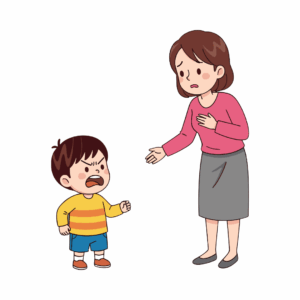
Mom rage can feel frightening, especially when you love your children deeply and still find yourself suddenly furious over something that seems tiny.
The spilled drink.
The repeated “Mom!”
The shoes left in the hallway.
The bedtime stalling.
The sibling fighting.
Sometimes you react much more strongly than the situation seems to deserve, and afterward comes the guilt:
“Why did I get that angry?”
The answer is often more complicated than the immediate trigger.
Mom rage can build when stress, exhaustion, overstimulation, unrealistic expectations, and a lack of support pile up for too long.
Research on parental burnout describes chronic parental stress as a combination of demands that can overwhelm the resources a parent has available to cope. A 2024 systematic review found that factors associated with parental burnout include perfectionism, anxiety, low self-esteem, relationship difficulties, child behavior problems, and lack of social support.
That doesn’t excuse yelling or hurtful behavior.
But understanding the trigger can help you change the pattern.
1. Constant Noise and Sensory Overload
Someone is talking.
Someone is crying.
A television is playing.
A toy is making noise.
Your child is touching you while you’re trying to cook.
After hours of stimulation, even one more sound can feel unbearable.
This is sensory overload, and it can make patience disappear quickly.
Instead of waiting until you’re ready to explode, look for small ways to reduce stimulation.
Turn off unnecessary background noise.
Step into another room for a minute if your children are safe.
Lower the lights.
Take a few slow breaths.
You don’t need to make the entire house silent.
You just need to give your nervous system fewer things to process.
2. Being Interrupted All Day
“Mom.”
“Mom.”
“Mom.”
You haven’t finished one thought before someone needs something else.
Constant interruptions can create a feeling that you don’t own even a few minutes of your day.
Eventually, the smallest interruption can feel enormous.
Try creating predictable moments when your children know they can get your attention.
For example:
“I’m going to finish this coffee, then I’m ready to listen.”
With younger children, expectations need to be realistic.
But even small boundaries around your attention can help you feel less constantly pulled in every direction.
3. Chronic Sleep Deprivation
It’s much harder to respond calmly when you’re exhausted.
A difficult bedtime after a full day of parenting can push you far closer to your limit than it would on a well-rested day.
Sleep isn’t a luxury when you’re responsible for regulating yourself and caring for children.
If you’re consistently exhausted, don’t only ask:
“How can I become more patient?”
Also ask:
“How can I get more support and rest?”
That might mean sharing nighttime responsibilities, asking family for help, lowering household expectations, or discussing persistent sleep problems with a healthcare professional.
The problem may not be that you need more willpower.
You may simply need more resources.
4. Feeling Like Nobody Listens
You ask your child to put their shoes on.
Nothing.
You ask again.
Nothing.
Then again.
By the fifth request, you’re shouting.
Often, the rage isn’t really about the shoes.
It’s the accumulated feeling of:
“I keep asking, and nobody is listening to me.”
Instead of repeating yourself louder, move closer.
Get your child’s attention.
Give one clear instruction.
Then follow through calmly.
“It’s time for shoes. You can put them on yourself, or I can help.”
The goal isn’t to win a battle.
It’s to make the expectation clear without turning your frustration into the main event.
5. Unrealistic Expectations of Yourself
Sometimes mom rage begins long before the children do anything.
You expected yourself to cook dinner, keep the house clean, answer messages, help with homework, exercise, be emotionally available, and somehow enjoy every minute.
Then reality happens.
The house is messy.
Dinner is simple.
You didn’t accomplish half your list.
And you feel like you’ve failed.
Perfectionism has been identified as one factor associated with parental burnout.
Ask yourself:
“What can be good enough today?”
Maybe dinner doesn’t need to be impressive.
Maybe the laundry can wait.
Maybe your child needs your attention more than the clean kitchen does.
Lowering unnecessary expectations can remove some of the pressure that fuels anger.
6. Having No Personal Space
Sometimes you don’t want another question.
You don’t want another hand touching you.
You don’t want someone climbing onto your lap.
You don’t want to make one more decision.
You simply want five quiet minutes.
That doesn’t make you a bad mom.
Humans need breaks.
If possible, create small predictable periods of personal space.
Tell your child:
“I need ten quiet minutes. I’ll come back when the timer rings.”
With younger children, this may require another adult’s help.
The point isn’t to disappear.
It’s to recognize that constantly being available can drain your emotional resources.
7. Decision Fatigue
What’s for breakfast?
What should they wear?
Did they pack their bag?
What are we having for dinner?
When is the doctor’s appointment?
Did anyone finish their homework?
Parenting involves hundreds of decisions, many of them tiny.
By evening, your brain may simply be tired of choosing.
Reduce decisions wherever you can.
Repeat meals.
Create predictable routines.
Keep commonly used items in the same place.
Prepare things the night before.
A simpler system can mean fewer opportunities to reach your limit.
8. Feeling Unsupported
One of the most painful triggers is feeling like everything depends on you.
You may be surrounded by people and still feel completely alone.
Research on parental burnout repeatedly points to social support and relationship factors as important parts of the parenting stress picture.
Instead of silently hoping someone notices you’re struggling, make the request specific.
Not:
“I need more help.”
Try:
“Could you handle bedtime tonight?”
Or:
“Can you take the children for an hour Saturday morning so I can rest?”
Specific requests are easier for other people to act on.
And if you have no reliable support system, consider whether there are community, family, school, or professional resources available to you.
You shouldn’t have to carry everything alone.
9. Your Child’s Big Emotions Trigger Your Own
Your child screams.
You feel your body tense.
They cry louder.
You raise your voice.
They become even more upset.
Now both nervous systems are activated.
This is why a child’s meltdown can sometimes feel like a personal emergency.
Remind yourself:
“My child is having a hard time. I don’t have to have the same hard time.”
Lower your voice.
Slow down your movements.
Keep the boundary simple.
“You’re really angry. I’m here. I won’t let you hit.”
You don’t need to make the emotion disappear.
You need to keep the situation safe while your child moves through it.
10. Accumulated Stress
Sometimes the final trigger isn’t the real trigger.
You were already exhausted.
You had a difficult conversation.
You haven’t eaten properly.
The house is chaotic.
You’ve been solving problems since morning.
Then your child spills water.
And suddenly you’re furious.
That’s accumulated stress.
Research on parental burnout suggests that exhaustion can play a central role in the experience of feeling fed up and finding parenting difficult.
So instead of only asking:
“Why did the spilled water make me so angry?”
ask:
“What was I carrying before the water spilled?”
That question can reveal what actually needs attention.
What to Do When You Feel Mom Rage Building
You don’t always have to wait until you’re calm.
Learn to notice your early warning signs.
Maybe your jaw tightens.
Your voice gets louder.
Your heart starts racing.
You feel an urge to lecture.
You start thinking:
“I can’t take this anymore.”
That’s your cue to pause.
If your child is safe, step away briefly.
Take several slow breaths.
Drink some water.
Put down whatever you’re holding.
Say:
“I’m getting really frustrated. I need a minute before I respond.”
That’s not weakness.
It’s regulation.
What If You Already Yelled?
Don’t let guilt turn one difficult moment into an entire difficult day.
Come back when you’re calm.
Say:
“I yelled earlier. I was really frustrated, but yelling wasn’t okay. I’m sorry.”
You can still address the behavior.
“We still need to clean up the mess.”
But separate accountability for your behavior from accountability for your child’s behavior.
Your child doesn’t need a perfect mother.
They need a mother who can repair.
Mom Rage Is a Signal, Not an Identity
Feeling rage doesn’t automatically mean you’re an angry mother.
It may mean you’re exhausted.
Overstimulated.
Unsupported.
Overloaded.
Hungry.
Touched out.
Stretched too thin.
Or expecting yourself to function at a level no human could sustain indefinitely.
That doesn’t mean you ignore harmful behavior or accept yelling as inevitable.
It means you look beneath the reaction.
Because if the same trigger keeps producing the same explosion, you may need to change more than your response.
You may need to change the conditions surrounding the response.
When Anger Feels Out of Control
If you frequently feel unable to control your anger, regularly frighten your children, or worry you may hurt yourself or someone else, don’t try to solve it through willpower alone.
Reach out to a qualified mental health professional or healthcare provider.
Parental burnout can involve severe emotional exhaustion and loss of control, and research has found that it can affect the parent-child relationship.
Getting support isn’t an admission that you’ve failed.
It’s an appropriate response to a situation that has become too heavy to carry alone.
Final Thoughts
Mom rage rarely comes from one spilled cup or one difficult bedtime.
Often, the final incident is simply the moment when an already-full cup overflows.
So start noticing your patterns.
What happens before you snap?
Are you hungry?
Exhausted?
Overstimulated?
Feeling ignored?
Carrying too much?
Expecting too much from yourself?
The goal isn’t to become a mom who never gets angry.
The goal is to become a mom who understands her anger well enough to respond differently.
Sometimes that means taking a breath.
Sometimes it means lowering your expectations.
Sometimes it means asking for help.
And sometimes it means admitting:
“I can’t keep doing this without more support.”
That isn’t failure.
It’s awareness.
And awareness is where change begins.