You are walking home from school and your child is quiet in a way that is not normal for them.
At the gate, three classmates ran ahead together, laughing about a game at break.
Your child was not invited to join, and they watched the group form without them.
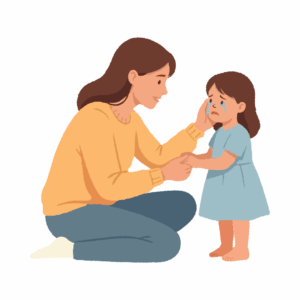
On the walk, they kick a stone, answer in one word, and then, halfway home, they say it plainly.
Nobody wanted to play with me today.
That sentence lands hard because you cannot fix it on the spot.
You want to rush in with a solution, call another parent, or tell your child not to worry about it.
None of them helps in the first ten minutes.
What helps first is much simpler and much harder.
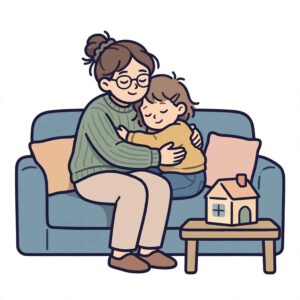
Stop, listen, and let your child feel believed.
Company Before Strategy
For a child, being left out is not a small social hiccup.
The message they hear is that they do not belong here.
That is why a calm reply like it does not matter can sting, even when you mean it kindly.
To your child, it clearly does matter.
Children also replay the moment.
On the way home they think about what they said, how they stood, and whether they looked silly for asking.
At bedtime the same scene can come back, which is why a child who seemed fine at dinner may cry at lights out.
The hurt is not drama.
It is a child trying to make sense of rejection with a brain that is still learning how friendships work.
So the order matters.
Feeling first, then story, then strategy.
Company before strategy means your child gets a listener before they get a plan.
Your job in this part is not to rank the pain or to solve it before supper.
Your job is to make home the place where the feeling can be said out loud without being corrected, minimised, or rushed past.
Listen Before You Fix
When your child tells you they were left out, try to slow yourself down before you offer a plan.
You can start with a short, open sentence.
Try: Tell me what happened at break today.
Then wait.
As they talk, reflect what you hear back in their own words.
If they say everyone played without me, you can say: That sounds lonely. You watched them play and you had nobody to play with.
You are showing your child that you heard the feeling underneath the story.
Ask one gentle follow up question at a time.
What part felt the worst, the game itself or how they said it?
These questions help you understand whether this was one rough break time, a pattern with one group, or a wider feeling of having nobody at school.
Do not correct the story while they are still telling it.
If you think your child may have missed a detail, save that thought.
If you jump in with well, maybe they just did not see you, your child hears that you are taking the other children’s side.
The first telling belongs to your child.
When they finish, name what you will do next in a small, honest way.
Try: Thank you for telling me. We will figure out a next step together, and you do not have to face break time alone with this.
That sentence gives comfort without promising a result you cannot control, like a guaranteed invitation tomorrow.
Ordinary Friction, or a Safety Problem
Not every exclusion needs an adult to intervene, and not every exclusion is safe to leave alone.
Ordinary friendship friction usually looks like this.
A game already has enough players and a child is told to wait for the next round.
A safety problem looks different.
It is repeated, deliberate, and hard for your child to escape on their own.
Be concerned if your child is regularly excluded by the same children, if exclusion comes with name calling, threats, hitting, taking belongings, or spreading rumours, or if your child is afraid to go to school.
If your child can walk away, join someone else, or try again tomorrow without fear, you can usually coach from home first.
If your child feels trapped, targeted, or unsafe, or if the same children keep singling them out, adults must step in.
That step might be a calm conversation with the teacher, not a confrontation with another child or parent.
Try: I wanted to let you know what my child has been experiencing at break, and ask what you have noticed.
If your child tells you about hitting, threats, or being followed or cornered, treat that as a safety matter straight away.
Stay calm in front of your child, thank them for telling you, and contact the school promptly.
You can say to your child: You did the right thing by telling me. Grown ups need to help with this one, and I will stay with you while we sort it out.
Words to Join the Game
What are you playing?
Can I join for this round?
I like this game. Is there a part I can do?
Try: I can be the shopkeeper if you need one.
Or: I can help build the den.
For approaching one child rather than a whole group, try: Do you want to play together at break?
One warm connection can change a whole break time.
Teach your child to read the answer with their eyes as well as their ears.
If the group says yes but nobody moves to make space, your child can say: Where should I stand?
That gives the group a practical next step.
If the group says the game is full, your child can try: Okay, maybe next round. I will be over there if you need another player.
Walking away calmly after a polite no is a skill, not a defeat.
It leaves the door open for tomorrow.
Practise these lines through play at home.
You can pretend to be the group and let your child try different openings.
Keep it light.
Laugh together when a line sounds funny.
The point is not a perfect performance.
The point is that your child has said the words out loud before, in a safe room, so they feel less strange in a noisy playground.
Words for Hearing No
For a flat refusal, try: Okay, I will go and find someone else to play with.
For a teasing refusal, try: That is fine. I do not need to play that game.
Then walk toward another child or a teacher on duty.
For a refusal that feels unfair because the game is not actually full, try: I see there is space, but if you do not want me today, I understand. I will play with someone else.
If the same refusal keeps happening, it may move the situation from ordinary friction into the pattern you raise with school.
What matters after the line is where your child goes next.
Agree on a backup plan before school, not in the middle of upset.
A backup plan could be: find Sam at the climbing frame, ask the dinner lady if you can help tidy the book corner, or sit on the bench near the library door where other quieter children gather.
A child with a backup plan is not wandering the playground hoping to be chosen.
They are choosing their next step.
At home, praise the brave part, not only the outcome.
If your child tried to join and was refused, you can say: I am proud that you asked. That took courage, even though the answer hurt.
Children repeat what gets noticed.
If only successful invitations get praise, children learn to ask only when they are sure of a yes, which means they stop asking at all.
One Friend, One Hour, One Game
Start with one child, one short playdate, and one clear activity.
A single friend, for an hour, with something to do together, gives your child a real chance to be themselves without competing for attention.
Choose the child with care.
Look for the child who is kind in small moments, who shares without being asked, who plays well alongside others even if they are not the loudest in class.
Keep the first playdate short and end it while it is still going well.
Before the friend arrives, agree on two or three activities and let your child choose one.
During the playdate, stay nearby but not in the middle of it.
After the playdate, talk about what went well in specific terms.
Try: You shared your cars without being asked, and that made the game last longer.
Specific praise teaches your child which of their own actions helped the friendship, so they can repeat them on purpose next time.
Repeat with the same child if it went well.
Two or three relaxed meetings build familiarity, and familiarity makes school easier.
When your child sees a known face at break, they are not starting from nothing.
They are walking toward someone who has already laughed with them at your kitchen table.
One Group Is Not the Whole World
Keep the number of branches small.
One or two regular activities are enough.
A child who is rushed from club to club every evening has no time to form the slow friendships that actually help.
Choose one branch, give it a few weeks, and notice whether your child comes home talking about a person, not only about the activity.
A person’s name is the sign that a branch is working.
At school, help your child notice the quieter edges of the playground.
There is often another child sitting alone, a pair playing a gentle game, or a teacher led activity that welcomes newcomers.
You can say: Tomorrow, if your usual group is busy, is there one other person you could sit near at lunch?
Framing it as one person keeps the task small and doable.
If your child wants to explore other friendships, you can find more ideas for choosing friends with care in How to Help Your Child Choose the Right Friends.
That guide looks at choosing friends proactively, while this guide focuses on coping when a child is left out and rebuilding from there.
What Not to Do, Even When You Mean Well
Do not tell your child to ignore it and it will go away.
Do not call another parent to demand an invitation or to argue about a playground game.
Do not label the other children as mean or nasty in front of your child.
Do not force a group apology or a staged playdate with children who have been unkind.
Do not solve every break time from home by arranging your child’s whole social life.
Do not compare your child with a sibling or classmate who makes friends easily.
If you have already jumped in, you can repair it with honesty.
Try: I jumped in too quickly yesterday because I hated seeing you upset. Next time I will check with you first before I talk to anyone.
Now the doubt sitting in the back of your mind: but should I not just call the other parent and sort it out?
A call that demands an invitation puts your child in the middle of an adult conflict, and it teaches the other children nothing about including yours.
What helps more is a calm word with the teacher, who sees the playground every day and can open a door your child can walk through on their own.
If you are parenting on your own, keep your steps small and sustainable: one listening conversation, one playdate invitation, and one check in with the teacher are enough for one week.
For more support on carrying that load, see Single Parenting Tips: How to Succeed as a Single Mom.
When the Pattern Needs an Adult
Raise it with the school if the same children keep singling your child out, if exclusion comes with name calling, threats, or hitting, or if your child is afraid to go to school.
A child who stops talking about school, who dreads Monday morning, who loses interest in an activity they once loved, or who starts saying nobody likes me as a general truth, is telling you the pattern needs attention.
If you are unsure whether it is bullying, describe what you have seen to the teacher and ask for their view.
You can also learn the warning signs of poor friendship in 10 Signs of a Bad Friend Every Child Should Know, which helps you spot patterns rather than judging one incident.
Four Moves for Tomorrow’s Break Time
Keep four moves in your head for tomorrow.
First, listen tonight, and believe the feeling before you fix anything.
Second, practise one line together, out loud, in the kitchen.
Third, agree on one person to approach and one backup place to go.
Fourth, praise the asking, whatever the answer is.
Just listening, one line, one person, and one brave ask.
Tonight, Just Listen
Your child does not need a perfect social life to be okay.
They need one or two people who choose them back, words they can use when a door closes, and a home where they can tell the truth about a hard day and be believed.
One person to approach, one line to try, one safe place to go if the first plan does not work.
Then let the evening be ordinary again.
A snack, a story, a game together.
If your child wants to tell you more about their day in their own time, you can find gentle questions that open the door in 30 Questions to Ask Your Child Instead of How Was School.
Belonging starts at home, and from there your child can practise belonging out in the world, one brave, ordinary step at a time.