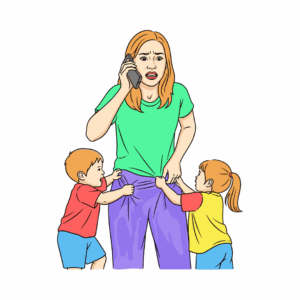
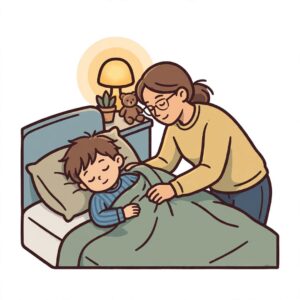
It is bedtime and your child is stalling.
One more drink, one more story, one more question about tomorrow.
Then, in the dark, in a small voice, they say it.
A boy in their class calls them names every day.
Yesterday he took their lunch and threw it in the bin.
Today he told the others not to play with them.
Your stomach drops.
And then your child adds the sentence that makes it harder: please do not tell the teacher.
You lie there in the dark with two fears pulling in opposite directions.
If you do nothing, it keeps happening.
If you tell the school, your child thinks you have betrayed them.
So what do you do when your child is being hurt at school and begs you not to tell anyone?
This guide is for that exact night.
It will show you what to say first, how to build a plan with the school instead of a confrontation, and how to give your child words they can use tomorrow morning.
Believe First, Fix Second
Here is the reframe that changes everything: your child needs to be believed first, and fixed second.
Call it the Believe First Rule.
Most parents do the opposite without meaning to.
They hear the story and start investigating at once.
Are you sure that is what happened?
What did you do first?
Maybe he was only joking.
Every one of those questions sounds reasonable to an adult.
To a child, they sound like doubt.
And a child who feels doubted stops talking.
That is the real danger.
Not that the school will do nothing, but that your child will decide telling you was a mistake and never tell you again.
Belief is not the same as having all the facts.
You can believe your child’s experience and still gather the facts calmly afterwards.
The order matters.
Belief first opens the door.
Fixing second walks through it.
The fix itself is not a confrontation.
It is a plan with the school, built in writing, checked a week later.
Call it the Three Step Plan.
Step one: listen and write it down.
Step two: tell the school in writing.
Step three: check back in seven days.
Three steps, one week, one written record.
That is the whole system, and it works because it is calm, specific, and impossible to forget.
Your child does not need you to storm the school gates.
They need you to believe them, write it down, and follow through.
1. The Small Moment They Tell You
Children rarely announce bullying in a clear sentence at a convenient time.
It comes out sideways.
In the car, at bedtime, halfway through a story about something else.
A stomach ache every morning.
A torn jacket with no explanation.
A sudden hatred of school from a child who used to love it.
These are the moments that matter, and they pass quickly.
If you are busy, or tired, or mid-conversation with someone else, the moment closes and your child decides not to try again.
So the first skill is stopping.
When your child starts a sentence that sounds like trouble, put the phone down, turn the television off, and turn your body toward them.
Do not ask five questions at once.
Ask one, then wait.
“Tell me what happened today.”
Then be quiet.
Silence feels awkward to adults.
To a child, silence says you have time for the whole story.
If they stop halfway, do not fill the gap with your own guess.
Say, “Take your time. I am listening.”
That sentence is worth more than any advice, because it tells your child this is a safe place to tell the truth.
For more on getting your child to open up, see 30 Questions to Ask Your Child Instead of How Was School.
2. What to Say First
The first words out of your mouth decide whether your child keeps talking.
So make them count.
Start with belief, in plain words.
“Thank you for telling me. I believe you.”
Then name the feeling, not the problem.
“That sounds frightening. No wonder you did not want to go to school today.”
Then promise the next step, not the whole solution.
“We are going to make a plan together. You do not have to face this alone.”
Three sentences.
Belief, feeling, plan.
Notice what is missing: no questions about what your child did wrong, no minimising, no instant solution.
There will be time for facts later.
Right now your child needs to know that telling you was the right choice.
Do not promise something you cannot keep.
Never say, “I will make sure this never happens again.”
You cannot guarantee that, and your child will know it.
Promise what you can do instead.
“I will talk to your teacher this week, and I will tell you what she says.”
That promise is specific, honest, and keepable.
And keep it.
If you say you will talk to the teacher on Tuesday, talk to the teacher on Tuesday, and tell your child what happened.
Follow-through is how trust is built, one kept promise at a time.
3. Writing It Down Together
The next day, sit with your child and write it down.
This is the one small tool for the whole guide: the Incident Notebook.
It is an ordinary notebook, and it does an extraordinary job.
For each incident, write four things: the date, what happened, who was there, and how your child felt.
Keep it factual and short.
“Monday 12 November. Tom called me stupid in the playground. Sara and Ben were there. I felt scared and angry.”
Four lines.
That is all it takes.
The notebook does three things at once.
First, it shows your child that you are taking this seriously.
Writing it down says this matters, and I am not going to forget it.
Second, it turns a frightening blur into a clear record.
Children remember feelings more than facts, and the notebook holds the facts steady when feelings are loud.
Third, it gives the school something concrete to act on.
A teacher can do far more with three dated incidents than with a general worry that something is wrong.
Let your child help write it.
Ask them, “What do you remember most about today?” and write their words down exactly.
Do not add your own interpretation.
The notebook is their record, in their words, and that is what makes it powerful.
4. The School Meeting
Now it is time to tell the school, and the way you tell them matters as much as what you say.
Go in calm, in writing, and with the notebook.
Write a short email or letter to the teacher first, before any meeting.
Keep it to a few lines: what is happening, when it happened, and what you are asking for.
“I am writing because my child has told me about repeated name calling and lunch taking in the playground over the past two weeks. I have kept a record. I would like to meet to discuss how we can stop this together.”
At the meeting, bring the notebook and ask three questions.
What is the school’s process for this?
Who will watch the playground this week?
When will we check back in?
Write the answers down before you leave.
If the teacher minimises it, stay calm and repeat the facts.
“I understand it may look small from the outside. From my child’s side, it is happening every day, and I would like a plan.”
Here is a distinction that helps you and the school: bullying is not the same as ordinary conflict.
Ordinary conflict is a one-off row between equals, and both children can walk away from it.
Bullying is repeated, it has a power imbalance, and one child cannot make it stop alone.
For more on telling ordinary friction from a real problem, see 10 Signs of a Bad Friend Every Child Should Know.
5. Words for Your Child in the Moment
While the adults build the plan, your child still has to walk into the playground tomorrow.
So give them words.
Not a lecture, not a strategy document, just three short sentences they can practise at home.
First: “Stop. I do not like that.”
Short, clear, and loud enough for others to hear.
Practise it at the kitchen table until it sounds firm, not frightened.
Second: walk away, toward other children or toward an adult.
Walking away is not weakness.
It is the smartest move, because it takes the audience away.
Third: tell an adult, every time.
“Tell your teacher, tell the lunch supervisor, tell me. Tell someone every single time.”
Children often think telling is telling tales.
So say it plainly: telling is not telling tales when someone is being hurt.
Telling tales is trying to get someone in trouble.
Telling an adult about bullying is asking for help, and asking for help is brave.
Practise the three sentences as a game.
You play the child who is being unkind, your child practises the reply, and then you swap roles.
Five minutes of practice at home can change what happens in the playground.
And teach them one more thing: stay near other children.
Bullying thrives in empty corners.
A child with one friend beside them is far harder to target than a child standing alone.
6. Rebuilding the Friendship Map
The last piece is the slow one, and it matters most.
After weeks of being targeted, your child may believe they have no friends at all.
That belief is not true, but it feels true, and feelings shape what a child tries next.
So help them rebuild their friendship map, one connection at a time.
Start with one steady friend.
Not the whole class, not the popular group, just one child who is kind.
Arrange one short playdate, at your house, doing something simple.
An hour is enough.
One good hour with one kind child does more for confidence than a week of advice.
Then widen the map slowly.
A club, a team, a neighbour, a cousin.
Each new connection is another branch, so that one group is never your child’s whole world.
Watch for the small signs of recovery.
Your child talks about school without dread.
They mention a friend by name.
They ask to go to a party.
Those signs mean the map is growing again.
For ideas on choosing friends with care, see How to Help Your Child Choose the Right Friends.
And if your child seems withdrawn for weeks, or their mood stays low even after the bullying stops, talk to your doctor. For more on what emotional safety looks like at home, see How Children Act When They Don’t Feel Safe Emotionally.
What Not to Do, Even When You Are Angry
The strongest instinct is to confront the other child’s parents.
It feels like the fastest way to protect your child.
It almost always backfires.
Another instinct is to tell your child to hit back.
It sounds like strength.
It is not.
A child who hits back gets in trouble too, and the school sees two children fighting instead of one child being bullied.
Do not minimise it either.
“Just ignore him” is the most common advice children receive, and the least helpful.
Ignoring does not work when the behaviour is repeated and public.
It tells your child that the adults have no better plan than pretending it is not happening.
Now the objection every parent raises: but will telling the school not make it worse?
Will the other child find out and take revenge?
Here is what is actually true.
Schools deal with this every week, and a good school knows how to act without naming your child as the source.
Ask them directly: “How will you handle this without making it obvious my child told you?”
That question is fair, and a good teacher will have an answer.
And remember the alternative.
Saying nothing does not keep your child safe.
It keeps them alone.
One more boundary to name plainly: if your child refuses to go to school, has nightmares that do not fade, talks about harming themselves, or the school does not act after two written reports, seek help from your doctor at once.
Those are signs the situation has gone beyond what a school plan alone can fix.
In the Moment: The Believe First Sequence
When your child tells you something frightening, hold this sequence in mind.
Four steps, nothing new, just this guide’s pieces in the order you will use them.
Step one: stop and turn toward them.
Put the phone down and say, “Tell me what happened today.”
Step two: believe out loud.
“Thank you for telling me. I believe you.”
Step three: name the feeling.
“That sounds frightening. No wonder you did not want to go to school.”
Step four: promise the next step.
“We are going to make a plan together. You do not have to face this alone.”
Four steps: stop, believe, name, promise.
Practice them once, out loud, before bedtime tonight.
Before you walk into the school, practise the four steps once more, out loud, in the car.
Say them slowly: stop, believe, name, promise.
They will be there when you need them, even when your own heart is racing.
A Calm Place to End
Your child told you something hard, and you listened.
That is already the most important part.
Many children never tell anyone, and they carry it alone for months.
Yours told you.
That means they trust you, and trust is the foundation everything else is built on.
Try one thing tonight.
Start the Incident Notebook with your child.
Four lines: date, what happened, who was there, how they felt.
Then write the short email to the teacher.
Write it tonight, while the details are fresh.
Those two small steps turn a frightening secret into a plan.
Tomorrow, your child will know that telling you changed something.
Your child does not need you to fix everything tonight.
They need to know that telling you was the right choice, and that you will follow through.
Believe first, fix second, and check back in seven days.
That is the whole plan, and it is enough.