Last Tuesday, we stared at the bright plastic potty sitting in the middle of our living room.
Our toddler was hiding behind the sofa.
Again.
We bought the expensive sticker charts. We read the modern parenting books. We even dedicated a whole weekend to letting them run around the house with no pants on, praying it would finally click.
We thought we were doing everything right.
But instead of a proud toddler, we have a puddle on the hardwood floor and a child who screams the moment we mention the bathroom.
We clean up the mess in silence. Our chest gets tight. Our patience wears incredibly thin.
We start to wonder what we are doing wrong. We ask ourselves if we started too late, or if we are just not being consistent enough.
It feels like failure. It feels like a battle we are losing every single day.
When we log online, we see other parents celebrating their perfectly trained two-year-olds. That comparison breeds an exhausting, quiet worry. We just want our children to succeed. We just want to move past the endless cycle of diapers and wipes.
When our toddlers resist, our primitive brain triggers an alarm.
We feel a sudden loss of control. We feel disrespected. Our instinct is to push harder, to set firmer rules, and to demand compliance.
But we need to close the books for a second and take a deep breath.
We are not failing. Our child is not broken.
This parenting moment is incredibly hard. It is messy, it is isolating, and it is deeply frustrating. But it is also a completely normal developmental milestone.
The problem is not our child’s bladder. The problem is the pressure.
Once we see the psychological gaps in how we are approaching this, we cannot unsee them. And our entire approach to parenting changes.
The Short Answer – Toddler Refuses to Use Potty
When our toddler refuses to use the potty, the solution is not to push harder. The solution is to step entirely out of the power struggle.
We have to drop our parental agenda.
Right now, we are treating our child’s bodily functions like a project we need to manage. And our toddlers can sense that pressure. They feel it in our heavy sighs. They hear it when our voice pitches up in false excitement.
When we try to force their body to do something, their natural, biological instinct is to rebel.
To achieve stress-free potty training, we have to give the control back to them. We must stop the constant prompting. We must stop hovering outside the bathroom door. We must completely abandon the bribes.
We must validate their hesitation, set up a supportive physical environment, and trust their unique timeline.
If we want a quick reset today, we need to change our language immediately. We start saying things that build their autonomy, like, “Your body is telling you it needs to go.” We stop saying things that breed anxiety, like, “If you use the potty, you get a sticker.”
(We will break down the exact five scripts to say, and five to avoid, in the final section).
But before we change our words, we need to understand exactly why our children are digging their heels in. We need to look at the mechanics of their mind.
The Psychology (Deep Dive)
Why do our kids resist?
It is easy to label them as stubborn. It is easy to assume they are just being difficult on purpose to test our patience.
But the resistance is not a behavioral malfunction. It is a developmental feature.
The Biological Drive for Autonomy
Toddlers are biologically wired for independence.
From the age of eighteen months to three years, they enter a critical psychological phase. Psychologists define this period as the stage of autonomy versus shame and doubt.
Our kids are waking up to a massive realization. They are realizing they are separate people from us. They want to know where their power lies. They are driven to test their boundaries.
And nothing belongs to them more intimately than their own body.
Potty training is the ultimate test of physical self-determination. If we micromanage their bathroom habits, we threaten that fragile new independence. We communicate, essentially, that we are the boss of their bodily functions.
Their psychological defense mechanism is opposition.
If we demand they sit on the toilet, they will stand. If we beg them to push, they will hold it in.
This is not a battle we can physically win. There are three things we can never force a child to do: we cannot force them to sleep, we cannot force them to eat, and we cannot force them to eliminate.
The harder we fight for control over the potty, the more they will prove that they hold all the cards.
The Burden of Hidden Shame and Fear
We often misread our children’s actions.
We see our toddler run behind the curtains to hide while they fill their diaper. We find their wet underwear shoved under the bed.
We think they are being sneaky. We assume they are ignoring the rules.
But what we are actually witnessing is profound shame.
Around age three, our kids develop the cognitive capacity for embarrassment. They desperately crave our approval. When they have an accident, they feel like they have failed us. Hiding is their way of managing that overwhelming sense of failure.
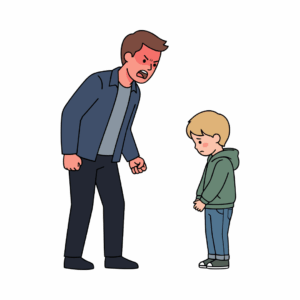
When we react with a sharp tone, a heavy sigh, or a disappointed face, we validate their worst fear. We make them feel deep shame.
And shame is a terrible teacher. It makes them anxious, and it makes them doubt their own abilities. An anxious child cannot relax on a toilet.
We also dismiss their genuine fears. We forget about magical thinking. To a toddler, a loud flushing toilet is a terrifying monster. The sensation of a piece of their body dropping away into dark water is incredibly unnerving. When we tell them to “stop being silly,” we invalidate their reality. We must validate the fear before we try to logically explain the plumbing.
The Stool Withholding Cycle
This psychological pressure quickly turns into a physical nightmare.
When a child is stressed, they hold their poop. They squeeze their pelvic muscles tight and refuse to let go.
This is where the situation becomes statistically significant.
Exactly 1 in 5 parents report experiencing significant struggles with toilet training. Furthermore, clinical data shows that 1 in 5 children will demonstrate stool withholding behavior.
We are not alone in this. It is incredibly common. But it is also physically dangerous.
When our child holds their poop, it stays trapped in the colon. The colon’s main job is to absorb water. So, over a few days, the retained stool gets progressively larger, drier, and harder.
When they finally cannot hold it anymore, it hurts terribly to push it out. It can cause small, painful tears.
This creates a vicious loop.
The next time they feel the urge to go, they remember the acute pain. They panic. They hold it in again.
This is known in pediatric psychology as the “cycle of stuck”.
Eventually, the rectum stretches out so much that it loses its nerve sensation. The child literally stops feeling the urge to poop. At this stage, liquid stool can leak out around the hard blockage. We think they are having accidents on purpose, but they actually have zero physical control over it.
If our child is trapped in this pain cycle, behavioral tricks will fail. We cannot psychologically persuade a child to endure physical pain. We must consult our pediatrician to safely introduce stool softeners, which break the physical trauma cycle so the psychological healing can begin.
The Magic of the Gastrocolic Reflex
When we try to manage the timeline, we often make the mistake of setting a timer.
We tell our kids to try the potty every twenty minutes. It disrupts their deep play. It frustrates them. It creates a dozen miniature power struggles every single day.
There is a much better way. We need to leverage their biology.
When we eat, food enters the stomach. This triggers a natural, involuntary biological response called the gastrocolic reflex. The stomach sends a signal to the colon, telling it to wake up and clear out space for the newly digesting food.
This reflex peaks precisely ten to thirty minutes after a meal.
This is our golden window.
Instead of asking them if they need to go all day long, we build a predictable daily rhythm. We implement a calm, five-minute potty sit shortly after breakfast and after dinner.
We do not call it trying. We just call it sitting.
We take the guesswork out of the timing, and we flow with their natural digestive current.
Actionable Scripts & Steps
Information is only useful if we know how to apply it in the moment.
We know why they are resisting. We know we need to drop the parental pressure. But what does that actually look like on a Tuesday afternoon when they are squirming in the corner?
The words we choose act as a filter. They either build a wall of resistance, or they build a bridge of autonomy.
Here is exactly what we should say, and what we must completely stop saying.
5 Scripts We Need to Start Saying
We must reframe our language to transfer the power back to the child. The following scripts are designed to validate the child’s emotion and establish clear, respectful boundaries.
| What to Say | The Psychological Mechanism |
|---|---|
| 1. “I see you are having a hard time stopping your play. Your body is telling you it needs to go.” | We validate before we educate. We acknowledge how hard it is to stop playing. More importantly, we point to their body as the boss. We remove ourselves as the authority figure enforcing a rule. |
| 2. “Your job is to listen to your body. My job is to help you when you are ready.” | This is the ultimate relational boundary. It gives them complete sovereignty over their body. It tells them we trust them to figure it out, which immediately deflates the power struggle. |
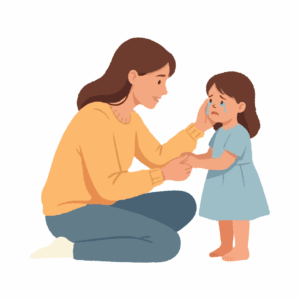
| 3. “You had an accident. You are safe. We will clean this up, and your body will try again later.” | This script completely removes shame. We keep our voice calm and neutral. We remind them that they are safe, and that a puddle on the floor does not change our love for them. |
| 4. “The pee and poop go in the potty. I am leaving this little potty right here for when your body is ready.” | It sets a clear expectation without demanding immediate compliance. We provide the physical tool, but we let them choose when to engage with it. It invites them in rather than pushing them down. |
| 5. “It is time for our 5-minute sit. We can read this book together. If nothing happens, you can go back to your toys.” | We use this after meals to catch the gastrocolic reflex. We cap the time at five minutes so the bathroom doesn’t feel like a prison. We take the performance pressure off the toilet entirely. |
5 Things We Need to Avoid Saying
The following phrases are highly prevalent in standard parenting advice. But when we are dealing with a resistant child, these common phrases are clinically destructive.
| What to Avoid Saying | The Psychological Damage |
|---|---|
| 1. “You are a big kid now. Only babies wear diapers.” | This directly attacks their identity. If they are feeling overwhelmed, they might actually want to be a baby right now. Shaming them makes them highly anxious, and anxiety causes them to withhold their stool. |
| 2. “If you go poop on the potty, I will give you a piece of candy.” | Bribes signal to our kids that the potty is a terrible place that requires a reward to endure. It also proves to them that we desperately want them to go. This hands them the perfect weapon to use against us when they want control. |
| 3. “Why did you pee on the floor? We just talked about this.” | Toddlers do not have the brain development to answer “why” questions about their physical impulses. It makes them feel confused and profoundly broken. It practically guarantees they will start hiding their future accidents. |
| 4. “Are you sure you don’t have to go? Try pushing a little harder.” | Constant prompting feels like nagging. Furthermore, telling a child to “push harder” when their muscles are tense is physically dangerous. It causes painful tears, instantly triggering the stool withholding cycle. |
| 5. “We are not leaving this bathroom until you go.” | This is the nuclear option of power struggles. It spikes their cortisol. It puts their nervous system into fight-or-flight mode. A stressed body physically cannot relax its sphincter muscles. We guarantee their failure. |
The Final Step: Fixing the Posture
There is one more physical gap we need to close.
When our toddlers sit on a standard adult toilet, their legs dangle in the air. Their knees sit at a strict ninety-degree angle to their torso.
This position actually tightens the puborectalis muscle around their rectum. It acts like a kink in a garden hose. It makes it physically incredibly difficult to poop without straining.
We need to get their knees up above their hips.
We bring in a tall footstool. We slide it right against the base of the toilet. We get a smaller seat insert so they do not feel like they are going to fall in.
When they can plant their feet firmly and lean into a deep squat, their pelvic floor muscles fully relax.
Sometimes, simply fixing their posture solves the resistance overnight.
We take a breath.
We stop trying to force the timeline. We stop trying to control the uncontrollable. We trust that they will learn how to master their own body.
When we finally step back, our children finally have the room to step forward.
Read: