You are on the floor with the blocks. The tower is half built, your child is reaching for the red one, and then a small hand swings up and slaps your cheek.
It stings. Your face flinches before your mind catches up. A yell starts to rise in your throat, fast and loud, before you have decided to yell at all.
That is the moment this article is about. Not hitting at nursery. Not a toy thrown across the room. Your own child hitting you, and what you do in the seconds right after.
Start here. The slap does not mean your child is naughty. It does not mean you have taught them badly. It means a big feeling arrived and the words for it did not arrive with it.
A toddler who hits a parent is usually frustrated and out of words. The hand moves because the mouth cannot yet do the work.
That does not make hitting okay. It makes it understandable, and it tells you where to aim your response.
Your first move is not a lesson
Do not try to teach in the sting. Teaching needs a calm child and a calm parent, and right now you have neither. Your first job is to make the moment safe and short.
Step back. One step is enough. Put a little space between your body and that fast little hand, so nobody gets hit again while you think.
Then breathe. One slow breath, in through your nose, out through your mouth. Let your shoulders drop. Your child is watching your face more closely than they are listening to your words.
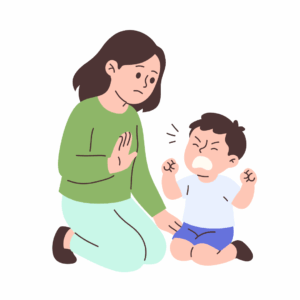
Now get low. Kneel or sit so your eyes are level with theirs. A tall parent looming over a small child looks like a threat, even when the parent means well. Eye level looks like a person who is staying.
Say it short, say it once
When a toddler hits, long sentences slide straight past them. Short words land. Say the boundary in plain language, in a low and steady voice.
“No hitting. Hitting hurts.”
That is the whole lesson for now. Two short sentences. No lecture attached, no question at the end, no reason to argue with. Your child needs to hear where the line is, not why the line exists.
If the hand comes up again, catch the boundary before the hit. Hold your hand out, palm flat, and keep your voice the same.
“I will not let you hit me.”
Then move your body, not just your words. Shift back, turn slightly away, or stand up if you need to. A boundary a child can see is easier to believe than a boundary they only hear.
Name the feeling under the hand
Once the hand has stopped, name what was driving it. You are not excusing the hit. You are giving your child the word they did not have a moment ago.
“I hear how mad you are.”
It tells your child you saw the feeling, that the feeling is allowed, and that hitting is still not the way to show it.
Keep the feeling word simple. Mad fits most hits. Frustrated fits a tower that fell. Sad fits a toy that broke.
“You wanted the red block. You can tell me mad.”
Try that shape when the moment allows it. First the want, then the feeling, then the new way to say it.
Your child may not repeat it back. They do not need to. Hearing it now plants it for next time.
“Hands are not for hitting. Hands are for building.”
That line works best after the calm has started to return, when your child can look at their own hands again. Say it while you offer a block, not while you are blocking a swing.
When play stops for a minute
Sometimes one clear line is enough and play goes on. Sometimes the hitting keeps coming, fast and repeated, and you need to pause the game itself.
Say so plainly, and keep your tone kind.
“We will take a break from blocks. We can try again when our hands are gentle.”
Then follow through. Put the blocks aside and sit nearby. The pause is the consequence, and it is enough.
A minute is plenty at this age. A long pause turns a short lesson into confusion. Short pause, warm return, and play starts again.
When you start again, say how it will go.
“We are building together. Gentle hands.”
That is not a threat. It is a fresh start, spoken out loud, so your child knows the door back into play is open.
After the storm, not during it
The real teaching happens later, when everyone is calm. That might be ten minutes later, at snack time, or at bedtime. Look for a quiet pocket, not a tired one.
Keep it brief. Revisit the moment in two or three sentences, then move on to what to do next time.
“Earlier you hit my cheek when you were mad about the block. That hurt. Next time you can say mad, or stomp your feet, or ask for help.”
Then practise it together, lightly, while you are both calm. Hold up a block, pretend to be mad, and stomp.
It looks silly, and that is the point. A practised move is easier to reach for than a brand new one.
The next time it happens
It will happen again. A toddler does not learn a new response from one calm correction. They learn it from hearing the same short words, in the same steady voice, many times, across many ordinary days.
The first time you say it, your child hears a new idea. The tenth time, they start to remember it before the hand moves.
Watch for the pattern underneath the hits. Often they cluster when a child is tired, hungry, rushed, or overexcited.
If the tower keeps falling, pause the game yourself. Offer a drink, a cuddle, or a change of activity before frustration peaks.
If you shouted, or grabbed a wrist too hard, repair it when you are calm. Go back, get low, and own it simply.
“I yelled when you hit me. That was loud. I am sorry. I will try to use my calm voice next time.”
Getting hit by your own child can sting more than you expect. Notice that feeling, and talk it through with another adult later.
So tonight, if a small hand swings toward you, breathe, step back, get low, and say it plainly.
“No hitting. Hitting hurts. I hear how mad you are.”