It is the third night of the holidays and your house is full.
There are cousins on the floor, music from the kitchen, and a plate of food going cold in your hand.
Your child is standing in the middle of the living room, crying over a cracker that broke in half.
It is not about the cracker and you know it.
They skipped their nap, ate dinner two hours late, and have been hugged by six different relatives.
An aunt leans in with a smile and says they are just tired.
You nod, but a small voice in your head is asking a harder question.
What do you do when the celebration itself is what is hurting your child?
Every December brings the same pattern.
The days get louder, the nights get later, and the child who was steady in November starts falling apart by the second week of the holidays.
You planned for a happy season and got a tired, wired, tearful child instead.
This guide is for that exact gap between the holiday you pictured and the holiday you are living.
It will show you how to protect the few things that keep your child steady, how to spot overload before it becomes a meltdown, and what to say when the room is watching.
Protect the Rhythm, Not the Plan
Here is the reframe that changes everything about the holidays: your child does not need a perfect celebration.
They need a steady rhythm with a celebration wrapped around it.
Adults treat the holidays as a break from routine.
Children experience them as a break in everything that makes them feel safe.
Their day is built on small certainties.
Wake time, breakfast at the same table, a nap or a quiet hour, dinner, bath, bed.
Those certainties tell their body what is coming next.
When the holidays remove them all at once, the child loses their map.
You do not need to cancel the holiday. You need to hold three anchors steady while everything else moves.
Call it the Three Anchors: wake time, one shared meal, and bedtime.
Wake time stays within half an hour of normal, even on the laziest morning.
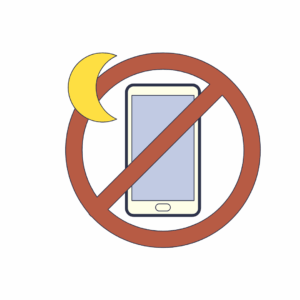
One meal a day happens at a table, sitting down, with no screens and no rushing.
Bedtime stays within an hour of normal, even on party nights.
Everything else can bend.
Think of it as a system you can copy: the 3-2-1 holiday plan.
Three anchors that never move, two quiet breaks built into the day, and one exit line ready before you arrive.
The quiet breaks are ten minutes each, in a calm room.
The exit line is one sentence you have already agreed on, so you never have to negotiate it in front of a room full of people.
Protect the rhythm and the celebration takes care of itself.
1. The Schedule Disappears First
The first thing to go is always the schedule.
A late lunch becomes a skipped nap.
A skipped nap becomes a 9pm bedtime.
By the second day, your child is running on a body clock that no longer matches the day.
You see it in small ways before the big meltdown.
They get silly and loud, then suddenly tearful over nothing.
They refuse food they normally love.
They cling to you at the door of a house they visited happily last year.
These are signs of a tired body asking for the day to slow down.
The fix starts the night before, not in the moment.
Before a big day, look at the plan and find the anchor that is most at risk.
If lunch will be late, pack a real snack for the car.
If bedtime will be late, protect the nap or the quiet hour earlier in the day.
When the schedule does slip, and it will, say it out loud so your child hears the plan.
“Dinner is late tonight, so we are going to have a snack now and eat properly when we get home.”
That one sentence gives them a map again.
Children cope far better with a changed plan than with a plan that simply vanished.
For more on keeping daily rhythms steady, see Toddler Routines.
2. Too Many People, Too Much Noise
Picture your child at a family gathering.
There are twelve adults talking at once, music playing, a baby crying, and someone new picking them up for a hug.
To you it feels festive.
To a small child it feels like standing in the middle of a storm.
They may go quiet and hide behind your legs.
They may get wild, running in circles and shouting, as if the noise has gone into their body.
Here is a distinction that helps: overexcited and overtired look the same from the outside.
An overexcited child is buzzing and cannot settle, and a short quiet break usually brings them back.
An overtired child is weepy, clumsy, and cannot be cheered up, and only sleep will fix it.
If it is excitement, take them to a calm room for ten minutes.
No screens, no questions, just a book or a soft toy and your quiet company.
If it is tiredness, start the goodbye, even if it is early.
Before you arrive, pack a Reset Bag.
This is the one small tool for the whole holiday: a small bag with a book, a snack, and one soft toy.
You can say, “The room is loud. Let us find a quiet corner and look at your book.”
For more on handling too much input, see Manage Overstimulation as a Mom.
3. New Beds, New Food, New Rules
The holidays move children into unfamiliar places.
A spare bedroom, a hotel bed, a cousin’s house where the rules are different and the food is strange.
Adults call this an adventure.
Bedtime is where it shows most.
The room is dark in a different way, the sounds are wrong, and the bed smells like someone else.
Your child asks for one more story, one more drink, one more cuddle, and you realise they are trying to make a strange room feel safe.
Pack one familiar thing for every night away from home.
Their own pillow, their usual pyjamas, the same bedtime book you always read.
Keep the bedtime steps in the same order, even if the time is later.
Same bath, same book, same song, same goodnight words.
Food works the same way.
Holiday meals are rich, late, and full of foods your child has never seen.
Do not make the meal a battle.
Offer one familiar food alongside the new ones and let them eat what they can.
“You can try the new dish, and there is bread here too if you are still hungry.”
Tell your child the new rule before you arrive, in one sentence.
“At grandma’s house we take our shoes off at the door.”
For help when nights away from home go badly, see My Toddler Won’t Sleep Through the Night.
4. The Thank You Pressure
Every holiday has a gift moment, and every gift moment has an audience.
Your child opens a present, looks at it, and says nothing.
Or they say they do not like it.
The room goes quiet.
Your child is processing surprise, newness, and twelve pairs of eyes at the same time.
Gratitude is a feeling that comes after the surprise settles.
Do not force the thank you in the moment.
Instead, give your child words they can use later, when the room is quiet.
“Thank you for the book. I liked the pictures of the train.”
And if your child says they do not like a gift, do not correct them in front of everyone.
Later, in private, you can say, “It is kind when someone chooses a gift for you. We can thank them for thinking of us, even if the gift is not your favourite.”
Some families have a rule that every gift gets a thank you card.
That is a lovely tradition, and it works because it happens later, when the child can think.
Let the card carry the thanks, not the ten seconds after the wrapping paper comes off.
Your child is learning that thanks can wait until the feeling is real.
5. When the Rules Change at Someone Else’s House
Then there is the relative who means well and undoes your rules anyway.
Grandma hands over a third biscuit after you said no more sugar.
An uncle lets your child stay up two hours past bedtime because it is a holiday.
Your child is learning, in real time, whose rules actually count.
This is the hardest holiday moment because it is not about your child at all.
It is about two adults disagreeing in front of a small person.
Do not correct the relative in front of your child.
Instead, have the conversation before the visit, in private, in one calm sentence.
“Bedtime is the one rule we really need to keep. Everything else can bend.”
Pick one rule, not five.
One rule is easy to remember and easy to respect.
Five rules feel like a list of complaints.
If the rule gets broken anyway, handle it quietly and move on.
Later, at home, you can say to your child, “At grandma’s house the rules were different. At home, our bedtime is the same as always.”
That sentence does two things.
It tells your child the home rules still stand, and it does it without blaming grandma.
Children can hold two sets of rules in their mind.
What confuses them is when the adults fight about which set is right.
6. Your Battery Runs Out Too
By the third day of the holidays, you are tired in a way that sleep does not fix.
You have cooked, hosted, driven, wrapped, and smiled through three days of noise.
Your patience is thin.
Your voice is sharper than you want it to be.
Then your child melts down and you hear yourself snap, and the guilt arrives before the sentence is even finished.
It is a parent running on an empty battery, and an empty battery cannot calm a child.
Your child borrows your calm.
When you have none left to lend, they feel it first.
Build one ten minute break for yourself into every holiday day.
Ten minutes alone, with a cup of tea or a walk around the block.
It is the thing that keeps the rest of the day kind.
And when you do snap, repair it the same day.
“I shouted, and that was not fair. I was tired, and I am sorry. Let us start again.”
They need a parent who comes back and makes it right.
If the tiredness stays long after the holidays end, or you feel flat and empty for weeks, that is worth more than a ten minute break. See Parental Burnout: 10 Signs You’re Running on Empty.
What Not to Do, Even When It Feels Polite
The most common holiday instinct is to push through.
Stay for one more hour, open one more present, pose for one more photo, even though your child is clearly done.
But pushing a tired child through the last hour of a party teaches them that their feelings do not count when adults are having fun.
Another instinct is to bribe your way through the day.
One more biscuit if you are good, one more present if you stop crying, one more cartoon if you sit still.
Replace the bribe with a plan your child can see.
Now the objection every parent raises: but will this not ruin the holiday for everyone else?
Here is the honest answer.
A child who is rested and calm is far better company than a child who is melting down in the corner.
Protecting the anchors does not ruin the holiday.
It is what makes the holiday enjoyable for everyone, including you.
One more boundary to name plainly: if your child’s distress does not settle within a week after the holidays end, or they refuse to leave the house, or their sleep does not return to normal, talk to your doctor.
Most holiday distress fades in a day or two.
Distress that stays is a different question, and it deserves a professional answer.
In the Moment: The Holiday Reset
When the meltdown starts anyway, hold this sequence in mind.
It has four steps and no new ideas, just the pieces from this guide in order.
Step one: get low and get close.
Kneel down, make eye contact, and say, “I am here. This is a lot.”
Step two: name the overload in one sentence.
“It is loud and late and you are tired.”
Step three: offer the way out, not a lecture.
“Let us find a quiet corner and look at your book.”
Step four: hold the anchor.
Once your child is calm, go home, keep bedtime, and let tomorrow be ordinary again.
Four steps: close, name, quiet, anchor.
Do not try to teach anything in the middle of it.
There will be time for the lesson tomorrow, when everyone is rested.
Right now, your only job is to get your child calm and get home.
You can hold them in your head even when the room is full and the music is loud.
A Calmer Way Into the New Year
Your child will not remember whether the holiday was perfect.
They will remember whether they felt safe in the middle of it.
That safety comes from small, boring, steady things: the same wake time, one meal at a table, a bedtime that holds.
Try one thing tonight.
Pick your three anchors for tomorrow and write them on a scrap of paper.
Wake time, one shared meal, bedtime.
Then pick your exit line and say it to your partner before you arrive.
That is the whole plan.
Three anchors, two quiet breaks, one exit line.
The holidays are hard on kids because everything changes at once.
Your job is not to make the season perfect.
Your job is to keep enough of the ordinary steady that your child can enjoy the extraordinary.
And when you get it right, even for one evening, you will see it in their face.
Calm, tired, and happy, all at the same time.
That is the holiday working.