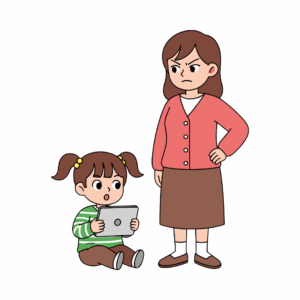
The timer dings. Your toddler’s whole body goes stiff. Their hands grip the iPad tighter. Their face crumples before the screen has even gone dark.
You warned them. You gave them five minutes, then two more. And still, the hardest two minutes of the day have begun.
Here is what is happening. A toddler does not hear a timer and think about time. They hear a sound that means the good thing is over.
The thing they love is about to disappear, and they have no way to bring it back.
That is a hard feeling at any age. At two or three, it can feel enormous. The tears are not a performance.
They are not trying to win. They are upset because something they loved just ended, and ending things is hard when you are small.
Tell them the ending before the screen starts
The ending works best when it is decided before the iPad is even in their hands. A toddler handles a finish much better when they can see it coming.
Short warnings, said while they are still calm, do more than any speech said after the crying starts.
Before you hand the iPad over, say the plan out loud. Keep it to one sentence.
“You can watch two videos. When the second one ends, the iPad sleeps.”
Then set a timer where they can see it. A phone timer on the table works. A kitchen timer works.
A toddler cannot read numbers yet, but they can watch a red bar shrink. That picture does the explaining for you.
When the timer has about two minutes left, give the last warning. Say it once, in the same words every time.
“Two more minutes, then the iPad sleeps. You can watch the timer turn red.”
Then walk away. Do not hover. Do not repeat the warning. One warning, said clearly, is enough. A toddler who hears the same sentence three times starts to wonder if the ending is real.
Let the timer be the bad guy
The timer is the best helper you have in this moment, because it lets the ending come from something other than you. Your child can be furious at a timer.
That is fine. A timer does not argue back, and it does not feel guilty.
When your toddler begs for more time, point at the timer instead of giving a reason.
“The timer says our time is done. The timer is in charge of the iPad.”
That sounds strange, and it works anyway. Toddlers understand rules that belong to things. The oven beeps when the food is ready.
The washing machine stops when the clothes are done. The iPad sleeps when the timer rings. It is just how the thing works.
What matters is that the timer always means the same thing. If the timer rings and the iPad keeps playing, the timer stops meaning anything. Your child stops believing the warning. The next ending gets harder, not easier.
So when the timer rings, the screen goes off. Not after one more video. Not after they finish this part. When the timer rings.
Close it together
The moment the timer dings is the moment to move your body, not your voice. Go to your child. Sit beside them. Put your hand gently over theirs on the screen.
“This is the last video. When it ends, we close it together.”
Then do it with them. Press the button together. Watch the screen go dark together.
A toddler who closes the iPad with you has done something, not had something taken away. That small difference matters more than it sounds like it should.
As soon as the screen is dark, name the next thing. Not later. Now. A toddler cannot sit in the empty space where the iPad was. They need somewhere to go.
“The iPad is sleeping. Now we build the tower. You pick the first block.”
The next thing does not need to be exciting. It needs to be ready. A snack on the table. A book already open.
Blocks already on the floor. If you have to invent the next thing while they are crying, you have already lost the moment.
If they melt down anyway
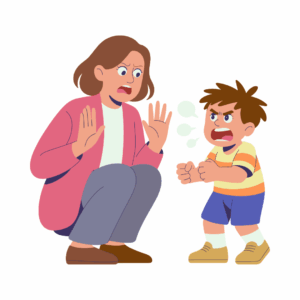
Sometimes you do everything right and they still fall apart. The warnings were clear. The timer rang. You closed it together. And they are on the floor, screaming, as if you took the best thing in the world away.
Stay. Sit on the floor near them. Do not lecture. Do not explain the rules again. A crying toddler cannot hear a lesson, and a lesson is not what they need.
“You are so sad the iPad is done. I see it. I am right here.”
That is all. Say it once, and then just be there. You do not have to fix the sadness.
You do not have to make it stop. You only have to stay with it until it passes, and it will pass.
What you must not do is hand the iPad back to end the crying. It is the most tempting move in the whole day, and it is the one that costs the most.
Five more minutes feels small. To your child, it teaches something big. It teaches them that crying changes the ending.
Once they learn that, every ending becomes a negotiation. The next timer will ring, and they will cry harder, because crying worked last time. The rule that bends once is a rule that bends every time.
If you have already caved before, that is not a reason to give up. It is a reason to start again tonight. Toddlers live in the present. They learn the new pattern fast when the new pattern holds.
The same words, the same ending, every time
The real secret of a calm ending is not a clever script. It is sameness. The same warnings, in the same words, at the same points, every single time the iPad comes out.
Your child stops fighting the ending when they know exactly what it looks like.
Pick your words tonight and use them again tomorrow. The two minute warning. The timer as the bad guy.
The closing together. The next thing, already waiting. When the shape of the ending never changes, your child stops spending their energy on the ending itself.
And if the iPad is part of the evening every day, put the ending in the same place in the routine. After the videos comes the bath.
After the bath comes the book. After the book comes bed. A toddler who knows what comes next has less to fear in the thing that is ending.
That is the whole job. A warning they can see. A timer that decides. A closing they do with you. A next thing already waiting. And a parent who means what they say when the timer rings.
Tonight, set the timer where they can see it, say the warning once, and when it rings, go and close it together.