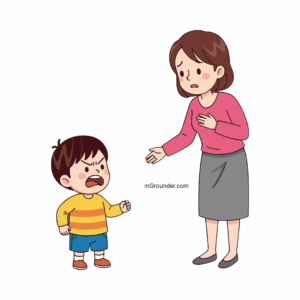
It is 5:40 in the afternoon, and the kitchen light is on.
Your toddler stands by the high chair, one sock half off.
A cracker slips from small fingers and lands face down on the tiles.
That is all it takes.
The crying starts at once, loud and sudden, filling the whole kitchen.
You offer water. Your toddler pushes the cup away.
You offer a snack. Your toddler shakes their head and cries harder.
You open your arms for a hug. Your toddler turns away, still crying.
You ask what is wrong. The crying gets worse.
Nothing you offer lands. Nothing you ask helps.
So you stand there, holding a cup of water nobody wants, listening to a cry you cannot name.
This is a different kind of cry.
Not the cry after a fall, or a lost toy, or a fright.
The cry that seems to come from nowhere, and refuses every fix.
The cry your toddler cannot explain, because they do not know the reason either.
The Cracker Was Not the Cause
The cracker mattered, but it was not the whole story.
Think back over the day. Morning started early.
Breakfast took longer than usual, and shoes would not go on right.
The park was busy. Lunch was late. The nap was short.
A cousin took the red truck. The shop was loud, with music playing.
None of those moments caused a flood on its own.
Each one left a little weight behind. By late afternoon, the weight was heavy.
Then the cracker fell, and that small loss opened the door.
Everything behind it came through at once. Your toddler is not crying about a cracker.
Your toddler is crying about a whole day. That is why the crying looks too big for what happened.
A spilled cup of tea can ruin an evening after a long day.
The tea is not the problem. The day is the problem.
Hunger, Tiredness, and Too Much Noise Feel the Same
Ask a toddler to sort out what they feel inside. That is a hard job.
Hunger feels unsettled. Tiredness feels unsettled. Too much noise feels unsettled.
Too many people feels unsettled. A scratchy shirt feels unsettled.
To a small child, those feelings blur together. They cannot point to one and name it.
They only know that something feels wrong, so they cry.
“Are you hungry?” Your toddler does not know.
“Are you tired?” Your toddler does not know.
“Do you want a hug?” Your toddler does not know that either.
Each question asks for an answer they do not have.
Each unanswered question adds pressure, and the pressure feeds the crying.
“What is wrong?” is the hardest question of all.
It asks a child to explain a feeling they cannot yet name.
When they cannot answer, they feel more lost, so they cry louder.
It is not defiance. It is not a game. It is a child out of words.
Stay Close and Stop Fixing
When the crying starts, your job changes.
You stop being the fixer, and you become the shore.
A shore does not chase the waves. A shore does not argue with them.
A shore stays where it is, and lets the water come and go.
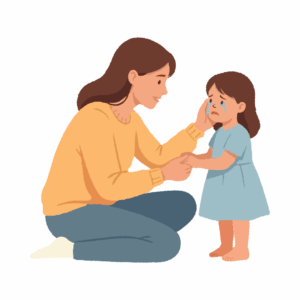
Sit down near your toddler. Not too close if they pull away.
Close enough to be found. Keep your body calm and your voice low.
Say little. “I am here.” That is enough.
“I am right here with you.” That is enough too.
“This is a big cry.” Simple words. No questions, no offers, no rush.
If your toddler leans in, let them. If they push away, let them.
Stay in the room. Stay on the floor. Stay near.
The crying will not last forever. It feels endless while it is happening.
Your toddler needs to feel the storm pass while you are still there.
That is what teaches them that big feelings end. Not a lecture. Not a lesson.
What to Do With Your Hands
Fixing feels kind. In this moment, fixing gets in the way.
A new snack is another decision. A different cup is another change.
A toy is another thing to manage. Your toddler is already full.
Full of noise, full of tiredness, full of feeling. There is no room for one more offer.
Put the cup down. Put the snack back in the bag. Put the toy on the table.
Free your hands. Free your lap, if your toddler wants it.
If your toddler reaches for you, hold them. If they want the floor, let them have it.
You can pat their back slowly. You can rub small circles on their back.
You can do nothing at all. Doing nothing is not doing nothing.
It is giving the crying space to finish. Watch their breathing. It will slow.
Watch their shoulders. They will drop. Watch their hands. They will unclench.
You do not need to name it. You only need to stay.
After the Storm Passes
The crying softens, then it stops. Your toddler sniffs and looks around.
Your toddler may ask for water now. Or for the cracker. Or for your lap.
This is the time to be curious. Not before. Now.
Look back at the day together, in small pieces.
“That was a long morning.” “The park was busy today.” “Your nap was short.”
You are not looking for one cause. You are looking for the pile.
Sometimes the answer is plain. Lunch was late, the house was loud, the day had no quiet time.
You do not need a neat reason to help next time. You only need a small change.
An earlier snack. A quieter afternoon. A shorter trip to the shops.
Try one small change, and see if the late afternoon gets easier.
Words for the Next Time
The next cry will come. It may come at the shops, in the car, or at bedtime.
Keep your words short, and keep them the same each time.
“I am here.” “I will stay with you.” “You can cry. I will stay right here.”
“That was a big feeling.” “We will sit here until it feels smaller.”
“Do you want to sit on my lap?” If they say no, that is an answer.
Take it kindly and stay near. “Do you want space?” If they nod, give them space.
When the crying eases, offer one thing. Only one. “Would you like some water?”
If they refuse, wait. “Would you like a cuddle?” If they refuse, wait again.
Your toddler does not need you to solve the cry. Your toddler needs you to survive it with them.
Spotting the Pile Before It Tips
You cannot stop every hard day, but you can watch for the pile growing.
A short nap. A late lunch. A loud morning. A long car ride.
Stacked together, they are heavy. When you see the stack growing, build in a pause.
Let your toddler push a toy car along the floor with no one watching.
Eat a little earlier than usual. Leave the shops a little earlier than usual.
The cracker will still fall, and the crying will still come.
Sit down near them. Stay. “I am here.”