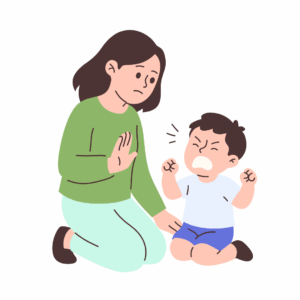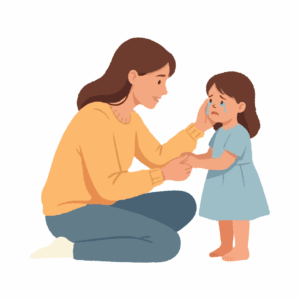
What to do. What to say. What to avoid when your toddler is having a meltdown.
Tantrums can make it difficult to think clearly, especially when you’re tired, frustrated, or in the middle of a public meltdown.
This free printable gives you simple, practical responses you can keep nearby when your toddler’s emotions get too big.
What’s inside the free printable?
The 5-Step Tantrum Response
A simple framework to help you respond without getting pulled into the struggle:
Pause → Connect → Set the Limit → Help → Reconnect
Ready-to-use parenting scripts
Get simple phrases for situations such as:
- Your toddler won’t leave
- Your child screams “NO!”
- Your toddler hits or kicks
- Your child throws something
- Your toddler demands something you’ve said no to
- Your child keeps crying after a boundary
A 30-second parent reset
Because sometimes the person who needs a moment to reset is you.
The printable includes a quick grounding exercise to help you pause before reacting.
After-the-tantrum reflection
A simple space to identify:
- What happened
- Possible triggers
- What helped
- What you might try next time
Why this approach?
You don’t have to stop every tantrum.
A tantrum doesn’t always need to be “fixed.”
Toddlers are still learning how to communicate, tolerate frustration, manage strong emotions, and cope with limits.
The goal isn’t to make every difficult feeling disappear.
It’s to help your child stay safe while you provide connection, boundaries, and support.
What to say during a tantrum
This section is particularly useful for SEO because it directly answers the searcher’s question.
When you don’t know what to say, start here:
“You wanted ______. You feel ______. I won’t let you ______. I’m here to help.”
For example:
“You wanted the toy. You feel angry. I won’t let you hit. I’m here to help.”
Then briefly explain:
Acknowledge the feeling. Hold the boundary. Stay present.
You don’t need a long explanation while your toddler is overwhelmed.
What the printable helps you avoid
Things that can make a tantrum harder
The printable reminds parents to avoid:
- Long explanations in the middle of a meltdown
- Repeatedly telling a child to “calm down”
- Shaming or mocking
- Threats you don’t intend to keep
- Arguing while your child is overwhelmed
- Demanding an immediate apology
- Giving in simply to end the crying
Then:
Fewer words. Calmer voice. Clear boundary. Safe presence.
Who is this for?
This printable is useful if you’re dealing with:
- Toddler tantrums
- Screaming and crying
- “No!” and refusal
- Difficult transitions
- Hitting and kicking
- Throwing
- Frustration and disappointment
- Big emotions
- Power struggles
- Parents who aren’t sure what to say in the moment
Download the free Toddler Tantrum Response Sheet and keep it on your fridge, in your parenting folder, or on your phone for those moments when you need a simple response, not another parenting lecture.
Frequently Asked Questions
What is a toddler tantrum response sheet?
A toddler tantrum response sheet is a quick-reference guide that gives parents practical steps and phrases to use during a child’s tantrum or emotional outburst.
What should I say during a toddler tantrum?
Start by acknowledging what your child wants or feels, then calmly hold the necessary boundary. For example: “You really wanted that. You’re upset. The answer is still no. I’m here with you.”
Should I ignore a toddler tantrum?
Not necessarily. A child can be given space while still knowing that you are nearby and available. The appropriate response depends on the situation, your child’s safety, and what is happening during the tantrum.
How do I handle toddler hitting during a tantrum?
Keep your child and others safe and calmly stop the hitting. You can acknowledge the emotion while maintaining the boundary: “You’re angry. I won’t let you hit.”
Is this printable a substitute for professional advice?
No. This resource provides general parenting information. If you’re concerned about your child’s behavior, development, safety, or emotional well-being, consider speaking with an appropriately qualified professional.