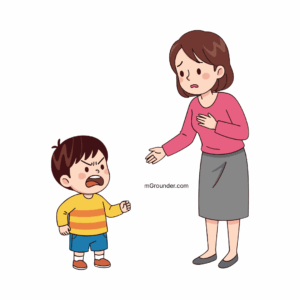
Your child is screaming.
They just threw a toy.
Maybe they hit their sibling, refused to leave the park, or knocked something off the table after you told them not to.
And then you wonder:
Should I hug them right now, or should I make sure they understand that their behavior isn’t okay?
Many parents worry that showing affection during misbehavior sends the wrong message.
What if the child thinks the behavior is acceptable?
What if the hug rewards the tantrum?
What if being loving makes the boundary less effective?
The answer is more reassuring than you might expect:
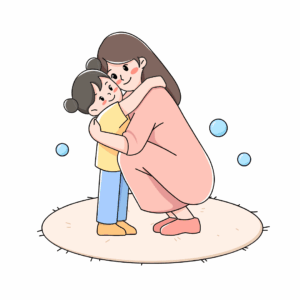
You can comfort your child without approving of their behavior.
A hug doesn’t have to mean, “What you did was okay.”
It can mean:
“I’m here with you while you work through this. And the boundary still stands.”
A Hug Doesn’t Mean You’re Giving In
This is the most important distinction.
You can hold your child while still saying no.
For example:
“I know you’re really upset. I’m here. I’m not going to let you hit.”
Or:
“You wanted another cookie. You’re disappointed. You can have a hug, but we’re still finished with cookies.”
The affection addresses the emotion.
The boundary addresses the behavior.
Those two things can exist at the same time.
A child doesn’t need to lose your affection in order to learn that a particular behavior isn’t acceptable.
Why Connection Can Matter During Difficult Moments
When children are overwhelmed, they don’t always have the skills to calm themselves immediately.
Toddlers especially can move very quickly from frustration to crying, screaming, hitting, throwing, or collapsing on the floor.
A calm parent can provide some of the regulation the child hasn’t developed yet.
A hug can be one way of communicating:
“You’re having a hard time, but you’re not alone.”
But Don’t Force the Hug
This part matters.
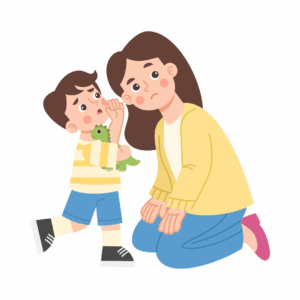
Not every child wants physical contact when they’re upset.
Some children want to be held.
Others want space.
Some may push you away.
That’s okay.
You can offer:
“Would you like a hug?”
If they say no, you can respond:
“Okay. I’ll stay right here.”
You can sit nearby.
Speak softly.
Keep them safe.
Give them time.
Connection doesn’t always require physical touch.
Sometimes your calm presence is enough.
When a Hug Can Help
A hug may be especially helpful when your child is overwhelmed by a big emotion rather than deliberately trying to hurt someone.
For example:
After a disappointing “no”
“You really wanted that toy. Come here.”
During a meltdown
“You’re having a really hard time. I’m right here.”
After a frightening experience
“That scared you. You’re safe.”
After a difficult transition
“You didn’t want to leave the playground. I know.”
After your child has calmed down
“That was a hard moment. Let’s have a cuddle.”
The purpose isn’t to erase the consequence.
It’s to help your child feel secure enough to move through the emotion.
What If They Hit You?
This is where parents often feel especially confused.
Your child hits you.
Should you hug them?
You can still offer affection, but safety comes first.
If your toddler is hitting, gently block the hit or move back.
Then say:
“I won’t let you hit me.”
You don’t have to punish them by withdrawing love.
You can remain close while maintaining the physical boundary.
“You’re angry. I won’t let you hit. You can hit this pillow or stomp your feet.”
If your child wants a hug once they’ve settled, you can give one.
The message becomes:
“I love you. I will keep you safe. And I won’t allow hitting.”
What If They Hurt Someone Else?
The same principle applies.
If your child hits a sibling, don’t immediately turn the situation into:
“You’re a bad kid.”
Instead:
“I won’t let you hit your brother.”
Then help everyone become safe.
Once the immediate situation is under control, you can help your child repair what happened.
“Your brother is hurt. Let’s check on him.”
A hug for your child doesn’t erase responsibility.
Your child can receive comfort and learn that their actions have consequences.
Don’t Use Affection as a Reward for Good Behavior
There’s a subtle difference between affection and reward.
You don’t want:
“If you stop crying, I’ll hug you.”
Or:
“If you’re good, you can have a cuddle.”
That can unintentionally make affection feel conditional.
Instead, affection can remain part of the relationship regardless of whether your child’s behavior is perfect.
You can say:
“I’m always here for you. I’m still not changing my answer.”
That distinction is important.
Your child learns that love isn’t something they have to earn by behaving perfectly.
You Can Be Loving and Firm
Some parents were raised to believe that discipline requires emotional distance.
The child misbehaves.
The parent becomes cold.
The child is sent away.
Affection is withheld until the child behaves again.
But firmness doesn’t require rejection.
You can be very clear:
“No hitting.”
“We’re leaving now.”
“The toy is going away because it was thrown.”
“You can’t take that from your sister.”
And still communicate:
“I love you.”
“I’m here.”
“You can sit with me.”
“We’ll get through this.”
That’s not weak parenting.
It’s firmness without rejection.
The Hug Shouldn’t Replace the Boundary
This is where positive parenting can sometimes be misunderstood.
Imagine your toddler throws a toy.
You hug them.
They calm down.
Then you immediately hand the toy back.
If this happens repeatedly, the child may learn that throwing the toy doesn’t really change anything.
The better sequence is:
Connect → Set the boundary → Follow through.
For example:
“You’re upset. Come here.”
Then:
“I’m not letting you throw the toy.”
Then:
“The toy is going away for now.”
You can offer comfort while still following through.
The hug is not the consequence.
The hug is connection.
What to Do When Your Child Doesn’t Want a Hug
Don’t take it personally.
A child in the middle of a meltdown may not want to be touched.
Instead, stay nearby if it’s safe.
Try:
“You don’t want a hug. That’s okay.”
“I’ll sit right here.”
“Let me know when you’re ready.”
You can also lower your voice and reduce stimulation.
Sometimes children calm faster when adults stop talking so much.
Your presence communicates enough.
What About Older Children?
The same principle can apply beyond toddlerhood.
An older child might slam a door, yell, or become extremely frustrated.
You don’t necessarily need to force physical affection.
Instead, you might say:
“I’m not okay with the way you spoke to me. But I’m still here.”
Or:
“We’re going to talk about what happened when we’re both calmer.”
If they want a hug, offer one.
If they want space, respect that while maintaining the boundary.
As children grow, connection often becomes less about holding them and more about being emotionally available.
Hugging After Misbehavior Can Also Create an Opportunity for Repair
Once your child is calm, you can reconnect.
You might say:
“That was a really big feeling.”
Then:
“You were angry because I said it was time to leave.”
And finally:
“Next time, you can tell me you’re angry, but I won’t let you hit.”
A hug can come naturally at this point.
Then help your child repair the situation.
Maybe they need to:
- Help pick up what they threw
- Check on someone they hurt
- Return something they took
- Try asking again
- Practice a better response
This is where discipline becomes teaching rather than simply punishment.
What If Your Child Thinks the Hug Means They Won?
Sometimes parents worry:
“If I hug them, they’ll think the tantrum worked.”
The solution isn’t necessarily to withhold affection.
Instead, make the boundary predictable.
Your child can cry.
You can hug them.
And the answer can remain no.
For example:
“You can be upset. I’m still not buying the toy.”
The child may protest.
You can repeat:
“I know you’re disappointed. The answer is still no.”
Eventually, your child learns something important:
My parent can comfort me without changing the limit.
That’s a valuable lesson.
What If You Don’t Feel Like Hugging Them?
This matters too.
Parents are human.
Sometimes you’re the one who is overwhelmed.
If your child has just screamed in your face, hit you, or pushed every button you have, you may not immediately feel warm and cuddly.
That’s okay.
You don’t have to fake an emotional response.
You can say:
“I love you. I need a minute to calm down.”
Take some space if your child is safe.
Regulate yourself.
Then reconnect when you’re ready.
You can repair without pretending you weren’t upset.
Don’t Make Physical Affection the Only Way You Connect
A hug is only one form of connection.
You can also:
- Sit beside your child
- Hold their hand
- Read a book together
- Make eye contact
- Speak calmly
- Listen
- Offer water
- Sit quietly nearby
- Help them name the feeling
- Play together later
Some children naturally prefer less physical affection.
Respect that.
The bigger goal is helping your child experience you as safe, predictable, loving, and firm.
A Simple Formula for Difficult Moments
When your child is misbehaving, try remembering:
1. Keep everyone safe.
Stop hitting, biting, throwing dangerous objects, or other unsafe behavior.
2. Name the feeling.
“You’re really angry.”
3. Hold the boundary.
“I’m not letting you hit.”
4. Offer connection.
“Would you like a hug?”
5. Follow through.
If a toy needs to be put away, put it away.
If it’s time to leave, leave.
If a behavior needs repairing, help your child repair it.
6. Reconnect afterward.
Once everyone is calm, talk briefly about what happened and what your child can try next time.
This approach doesn’t require you to choose between discipline and affection.
You can provide both.
The Bigger Lesson Your Child Learns
When a child experiences a parent who remains loving during difficult moments, they can gradually learn that making a mistake doesn’t mean losing the relationship.
That’s important.
You want your child to be able to think:
“I did something wrong, but I can fix it.”
Not:
“I did something wrong, so I’m bad.”
And not:
“If I behave badly enough, Mom will give me what I want.”
Instead:
“My feelings are safe. My parent has boundaries. I am still loved.”
That’s a much healthier foundation for learning self-control.
Final Thoughts
So, should you hug a child who is misbehaving?
You can.
A hug doesn’t automatically reward bad behavior, erase a consequence, or make you permissive.
What matters is what the hug means.
If you’re saying:
“You can hit people and I’ll give you whatever you want.”
that’s a problem.
But if you’re saying:
“You’re having a hard time. I love you. I’m here. And I’m still not letting you hit.”
that’s something very different.
Connection doesn’t have to cancel boundaries.
You can hold your child while holding the limit.
You can comfort them while teaching responsibility.
You can say no without withdrawing love.
And sometimes, especially in the middle of a very difficult moment, your child may need to know both things at once:
“This behavior isn’t okay.”
and
“I still love you.”