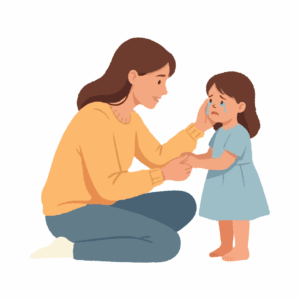
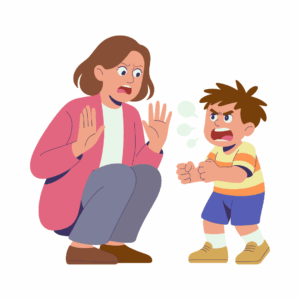
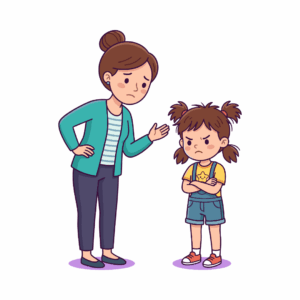
Talking to a toddler can sometimes feel like talking to someone who understands far more than they can actually express.
Your child may know exactly what they want but struggle to explain it. They may repeat the same question ten times, misunderstand what you said, shout when they mean to ask, or suddenly refuse to listen after you’ve given what feels like a perfectly reasonable instruction.
It can be frustrating.
But toddler communication is still developing. The way you speak to your child during these early years can help them build vocabulary, emotional awareness, confidence, and better ways of expressing themselves.
The goal isn’t to find the perfect words every time.
It’s to make everyday conversations clear, respectful, and connected.
Talk With Your Toddler, Not Just at Them
One of the simplest changes you can make is to turn more interactions into conversations.
Instead of constantly giving instructions:
“Put your shoes on.”
“Eat your breakfast.”
“Get your coat.”
“Come here.”
make room for comments and responses too.
If your toddler is building with blocks, you might say:
“You made a really tall tower.”
Then pause.
Maybe your child responds with a word, gesture, or smile.
You can continue:
“I wonder how many blocks you can add before it falls.”
You don’t need to turn playtime into a lesson.
Everyday conversation is enough.
1. Get Down to Their Level
When you’re giving your toddler an important instruction, try getting physically closer rather than shouting from another room.
Move near them.
Say their name.
Make eye contact if they’re comfortable with it.
Then speak.
For example, instead of yelling:
“Put your toys away!”
from the kitchen, walk over and say:
“It’s cleanup time. Let’s put the blocks in the basket.”
A toddler is much more likely to understand a message when they are actually paying attention to it.
2. Keep Instructions Short and Clear
Toddlers don’t need long explanations for simple requests.
Instead of:
“How many times do I have to tell you that we need to get ready because we’re leaving soon and you still haven’t put your shoes on?”
try:
“It’s time to leave. Please put on your shoes.”
Short doesn’t mean harsh.
You can be warm and clear at the same time.
Try one instruction at a time
Instead of:
“Go upstairs, get your pajamas, put them on, brush your teeth, and come downstairs.”
break it down.
“Let’s get your pajamas.”
Then move to the next step.
This makes it easier for a young child to follow what you’re asking.
3. Give Your Toddler Time to Respond
Adults are used to quick conversations.
We ask a question and expect an answer almost immediately.
Toddlers often need more time.
If you ask:
“Do you want the red cup or the blue cup?”
pause.
Give your child a moment to process the question and respond.
You don’t need to answer for them immediately.
That pause teaches something important:
Conversation goes both ways.
Your toddler isn’t simply receiving instructions. They’re learning to participate.
4. Describe What You See
You don’t need to constantly ask questions.
Sometimes simply describing what your toddler is doing creates natural conversation.
“You’re putting the yellow block on top.”
“You found the big truck.”
“The dog is running.”
“You’re pouring water into the cup.”
This gives your child words for things they’re already interested in.
It also avoids turning every interaction into a test.
You aren’t asking:
“What color is this?”
You’re simply giving them language to absorb.
5. Expand on What Your Toddler Says
Your toddler might say:
“Dog!”
Instead of correcting them or demanding more words, build on it:
“Yes, a big brown dog!”
If they say:
“Car go!”
you might say:
“Yes, the red car is going fast.”
This gives your child a slightly more advanced version of what they’re already communicating.
You’re showing them how language grows naturally.
6. Give Feelings Simple Names
Toddlers experience enormous emotions without always having the words to explain them.
You can help by putting those feelings into simple language.
“You’re frustrated.”
“You really wanted that.”
“You’re excited!”
“That scared you.”
“You’re sad because Daddy left.”
You aren’t trying to make the emotion disappear.
You’re giving your child vocabulary for what is happening inside them.
Eventually, instead of screaming or throwing themselves onto the floor, they may begin to say:
“I’m mad!”
That doesn’t mean the tantrums disappear.
It means your child is gradually gaining another way to communicate.
7. Say What Your Toddler Can Do
Toddlers hear plenty of:
“Don’t touch that.”
“Don’t run.”
“Don’t yell.”
“Don’t throw.”
Sometimes the boundary needs to be direct.
But whenever possible, tell your child what they can do.
Instead of:
“Don’t throw the toy.”
try:
“Toys stay on the floor.”
Instead of:
“Don’t hit your sister.”
try:
“Use gentle hands.”
Instead of:
“Don’t run inside.”
try:
“Walking feet inside.”
Instead of:
“Don’t scream.”
try:
“Use a calm voice.”
The positive direction gives your toddler something specific to do.
8. Avoid Sarcasm
Adults may understand sarcasm immediately.
Toddlers usually don’t.
If your child spills milk and you say:
“Great job!”
they may not understand that you mean the opposite.
Sarcasm can also make an already difficult moment more confusing.
Say what you actually mean:
“The milk spilled. Let’s clean it up.”
You don’t have to make every parenting moment serious, but when your child needs guidance, straightforward language is usually easier to understand.
9. Avoid Labels Like “Bad” or “Naughty”
There’s a difference between correcting behavior and defining a child by that behavior.
Instead of:
“You’re being naughty.”
try:
“Throwing isn’t okay.”
Instead of:
“You’re so difficult.”
try:
“You’re having a hard time with this.”
Instead of:
“You’re a bad listener.”
try:
“You didn’t follow the direction.”
The second versions leave room for change.
Your child isn’t permanently “bad” because they had a difficult moment.
They’re learning.
10. Don’t Threaten What You Won’t Follow Through On
When you’re frustrated, it’s easy to say:
“If you do that again, we’re never going to the park again!”
But extreme threats are difficult to enforce and can turn everyday parenting into a cycle of escalating warnings.
Use realistic consequences instead.
“If you throw the blocks again, we’ll put them away.”
Then follow through calmly if it happens.
Predictable boundaries are more useful than dramatic threats.
11. Replace “Because I Said So” When You Can
Sometimes there simply isn’t time for a detailed explanation.
If your toddler is running toward a road, you don’t need a philosophical discussion.
“Stop. Stay with me.”
Safety comes first.
But during ordinary situations, a brief explanation can help children understand.
Instead of:
“Because I said so.”
try:
“We need to leave because the store is closing.”
Or:
“The scissors are for grown-ups because they’re sharp.”
You don’t need to justify every parental decision.
Just offer an explanation when it helps your child understand the boundary.
12. Ask Fewer Questions When Your Child Is Overwhelmed
When a toddler is already melting down, questions can sometimes make things harder.
“Why are you crying?”
“What’s wrong?”
“Why did you do that?”
“What do you want?”
Your child may not know.
Instead, start by helping them feel understood.
“You really wanted the toy.”
“You’re angry.”
“That was disappointing.”
Once they’re calmer, you can talk more.
13. Don’t Force Your Toddler to Talk Before They’re Ready
Some toddlers communicate with gestures, sounds, facial expressions, or single words before they’re ready for longer conversations.
Pay attention to those forms of communication too.
If your child points toward the refrigerator, you might say:
“You want something from the fridge?”
If they take your hand toward a toy:
“You want me to play with you.”
You’re showing them that communication isn’t limited to perfect sentences.
14. Use Play to Teach Communication
Toddlers often communicate naturally through pretend play.
You can use stuffed animals, dolls, cars, or pretend kitchens to practice situations that are difficult in real life.
For example:
“Bear wants the truck. What can Bear say?”
Your toddler might answer:
“My turn!”
You can then model:
“Can I have a turn when you’re finished?”
Play makes social language feel less like a lesson and more like something fun.
15. Avoid Constantly Correcting Their Grammar
If your toddler says:
“He goed home.”
You don’t necessarily need to say:
“That’s incorrect. You should say, ‘He went home.'”
Instead, naturally model the correct version:
“Yes, he went home.”
Your child hears the correct form without being interrupted or embarrassed.
Language development takes time.
Your role is to provide good models, not turn every sentence into a correction.
16. Use Respectful Language Even When Setting Limits
Respectful communication doesn’t mean allowing everything.
You can be firm without being insulting.
Instead of:
“What is wrong with you?”
try:
“I won’t let you hit.”
Instead of:
“Stop acting crazy.”
try:
“You’re very upset. I’m here to help.”
Instead of:
“You’re driving me crazy.”
try:
“I’m getting frustrated. I need a moment.”
Your toddler is learning not only from what you tell them, but from how you communicate with them.
17. Talk About What Happens Next
Toddlers often struggle with transitions because they don’t have a strong sense of time yet.
Help by making upcoming changes concrete.
“One more book, then bedtime.”
“We’re going to the car after we put your shoes on.”
“First pajamas, then story.”
Simple sequences can make routines easier to understand.
18. Let Your Toddler Hear You Notice Positive Things
Don’t reserve your words for correction.
Talk about the things your child is doing well.
“You waited for your turn.”
“You helped me put that away.”
“You kept trying.”
“You used your words to tell me you were upset.”
Specific observations help your child understand which behaviors you notice and value.
They also communicate something important:
“My parent notices me for more than the things I do wrong.”
What to Avoid Saying Too Often
You don’t have to eliminate every phrase from your vocabulary, but consider reducing:
- “Because I said so.”
- “You’re being bad.”
- “Stop crying.”
- “You’re fine.”
- “Don’t be silly.”
- “Why can’t you listen?”
- “You’re driving me crazy.”
- “If you don’t stop, I’ll…”
- “Big kids don’t act like that.”
- “What’s wrong with you?”
Replace them with language that is clearer and more specific.
For example:
“You’re safe. I’m here.”
“You’re disappointed.”
“I won’t let you hit.”
“Try asking again.”
“You can choose this one or that one.”
“It’s okay to be upset. It’s not okay to hurt someone.”
A Simple Communication Formula for Toddlers
When you’re unsure what to say, try this:
Connect
“You really wanted that.”
Set the boundary
“I’m not going to let you hit.”
Give an alternative
“You can say, ‘I’m mad.'”
Follow through
“We’re going to take a break until your body is calm.”
This keeps your response both compassionate and firm.
Remember That Your Toddler Is Still Learning
A toddler may understand far more than they can express.
They may know the rule and still break it.
They may know how to ask nicely and still scream.
They may know the words for an emotion and still have a tantrum.
That’s development, not necessarily defiance.
Your child is practicing communication every day.
Sometimes they’ll use the skills you’ve taught.
Sometimes they’ll completely lose them when they’re tired, frustrated, excited, or overwhelmed.
Keep modeling.
Keep repeating.
Keep your expectations appropriate for their age.
Final Thoughts
Talking to toddlers isn’t about finding the perfect parenting script.
It’s about creating hundreds of small conversations throughout the day where your child gets to hear language, express themselves, ask questions, name emotions, make choices, and experience respectful communication.
Talk with them during meals.
Describe what you see during walks.
Read together.
Listen when they try to explain something.
Give simple directions.
Name their feelings.
Model the words you want them to use.
And when they have a difficult moment, remember that they aren’t finished learning how to communicate.
You don’t have to talk perfectly.
You just need to keep showing them what respectful, clear, connected communication sounds like.