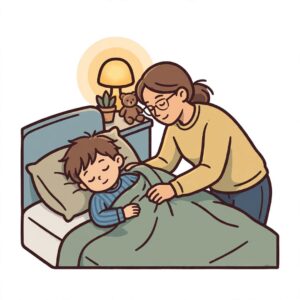
It is bedtime. The room is dim. Your toddler curls up, thumb in mouth, eyes slowly closing.
You watch the small hand and wonder whether you should stop it. You wonder if you have waited too long.
You have not. Thumb sucking is a common way toddlers settle themselves.
It often appears when they are tired, bored, unwell, or finding a new place strange.
The thumb is always there. It needs no batteries, no searching in the dark, and no help from a grown up.
That is why it works so well. It is also why taking it away by force rarely works.
Pressure can make the habit stronger.
A child who feels watched may suck more, not less, and may hide it instead of stopping it.
What helps is quieter. It is noticing when the thumb goes in, offering another way to settle, and keeping the days calm around it.
Try these words first
Keep the tone light. A comment about the thumb should sound like a gentle offer, not a warning.
Your thumb is busy. Would your hands like to hold the bunny?
Let us hold hands for a little while. You can squeeze mine.
Your mouth is busy resting. Your hands can help me stir.
When you see the thumb go in, you can offer a choice.
Do you want the soft cloth or the teddy to hold?
At bedtime, keep the offer simple. Bunny in one hand, blanket in the other. Both hands are full.
If the thumb goes back in, let it be for now. Try the offer again another time, without a sigh.
That is okay. We can try hands busy tomorrow.
Do not pull the thumb out of the mouth.
Do not cover it with a taste or a glove to punish the habit.
Those moves can feel shaming. They can also make the thumb feel more precious, because it is now forbidden.
When the thumb goes in most
Notice the times, not just the thumb. Does it appear at bedtime?
In the car? While watching a screen? When a new person visits?
Those moments often share one thing. The child is moving from busy to still, or from familiar to new.
Thumb sucking often fills a gap.
It fills the wait before sleep, the quiet in the car, and the pause before a hello.
If you can fill that gap gently, the thumb may be needed less.
A song before sleep, a toy for the car, a hand to hold at the door.
Try a small change at one time of day first.
Bedtime is a good place to start, because the routine is already steady.
Keep the bedtime steps in the same order. Bath, book, cuddle, lights low, bunny in hand.
A steady bedtime gives the body a clear path to sleep. The thumb becomes one part of settling, not the only part.
During the day, watch for boredom. A child with nothing to do may reach for the thumb out of habit.
Offer hands a job. Stir the bowl. Stack the cups. Carry the small bag. Hands that are busy often forget the thumb.
What to do instead of pressure
Pressure often looks like constant reminders. Do not suck your thumb. Take it out. We talked about this.
Those reminders keep the focus on the thumb. They can make a child think about it all day.
Instead, praise the moments when the hands are busy. You held your bunny all through the story. I saw that.
Praise the settling, not the stopping. You fell asleep with your blanket in your hand. That was cosy.
Keep the praise specific and brief. One line is enough. Too much praise can make the child feel watched again.
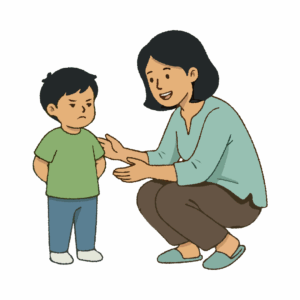
If the habit appears in public, stay calm. A quiet offer works better than a public correction.
Would you like to hold my hand while we walk? That line can help without drawing eyes to the thumb.
Ask the other adults in the family to use the same gentle words. A mixed message can confuse a small child.
We offer hands something to hold. We do not pull the thumb out.
That shared approach matters more than any single trick. It tells the child the grown ups are on the same side.
Comfort, teeth, and when to ask for help
Many parents worry about teeth.
That worry is real, and it is worth a calm conversation with a dentist at a regular check.
A dentist can look at the mouth, talk about the pattern, and suggest what fits your child.
Ask at the next visit, rather than searching for a deadline at home.
Do not set a date to stop by. A deadline can add pressure to a habit that is tied to comfort.
Instead, watch the pattern over weeks. Is the thumb in less at playtime?
Is it mostly at sleep? Is the child using other ways to settle?
Those small shifts are the signs that the habit is easing.
They are easy to miss if you only watch for a full stop.
If sucking is constant through the day, if it comes with a lot of distress, or if you are worried about the mouth, ask a dentist or your family doctor.
Write down when it happens for a few days before the visit.
Bedtime, car, tired times. That note can help the conversation stay practical.
You can also talk with the nursery or childminder. Ask what they see, and share the gentle words you use at home.
We offer a toy to hold. We keep it light. That note helps everyone stay steady.
A gentle way forward
Thumb sucking is not a sign of bad parenting.
It is a sign that a child has found a way to soothe themselves.
Your task is not to take that way away. It is to add more ways, slowly, so the thumb is needed less.
More cuddles at bedtime. More busy hands in the day. More calm in the gaps between things.
Some children stop on their own as play gets busier and words get easier.
Some take longer, and need a little more time.
Let time do some of the work. Your steady offers do the rest.
If tonight is a thumb night, let it be a thumb night.
Offer the bunny, keep the lights low, and sit close for a minute.
Your hands are free. Would they like to hold the bunny?