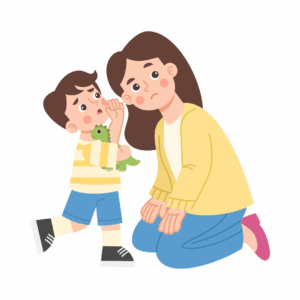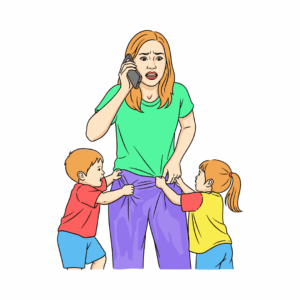
When your child is screaming, crying, hitting, or completely shutting down, it’s tempting to focus on one thing:
“How do I make this behavior stop?”
But child psychology tells us something surprising.
Before children can regulate their emotions, they first learn to borrow yours.
This process is called co-regulation, and it’s one of the most powerful parenting tools you can develop.
Co-regulation doesn’t mean giving in, rescuing your child from every difficult emotion, or staying perfectly calm all the time.
It means becoming your child’s safe emotional anchor until they’re able to calm themselves.
The way you respond during your child’s biggest emotional storms shapes how they’ll handle stress, frustration, disappointment, and conflict for years to come.
Let’s look at what co-regulation really means; and the biggest mistakes even loving parents make.
What Is Co-Regulation?
Co-regulation is the process of helping your child manage overwhelming emotions through your calm presence, words, and actions.
Think of your nervous system as a thermostat.
When your child becomes emotionally overwhelmed, they unconsciously look to you to determine whether they’re safe.
If you remain steady, your calm helps bring their emotions back down.
If you become angry, anxious, or reactive, their distress often grows even bigger.
This isn’t because you’re failing.
It’s because children’s brains are still developing the skills adults use to regulate emotions independently.
Before children can self-regulate, they need repeated experiences of being co-regulated.
DO: Stay Calm Before You Speak
Your tone matters more than your words.
A calm voice communicates safety long before your child processes what you’re saying.
Even simple phrases become powerful when delivered with warmth.
Try saying:
“I’m here.”
“You’re safe.”
“We’ll figure this out together.”
You don’t need a perfect script.
You need a regulated presence.
If you’re feeling overwhelmed yourself, take one slow breath before responding.
That single pause can change the direction of the entire interaction.
DON’T: Match Your Child’s Emotional Intensity
When children yell, many parents naturally raise their voices too.
Unfortunately, this often creates an emotional tug-of-war.
Imagine your child is already operating at a “10.”
Meeting them with your own “10” doesn’t calm the situation—it confirms to their brain that there’s something to panic about.
Instead of saying:
“STOP SCREAMING RIGHT NOW!”
Try:
“I know you’re really upset. I’m listening when your voice is a little quieter.”
Calm isn’t weakness.
It’s leadership.
DO: Validate Feelings Without Approving Behaviors
One of the biggest misconceptions about gentle parenting is that validating emotions means excusing bad behavior.
It doesn’t.
You can fully accept your child’s feelings while still setting clear limits.
For example:
“You’re really angry that it’s time to leave.”
Follow it with:
“I won’t let you hit me.”
Notice what happened.
The emotion is welcomed.
The behavior is redirected.
Children need both empathy and boundaries.
DON’T: Rush to Fix the Problem
When children struggle, parents often jump into solution mode.
But solving the problem too quickly can unintentionally send the message:
“I don’t think you can handle hard things.”
Instead of immediately offering solutions, pause.
Say:
“Tell me what’s making this feel so hard.”
Or:
“I’m listening.”
Many children calm down simply because someone took the time to understand them.
Often, connection comes before correction.
DO: Name the Emotion
Young children frequently experience emotions they don’t yet have words for.
By labeling what you observe, you help build emotional awareness.
You might say:
“You seem frustrated.”
“That was really disappointing.”
“I think you’re feeling overwhelmed.”
Over time, children begin using these words themselves.
That’s how emotional intelligence develops.
DON’T: Use Shame to Gain Compliance
Statements like:
- “You’re acting like a baby.”
- “Big kids don’t cry.”
- “You’re embarrassing me.”
- “Look at everyone staring.”
may stop the behavior temporarily.
But they don’t teach emotional regulation.
Instead, they teach children that difficult emotions should be hidden.
Children who fear their emotions don’t become emotionally stronger.
They simply become better at suppressing them.
DO: Keep Your Boundaries Calm and Clear
Co-regulation isn’t about saying yes to everything.
Children actually feel safer when limits are predictable.
The key is enforcing boundaries without adding fear or shame.
For example:
“I won’t let you throw toys.”
“You can be angry, but I won’t let you hurt anyone.”
“I’m staying with you until you’re calm.”
Notice how these responses are firm without being harsh.
Children need adults who are both kind and confident.
DON’T: Expect Instant Calm
Parents sometimes assume co-regulation should work immediately.
It won’t.
Just like adults don’t instantly calm down after hearing “Relax,” children also need time.
Your role isn’t to eliminate emotions.
Your role is to help your child move through them.
Sometimes they’ll need five minutes.
Sometimes they’ll need twenty.
Healing isn’t measured by how quickly the tears stop.
It’s measured by whether your child feels safe while experiencing them.
DO: Model Emotional Regulation
Children learn far more from what they observe than from what they’re told.
If you make a mistake—and every parent does—let your child see how you recover.
For example:
“I raised my voice earlier, and I’m sorry.”
“I was frustrated, so I took a deep breath.”
“I’m going to calm myself before we keep talking.”
These moments teach children that emotional regulation isn’t about never getting upset.
It’s about knowing what to do when you are.
DON’T: Turn Every Emotional Moment Into a Lesson
When your child is in the middle of a meltdown, their brain isn’t ready for lectures.
This isn’t the time for:
- “What did we learn?”
- “See what happens when you don’t listen?”
- “Next time you should…”
During intense emotions, children need connection first.
Teaching comes later.
Wait until everyone is calm before discussing better choices or problem-solving together.
Simple Co-Regulation Scripts Every Parent Can Use
When emotions run high, you don’t need long speeches.
A few reassuring words are often enough.
Try these:
When your child is overwhelmed:
“I’m right here.”
When they’re frustrated:
“This feels really hard right now.”
When they’re angry:
“It’s okay to be angry. It’s not okay to hurt.”
When they’re crying:
“You don’t have to go through this alone.”
When they feel like giving up:
“Let’s do the next small step together.”
These phrases communicate safety, empathy, and confidence all at once.
Remember: Co-Regulation Comes Before Self-Regulation
Many parents expect children to calm themselves before they’ve learned how.
But self-regulation isn’t something children magically develop with age.
It’s something they build through hundreds of moments of being calmly guided by trusted adults.
Every time you stay present instead of reacting…
Every time you validate feelings while maintaining boundaries…
Every time you choose connection over control…
You’re strengthening your child’s emotional foundation.
That doesn’t mean every meltdown disappears.
It means your child slowly learns that big feelings aren’t dangerous—and that they have the tools to handle them.
Final Thoughts
Children don’t need parents who are perfectly patient, endlessly calm, or never make mistakes.
They need parents who are willing to return to connection, even after difficult moments.
Co-regulation isn’t about preventing every tantrum or eliminating every tear.
It’s about showing your child, again and again:
“Your feelings don’t scare me. I’m here, and we’ll get through this together.”
Those moments may seem ordinary today.
But over time, they become the inner voice your child carries into school, friendships, adulthood, and every challenge life brings.
And that’s one of the greatest gifts a parent can give.