It is 2 a.m.
You are standing in the dark, holding a small warm body against your chest.
Your child is crying.
Not the tired whimper of a bad dream, but the rising wail of a child who has lost the one thing that makes the world feel safe.
You pat the mattress.
You check the cot.
You look under the blanket, and then you see it, on the floor, two feet from your hand.
The dummy.
You rinse it, you hand it over, and the crying stops in the middle of a breath, like a tap turned off.
You stand there for a moment, listening to the quiet.
And then you think the thought you have been avoiding for months.
Is it time?
Is it time to take the dummy away?
And underneath that question is the one that really keeps you up at night.
What if taking it away breaks the sleep you have only just got back?
The Dummy Is Doing a Job
Here is the reframe, and it changes everything after it.
The dummy is not a bad habit.
It is a tool doing a job.
That job is comfort.
Your child sucks to soothe, the same way they rub a blanket between their fingers or press their face into your neck when the room gets loud.
The sucking slows their breathing.
It tells their body that the world is safe enough to sleep in.
That is why taking the dummy away feels so big.
You are not removing a piece of plastic.
You are removing the way your child knows how to calm down.
And that is why the parents who struggle most with weaning are usually the ones who take the tool without giving anything in its place.
The child is left with the same big feeling and no way to hold it.
So the work of weaning is not really about the dummy at all.
It is about teaching your child a second way to feel safe, before you take away the first one.
That is the whole thesis of this guide, and it has a name: the comfort job.
Once you see the dummy as a job, the question changes.
It stops being “how do I take this away?”
It becomes “what will do this job instead?”
Answer that question first, and the goodbye gets much easier.
1. Name the Job Before You Remove the Tool
Before you change anything, watch for one week.
Notice when the dummy comes out.
Is it only at sleep times?
Or does it appear at the supermarket, in the car, when a visitor arrives?
That tells you what the job is.
A dummy that only appears at bedtime is doing a sleep job.
A dummy that appears all day is doing a bigger job, and it is holding feelings your child does not yet have words for.
That is the difference between comfort and habit, and it matters, because comfort needs a replacement and habit needs a goodbye.
Either way, the answer is the same.
You do not start by taking it away.
You start by naming it, out loud, in a calm moment.
“You like your dummy when you are sleepy. It helps you feel calm.”
That one sentence does two things.
It tells your child you have noticed, and it tells them the dummy has a purpose, not a punishment waiting for it.
Children give things up more easily when they feel understood first.
So for one week, just watch and name.
No rules, no countdown, no hiding the dummy in a drawer to test them.
By the end of the week, you will know exactly when the dummy matters most, and that is where your plan starts.
It is also the part that makes the rest work.
2. Pick a Quiet Week
Weaning works best in a quiet week.
Not the week of a holiday, a house move, a new nursery, or a new baby.
Not the week your child is ill, or cutting teeth, or learning to walk.
Those weeks ask enough of a small child already.
Add a dummy goodbye on top, and you are asking them to cope with two big changes at once.
Choose an ordinary week instead.
One where the days look mostly the same.
One where you are not travelling, and nobody is starting anything new.
A steady daily rhythm makes the goodbye easier, because a child who knows what comes next has less to worry about.
Then tell your child what is coming, in simple words, a few days ahead.
“On Saturday, the dummy is going to say goodbye. We will do it together.”
Children handle endings far better when they see them coming.
A surprise goodbye feels like a loss.
A planned goodbye feels like a step.
That is a small difference in words and a big difference in how it lands.
If your child is ill on the chosen day, move it.
A dummy taken away on a bad day becomes a story about being punished.
A dummy given away on a good day becomes a story about growing up.
Pick the good day.
3. Daytime Goes First
Here is the order that works: daytime first, sleep last.
The dummy leaves the daytime first because the daytime is where your child has other things to do.
There are toys, and food, and walks, and people to talk to.
At night there is only the dark and the quiet, and the dummy is doing its hardest job there.
So start in the morning.
When your child wakes, the dummy stays in the cot.
You can say it plainly.
“The dummy stays in bed in the daytime now. It is for sleeping.”
That is a rule a small child can understand.
It is also a rule you can keep, because it has a clear edge to it.
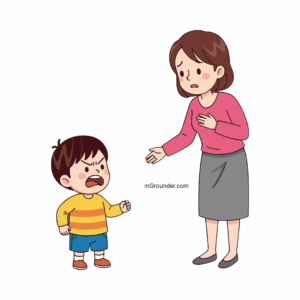
Expect some protest at first.
Your child will ask for it in the car, at the park, when they fall and scrape a knee.
Hold the line kindly, and offer the replacement instead.
“You are upset. Here is your bunny. Let us hold him together.”
Within a few days, most children stop asking in the daytime at all.
The dummy has shrunk to one job now: the sleep job.
One job at a time is how a big change becomes a small one.
4. The Comfort Swap
Here is the part most parents miss.
You cannot take a comfort away and leave an empty space.
Something else has to do the job.
That something is usually a soft toy, a blanket, or a small cloth your child can hold.
Pick it together, a few days before the goodbye.
Let your child choose it.
A bunny from the shelf, a blanket from the drawer, a small bear that fits in one hand.
Then let the two of them spend time together.
The dummy and the bunny, side by side at bedtime, for two or three nights.
Your child holds one in each hand, and the bunny starts to smell like them, and like sleep.
That is the swap happening quietly, before the dummy ever leaves.
On the goodbye day, the bunny is already a friend, not a stranger handed over in a crisis.
Say it out loud when you hand it over.
“Bunny is here now. He can help you feel calm, just like your dummy did.”
Some children take to a new comfort in a night.
Some take a week, and that is fine too.
The point is not the toy.
The point is that your child has something to hold when the feeling comes.
If your child swaps the dummy for thumb sucking, that is the same comfort job in a new shape, and it needs the same gentle approach.
5. The Three-Day Gentle Goodbye
Here is the system, and it has numbers you can copy: the three-day gentle goodbye.
Day one, the dummy is only for sleep times.
No dummy at breakfast, no dummy in the car, no dummy at the park.
It waits in the cot, and your child knows where it is.
Day two, the dummy is only for bedtime.
The nap goes without it, and the bedtime keeps it for one more night.
That is the hardest day, and the shortest one.
By the evening, your child has already had a whole day and a whole nap without it.
Day three is the goodbye itself.
In the morning, you do it together.
Your child puts the dummy in a small box, and you close the lid, and you say thank you to it.
That box has a name: the dummy box.
“Thank you, dummy, for helping me sleep. I am bigger now.”
That sentence matters more than it looks.
It lets your child be the one who says goodbye, instead of the one it happens to.
The box goes on a high shelf, and it stays there.
Not in the bin, and not in a drawer.
On a shelf, where goodbyes live.
Three days, three small steps, one goodbye your child chose.
6. The First Three Nights
The first night is the one parents fear most.
Here is what usually happens instead of the disaster you are picturing.
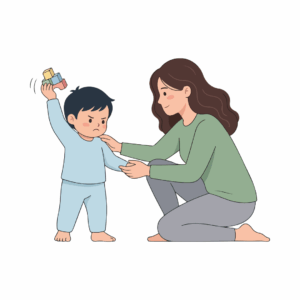
Your child asks for the dummy at bedtime, and you say no, kindly, and they cry.
Not all night.
Usually ten or fifteen minutes, and then the tiredness wins.
You stay with them.
You sit on the floor, you rub their back, you hand them the bunny.
“I am here. The dummy has gone to sleep on the shelf. Bunny is here.”
That is the whole job on night one.
Stay, soothe, and do not give it back.
Night two is shorter.
Your child remembers that the crying did not bring the dummy back, and that you stayed anyway.
Night three is often the easiest of all.
Your child reaches for the bunny first, and the dummy is already a story from two days ago.
If the crying goes past half an hour, go in and stay.
Sit with them until they settle, then leave quietly.
What you must not do is hand the dummy back at 2 a.m. to buy an hour of sleep.
One midnight return teaches your child that crying long enough works, and the next night will be longer.
Three nights, and most children are through it.
If the crying is bigger than tiredness, if your child is shaking or cannot be comforted at all, you may be looking at a dysregulated child, and the response is different.
What to Skip, and the Doubt That Stays
Some shortcuts feel like they work, and quietly make it harder.
It helps to name them, because most parents try at least one, and naming them is not a reason for guilt.
Do not cut the tip off the dummy.
It sounds gentle, and it is not.
Your child sucks harder on a broken dummy, gets frustrated, and the dummy becomes a problem instead of a goodbye.
Do not take it away in secret while your child is asleep.
A child who wakes to find the dummy gone feels tricked, and a tricked child clings harder to the next comfort they find.
Do not swap it for a sweet drink or a biscuit at bedtime.
Sugar is not comfort, and a new habit at bedtime is not a goodbye.
Do not shame them for wanting it.
“You are too big for a dummy” lands like a verdict, and a child who feels judged holds on tighter.
And now the doubt that is probably sitting in your chest.
“But won’t taking it away ruin his sleep for weeks?”
For most children, no.
The first three nights are bumpy, and then the sleep comes back, often better than before, because your child has learned to settle without a prop.
If your child is over four and still reaches for the dummy all day, or keeps it in while talking, or a dentist has mentioned their teeth, talk to your pediatrician or dentist.
Not because something is wrong, but because a second pair of eyes helps.
Bedtime Tonight: Four Small Steps
When bedtime comes and your child asks for the dummy, hold four steps in mind.
First, name the feeling.
“You want your dummy. You are tired, and you miss it.”
Second, offer the swap.
“Bunny is here. Hold him close.”
Third, stay.
Sit on the floor, rub their back, and be quiet with them.
Fourth, leave when they are calm.
Not when they are asleep, but when the breathing has slowed and the body has gone soft.
If they cry, let them cry with you there.
Tears with a parent nearby are not the same as tears alone.
Tomorrow night, do the same four steps again.
That is all of it.
Name it, swap it, stay, leave.
No new ideas, nothing to memorise, just four steps you can hold in your head while the house goes dark.
Tonight, Find a Box
You do not need a perfect week, a perfect plan, or a brave face.
You need a small box, a soft toy, and three days.
Tonight, after your child is asleep, find a small box and put it on a high shelf.
Tomorrow, let your child choose the toy that will take the dummy’s place.
Then start the three days, one small step at a time.
Daytime first, bedtime second, goodbye third.
There will be tears, and they will pass.
There will be a night when you sit on the floor and wonder if you have made a mistake.
You have not.
You are teaching your child that comfort can come from more than one place.
And one night soon, you will check the cot and find your child asleep, the bunny tucked under one arm, the dummy long forgotten on its shelf.
That is the goodbye working.
And if the struggle is sleep itself, not just the dummy, here is help for a toddler who cannot sleep through the night.