You have said it three times now. Put your shoes on. Put your shoes on. Put your shoes on.
Your child is still studying the ceiling. One shoe is on the wrong foot. The other shoe is somewhere under the table.
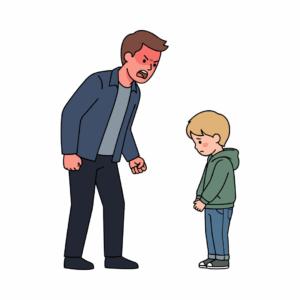
Your voice is getting louder. Your jaw is getting tighter. You can feel the morning slipping away, minute by minute.
Nothing is wrong with your child in this moment. They heard sounds. They did not hear a direction they could follow.
Listening is not about volume. It is about closeness, one clear step, and a reason to move now.
The phrases below do that work. Say them in a normal voice, close up, and wait a beat after each one.
Pick one phrase to try tonight, not all fifteen at once. One new line, used well, will teach you more than a whole page read in a rush.
Notice what happens after you say it. Did their shoulders drop? Did their eyes come back to you? Did their feet start moving? That small shift is listening beginning.
Get close before you speak
Most directions fail before they start. They are spoken across a room, over a television, while a child is deep in play.
A child who is far away, busy, or upset cannot take in a new instruction. Their body is somewhere else. Their attention is somewhere else.
So start with connection. Walk over. Get low. Touch their shoulder lightly. Wait until their eyes find yours.
That pause is not wasted time. It is the part that makes the next words land.
Try whispering the plan instead of announcing it. A whisper pulls a child in. A shout pushes them away.
1. “I have a secret plan. Come close so I can tell you.”
2. “I am right here. Look at my eyes when you are ready.”
3. “I can see you are busy. I will wait until you can hear me.”
Use the first three lines whenever you feel the urge to repeat yourself from the doorway. Move your feet first. Then use your voice.
If your child turns away, stay low and stay quiet. A calm body says more than a second reminder.
Waiting feels strange at first, especially when the clock is loud in your head. Give it a few seconds. Most children turn back when no new demand is chasing them.
When their eyes meet yours, speak at once, while the connection is fresh. A direction given in that moment has a far better chance than one shouted from the hall.
Give one step, not the whole morning
Put your shoes on, get your bag, wash your hands, and hurry up is four jobs at once. A young child will pick none of them.
One step is enough. Name it plainly. Name what comes after it, so the step has a point.
Keep your voice steady and your words short. Then stop talking and let them move.
4. “First shoes, then park. Show me your fast feet.”
5. “Shoes on. I will count to three while you hop to the door.”
6. “Your job is shoes. My job is holding the door.”
7. “Pick the red shoes or the blue shoes. You choose.”
A choice helps when a child feels cornered. It gives them a say without changing the job.
Keep the choice small and real. Two shoes, not ten. Two real options, not a trick.
If they pick, praise the picking. If they stall, repeat the same line once, in the same calm voice.
Changing the words each time makes a child start over. They have to work out what is new, what still counts, and whether the job has changed.
The same line, said the same way, is easier to trust. It tells them the plan has not moved, even if their feet have not moved yet.
Point at the shoes as you speak, or hold one shoe out. A small gesture can carry the direction when words alone are not enough.
When they drift or dig in
Some children start, then stop. Some argue. Some melt down at the word shoes, as if shoes were the whole problem.
Often shoes are not the problem. They are tired, or they do not want to leave, or the morning has moved too fast.
You do not need to fix the feeling before you ask for the step. You need to name the feeling, then hold the step.
That order matters. Connection first, direction second, every time.
8. “This part is tricky. Let us do the first bit together.”
9. “You can be mad and still put your shoes on.”
10. “I hear you. Shoes first, then we can talk about the park.”
11. “Let us race the song. Shoes before the music ends.”
A little play can break a standstill. A race, a count, a silly walk to the door, all give a stuck body a way forward.
Keep the game short. If the song ends and the shoes are still off, help with one shoe and let them do the other.
Helping is not giving in. It is finishing the job together so the morning can move on.
If tears come, stay close and keep your voice low. You can hold them for a moment, then return to the same step.
Comfort and direction can live in the same minute. One does not cancel the other.
Close the loop so it sticks
Children listen better the next time when they notice that listening worked. That noticing needs words from you.
Do not wait until bedtime to mention it. Say it at the door, in the car, or on the path to the park.
Name exactly what they did. Keep it plain. Keep it warm.
12. “Thank you. You heard me the first time.”
13. “Shoes on, bag ready, out the door. You did it.”
14. “Next time I will whisper it again. That worked, did it not?”
15. “We are ready. Tell me what happens first at the park.”
The last line looks ahead. It gives your child something to picture, and it leaves the morning on a good note.
Some mornings a phrase will land and some mornings it will not. That does not mean the words were wrong. It means the moment was harder, or your child was more tired, or the day started late.
Try the same phrase again tomorrow, close up and calm. Repetition builds the pattern. Your child learns that this is how mornings work in your home.
Tomorrow will still have a ceiling to study and a shoe under the table. That is normal.
Walk over, get low, whisper the plan, and say one clear step. Then wait for their eyes to find yours.