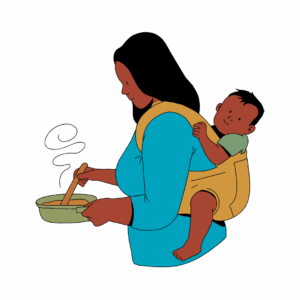
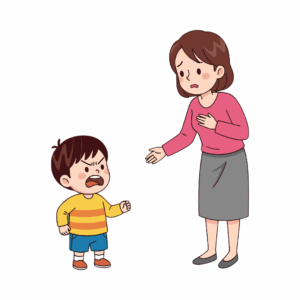
Some parents are calm harbors.
Some are fireworks.
Some are patient teachers and some are warm blankets with arms.
If you have ever watched another parent and thought “I could never be like that,” here is a secret: you were never supposed to be.
Your temperament is not a flaw to fix.
It is the specific gift your children were meant to receive.
Take the two-minute check-in below and meet the parent you already are.
Your Temperament Is a Gift, Not a Flaw
Parenting advice loves to sell one ideal.
Be calm but be fun.
Be firm but be gentle.
Be present but also take time for yourself.
No human contains all of that at once.
You came wired a certain way, and that wiring shapes how you love.
A calm parent gives children steadiness.
An energetic parent gives children joy.
A thoughtful parent gives children understanding.
A warm parent gives children safety.
None of these is the “right” one.
Your child does not need a perfect parent.
They need a parent whose strengths feel like home.
The goal was never to become someone else.
The goal is to become more fully yourself, on purpose.
The Four Parenting Temperaments
Most parents lean toward one of four natural rhythms.
The Calm Anchor stays steady when the house is chaos.
Their voice barely rises.
Their presence says “all is well” even when nothing is.
The Energetic Playmate turns Tuesday into an adventure.
They are on the floor, in the game, mid dance party.
Their laughter is the soundtrack of childhood.
The Thoughtful Guide explains the world one question at a time.
They answer the whys.
They wonder out loud and let children think alongside them.
The Warm Protector is the safe harbor.
Arms open, snacks ready, heart on sleeve.
Their children run to them, not from them.
You probably recognized yourself in one of these already.
Most of us carry a primary temperament with a backup.
And here is the beautiful part: children thrive under all four.
If you want to see how these styles show up in everyday family life, our guide to common parenting styles breaks them down with warmth: 10 Common Parenting Styles and What They Look Like
How to Parent in Your Own Rhythm
Once you know your temperament, you can stop fighting it.
Calm Anchors do not need to become party planners.
Your quiet presence is already doing the heavy lifting.
Energetic Playmates do not need to force stillness.
Your joy is regulating your children more than you know.
Thoughtful Guides do not need to rush past the questions.
Your patience with curiosity is building sharp minds.
Warm Protectors do not need to toughen up.
Your softness is exactly what a hard world needs.
Parenting in your rhythm means choosing strategies that fit you.
A Calm Anchor handles meltdowns with quiet holding.
An Energetic Playmate handles them with a silly reset.
A Thoughtful Guide handles them with words and naming.
A Warm Protector handles them with closeness and comfort.
All four work.
The best strategy is the one you can actually sustain.
When Your Temperament Clashes With Your Child’s
Here is where it gets interesting.
Your calm child may find your energy overwhelming.
Your wild child may find your quietness boring.
This is normal.
It is also an invitation.
A high-energy parent can learn to sit still for a calm child, sometimes.
A calm parent can learn to be silly for a wild child, sometimes.
The word is sometimes.
You do not have to abandon your nature.
You just stretch toward theirs, the way you would learn a few phrases of their language.
And when the stretch fails, repair covers it.
“I was too loud this morning and I am sorry” works in every temperament.
Children do not need you to match them perfectly.
They need to see you trying.
That effort teaches them something precious: that different people can love each other well across the difference.
Growing Without Changing Who You Are
Growth is not a personality transplant.
It is your temperament, matured.
The Calm Anchor learns to speak up when boundaries need a voice.
The Energetic Playmate learns to slow down when a child needs quiet.
The Thoughtful Guide learns that sometimes a hug beats an explanation.
The Warm Protector learns that holding a boundary is also love.
Notice the pattern.
Nobody becomes someone else.
Everyone becomes more of themselves, with better tools.
That is the whole game.
If burnout has been blurring your natural rhythm lately, you are not broken, you are depleted, and this is worth reading: Parental Burnout: 10 Signs You’re Running on Empty
Your temperament will still be there when you rest.
It is yours.
It is not going anywhere.
What Parenting Temperament Matches You? FAQs
How long does the quiz take?
About two minutes.
Ten quick questions about your natural rhythm as a parent.
Are there right or wrong answers?
No.
Every temperament in this quiz is a strength.
What if I see myself in more than one?
That is normal.
Most parents have a primary temperament and a strong backup.
Can my temperament change?
It can mature and soften around the edges.
The core of it stays yours.
What if my partner parents completely differently?
Lucky kids.
Different temperaments in one home give children a wider emotional world.
Just keep talking to each other about it.
One more thing before you go.
Whatever temperament the quiz named, it named something true about you.
The calm, the laughter, the questions, the warmth.
Your children did not get a generic parent.
They got you, specifically you, with your exact rhythm.
And when the days are hard, remember this: you do not have to parent like anyone else to parent well.
You just have to parent like yourself, with love, on purpose, again tomorrow.
If public meltdowns test your temperament most, keep this close for the hard moments: What to Do When Your Child Has a Public Meltdown