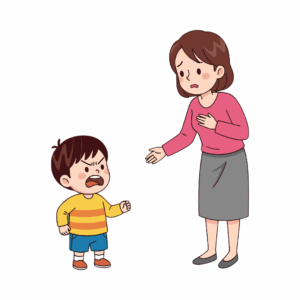
Juice is all over the kitchen floor. The cup is on its side.
Your six year old is standing in the middle of it, looking straight at you, saying, “The cup fell by itself.”
You know that is not true.
Your child knows that you know.
And still, your child would rather defend an impossible story than say the simple true sentence: “I knocked it over.”
What is the truth costing in your house?
That is the question to sit with before you answer the lie, because children lie for reasons that make sense inside a child’s world, even when the lie itself makes no sense to an adult.
A lie can be a wish, a shield, a way to belong, or a way to avoid a reaction they have already seen and do not want to see again.
If you only punish the lie, you may stop that one story while teaching your child to tell the next one better.
So what is this lie trying to tell you, and how do you answer it so the truth feels safe enough to tell next time?
The Truth Has a Price Tag in Your House
That is the risky truth at work in your kitchen.
Your child is not weighing honesty against dishonesty the way an adult would. Your child is weighing two risks.
On one side is the risk of lying and being caught.
On the other side is the risk of telling the truth and facing what follows: your raised voice, your disappointed face, a lost privilege, a label that sticks.
When the truth feels like the bigger risk, a child will choose the lie. That is not a flaw in their character.
It is a calculation, and it is often an accurate one, because children learn the price of honesty from what happened the last time they told an unwelcome truth.
Think back to that last time. What did your face do first?
Did your voice stay calm, or did it rise before your child had finished the sentence?
The goal, then, is not a child who never slips.
The goal is a child who feels safe telling the truth, even when the truth comes with a consequence.
A home where truth is dangerous makes lying the escape hatch.
A home where truth is survivable makes truth the easier path.
A Dragon in the Garden Is Not a Lie
Your four year old tells you a dragon lives in the garden, or that their teddy ate the biscuit.
Your first instinct may be to correct them. Wait.
A story and a lie look alike on the surface, but they are not the same thing, and they need different responses.
A story is told for joy.
Your child enjoys telling it, their eyes light up, and they are not trying to escape anything. A lie is told for cover.
Your child tells it to dodge trouble, and their body tightens as they say it.
When it is a story, enjoy it first, then gently anchor the facts when it matters. “That is a great dragon story. In real life, the plant pot fell when the ball hit it. Let us fix it together.”
When it is a cover story, do not argue about the dragon. Describe what you see, in a calm voice.
“I see juice on the floor and the cup is on its side.”
Young children are still learning where imagination ends and real life begins.
If you are not sure which one it is, ask plainly. “Is that a story, or did it really happen? Both are okay to tell me, I just want to know which one it is.”
The Milk Spill That Taught Them to Hide
Fear is behind most of the lies that worry parents most.
Fear of shouting, fear of losing a tablet, fear of a parent’s disappointed silence, fear of being called a liar in front of others.
Picture the spilled milk from last week. Your child was shouted at for the spill, and today there is another spill, and another impossible story.
Your child has not become dishonest in a week.
Your child has learned the price of honesty in that house, and the price was too high.
Before you decide what a lie means, ask three questions, in this order.
One, could they do what was asked, or was it a skill they do not have yet? Two, were they scared of your reaction?
Three, what did the lie win them: safety, belonging, or protection for someone else? Three questions, every time.
Skill, fear, or something they were trying to gain.
If fear is the answer, the fix is not a bigger threat.
The fix is a calmer response to the next truth, kept steady for weeks.
Children who have learned that truth brings trouble will not believe one promise.
They will believe twenty calm responses in a row.
If you want a fuller picture of what fear looks like from inside your child, read how children act when they do not feel safe emotionally.
“I Finished My Homework”
“I finished my homework,” your child says, and you later find the page blank. It is easy to hear that as a grand deception.
It is often a shortcut around an evening they dread, not a lie about who they are.
The homework may be too hard, too long, or too lonely, and your child would rather risk a lie than sit with it.
Here the lie is a signal about the task itself, and fixing the task often fixes the lie faster than punishing the sentence.
Sit beside them for the first ten minutes, not to check their work, but to make the start less lonely.
Ask what part feels hardest, and break that part into one small step.
Then open the door with an invitation, not a test. “Tell me what happened. I will listen to the whole story.”
A yes or no question corners a frightened child into the easiest escape, which is no.
An open question lets them tell the story in their own order. If they say, “I do not know,” stay steady.
“Take your time. I want to hear what happened, not a perfect story,” often unlocks the sentence they were afraid to say.
When Fitting In Feels Safer Than Telling the Truth
From about age seven onward, lies get more social.
Your child may claim to own a game they do not own, to have watched a show they have not watched, or to like a band they have never heard, because being different in the playground feels risky.
These lies are painful to hear, because they hint that your child feels on the outside. Answer the belonging worry, not just the untrue claim.
In the car ride home, instead of catching the false detail, name the feeling underneath it. “It sounds like fitting in mattered a lot today. Tell me about the part that felt hard.”
Then help them find one true thing to share, one friend to sit with, one interest they can talk about honestly, and the need to invent a life shrinks.
An older child may also be guarding privacy, not deceiving you.
An eleven year old who lies about a friendship may be holding onto a part of life they are not ready to share fully, and that need for privacy is normal.
Hold a firm line on safety while respecting that need.
Loyalty Can Wear a False Story
“Dad did not shout.” “My brother did not take it.”
A child may lie to cover for a sibling, a friend, or even a parent, and that can be loyalty, not sneakiness.
Loyalty is a good instinct pointed at a hard situation, and answering it with anger teaches your child that loyalty and truth cannot live together.
Thank the loyalty first, then separate it from the cover story.
“You wanted to protect your brother, and that is kind. We can be kind and truthful at the same time.”
Then deal with the act itself, calmly. “We will deal with the broken toy calmly,” is enough.
You do not need a lecture about honesty on top of it.
The same care matters when a child tells different versions of events in two homes, or when a grandparent says, “Do not tell your mother, it will be our secret,” about a sweet before dinner.
That child is not being cunning. That child is trying to keep peace between adults.
Agree, wherever you can, that telling the truth will be met calmly in both places, and do not quiz your child to catch the other household out.
When It Happens Every Day, Stop Looking at the Child
Every child lies sometimes. A pattern is different, and it deserves a calmer, more curious response rather than a louder one.
You may be looking at a pattern when lies happen most days.
Or when they cover small things that would carry no real consequence.
Or when your child lies even when you have already said there will be no punishment for the truth.
Or when lying comes with withdrawing from friends, sudden anger, or falling schoolwork.
When you see a pattern, look for the system feeding it before you tighten the rules.
Ask yourself, in private: is the truth punished more harshly than the lie in our house?
Are expectations set higher than my child can reliably meet? Is my child protecting someone, or protecting themselves from a situation I have not seen?
Is there a big change my child has not had words for?
Then change one part of the system. Lower one impossible expectation. Make one regular truth safe by promising, and keeping, a calm response.
Keep one private note for two weeks, one line a day: what was lied about, what happened just before, and what your response was.
Call it the two week note.
Patterns become visible on paper in a way they never do in heated moments, and that detail points to the real problem.
The Traps That Make the Next Lie Easier
Some reactions feel protective while quietly making the next lie more likely. The worst of them is the truth trap.
Asking, “Did you eat the chocolate?” when chocolate is on your child’s face is not a test of honesty.
It is a test of courage under pressure, and most frightened children will fail it. State what you see instead.
Do not punish the confession more than the lie would have cost.
If telling the truth brings a bigger reaction than getting caught, your child will choose getting caught next time.
Do not label your child a liar, especially in front of others. There is a large difference between, “You lied,” and, “You are a liar.”
The first describes one act that can be repaired. The second describes a person.
Keep the language on the act, because what respecting your child really looks like is often clearest when correction is needed most.
Do not demand a forced apology on the spot.
A child made to say sorry while still scared learns that sorry is a password to end trouble, not a real repair.
Let the apology come after calm, when it can be meant. The guide to forcing your child to say sorry explains why waiting protects honesty instead of weakening it.
Now for the doubt sitting in the back of your mind. “But will thanking the truth not let my child off the hook?”
No, because thanking the truth is not the same as dropping the consequence.
The spilled juice still needs cleaning, the broken toy still needs repairing, and the unfinished homework still needs finishing.
What changes is the order: the thank you comes first, and the consequence is for the act, not the confession.
Standing Over the Spill
Go back to the kitchen.
The juice is still on the floor, your child is still waiting to see what kind of moment this will be, and you have about sixty seconds to decide.
Breathe first, before your mouth opens. Say what you see, not what you suspect.
“There is juice on the floor and the cup is on its side.”
Then invite the story. “Tell me what happened. I will listen to the whole story.”
If your child still holds the false version, say, quietly, “That does not match what I see. Let’s start again and tell it truly.”
When the truth comes, thank it before you touch anything else. “Thank you for telling me the truth. That took courage, and I am glad you told me.” Say it sincerely, and say it before any consequence.
Only then deal with the act, separately and calmly. “You told the truth, and I am proud of that. The juice still needs cleaning, so we will do that together.” Clean it together, and then let the day move on.
Tonight, Thank One Truth
You do not need to fix lying today.
You need one calm response, tonight, the next time a small truth reaches you, even a truth you would rather not hear.
Thank it first, before you deal with anything else, and watch what your child’s face does when honesty does not bring a storm.
That is the next step, and it is deliberately small, and the same steady approach sits behind how to become a parent your kids enjoy being around, where connection comes before correction.
Your child will lie again. That is not pessimistic.
It is realistic, and it frees you from the idea that one perfect response will end lying forever.
What you can build, one calm response at a time, is a home where the truth is the easier path, because truths are thanked and repairs replace shame.
If the pattern continues despite a calmer response, a fairer load, and a safer way to tell the truth, talk with your child’s doctor.
The same applies if lying comes with deep distress, harming others, or a major change in mood or behaviour.
That is the boundary where everyday steps are not enough.
A child health professional can help from there.
For now, tonight, just thank the truth when it comes.